
Reducing Vessel Berth Time Through Safer, Better-Planned Quayside Operations





Reducing Vessel Berth Time Through Safer, Better-Planned Quayside Operations
Reducing vessel berth time starts with safer, better-coordinated marine quayside operations. For terminal teams, every delayed lift, communication gap, unplanned equipment stop, or unsafe movement near the quay can disrupt vessel schedules and raise operating costs. The pressure is especially visible when several constraints arrive together: a late vessel, changing stowage information, congested yard lanes, wind restrictions, maintenance work, and a crew handover in the middle of a peak window.
The answer is not simply to ask crane operators to work faster. In fact, pushing cycle speed without removing operational uncertainty often creates more stoppages. Shorter berth stays come from making each move predictable: the right container or bulk-handling sequence, clear work zones, reliable equipment, confirmed interfaces between teams, and timely decisions when conditions change. Safety is not separate from productivity at the quay. It is one of the conditions that makes sustained productivity possible.
Berth Time Is Lost Between Movements, Not Only During Them
A vessel may appear to be delayed by slow crane performance, yet the root cause is often outside the lift itself. The crane may wait for a tractor, a twistlock team, a hatch-cover instruction, yard confirmation, an inspection release, or safe clearance from another activity. For bulk terminals, the equivalent delay may arise from feeder alignment, conveyor availability, ship-loader positioning, trimming instructions, dust-control limits, or an interruption in material flow from the stockyard.
This is why berth productivity should be reviewed as an end-to-end operating chain rather than a single equipment metric. Gross moves per hour can be useful, but it does not explain why productive time was lost. A better operational review separates planned working time, productive time, waiting time, safety stops, equipment-related interruptions, and delays caused by information or access. This does not require a complicated reporting system at the outset. It requires common definitions and enough discipline to record what actually stopped the work.
When teams use vague categories such as “operational delay,” the same problems return unnoticed. A more useful log distinguishes, for example, late vehicle arrival, missing lashing gang, incorrect work instruction, crane interlock event, weather restriction, blocked lane, and maintenance intervention. The purpose is not to assign blame. It is to identify which recurring losses can be designed out before the next call.
Start Planning Before the Vessel Is Alongside
A workable berth plan begins well before mooring lines are secured. The terminal needs a shared view of the intended work: expected arrival and departure windows, berth position, vessel particulars, cargo plan, crane allocation, hatch sequence, lashing requirements, yard or stockyard readiness, and constraints that may change the plan. No plan survives every real-world disruption, but an incomplete plan leaves supervisors with too many decisions to make under pressure.
For container operations, the practical question is whether the quay plan and the yard plan are genuinely connected. A vessel sequence may look efficient on a screen while the required boxes are dispersed across distant blocks or located in areas with limited equipment availability. For discharge operations, landing locations, transport routes, reefer requirements, out-of-gauge handling, inspection holds, and dangerous-goods segregation may all affect the pace at which the quay can work. The vessel plan must therefore be checked against the terminal’s physical ability to receive and move cargo, not merely against an idealized crane schedule.
The same principle applies to dry bulk. Before loading begins, teams should confirm the material grade, stockpile accessibility, reclaiming route, conveyor condition, loader travel path, trimming method, and any environmental controls that affect operating limits. A ship loader may be technically available while upstream material flow is too unstable to support continuous loading. If this is known early, the terminal can adjust the loading sequence rather than discovering the constraint after the berth window has started.
A short pre-arrival readiness meeting is often more valuable than a long report. It should bring together the people who can act on the plan: berth planners, quay supervisors, equipment control, yard or stockyard coordinators, maintenance, marine services, and safety personnel where conditions warrant it. The meeting should end with named actions, not a general agreement that everyone is “ready.”
Design the Quay as a Controlled Work Zone
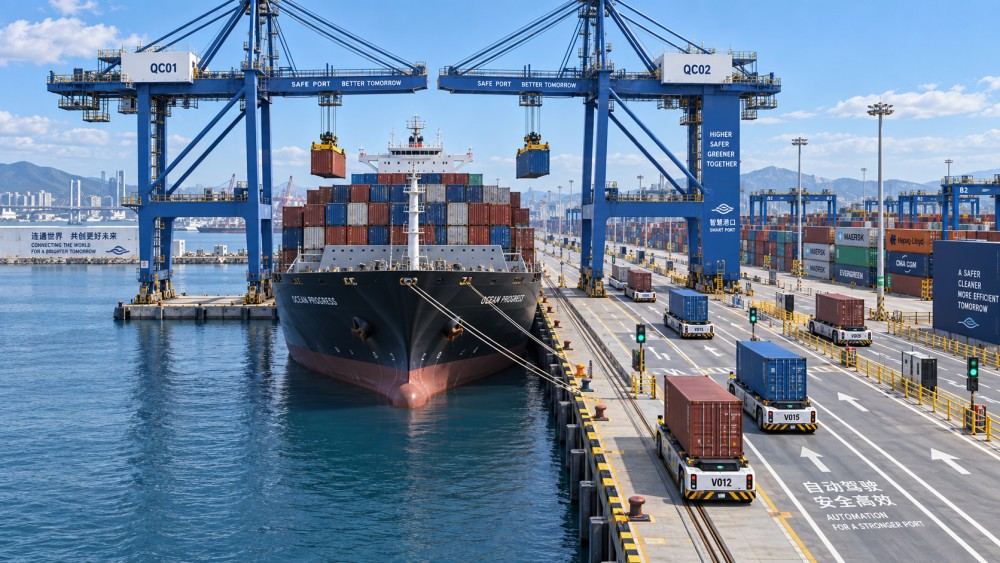
The quayside is a shared space where large mobile machines, vessel crews, lashers, truck drivers, technicians, inspectors, and supervisors may be working at the same time. A safe operating layout reduces uncertainty for every person in that space. Traffic routes, pedestrian exclusions, maintenance areas, emergency access, container landing zones, mooring-line hazards, and crane travel paths should be clear enough that workers do not have to interpret them differently during a busy shift.
Many preventable delays begin with a small conflict: a service vehicle enters an active crane lane, a technician needs access to equipment during vessel work, a lashing team waits for confirmation that a bay is safe to enter, or a truck queues where it blocks another route. The immediate response may be a stop-work instruction, which is appropriate. But the operational lesson is that the conflict should have been anticipated in the work-zone design and shift plan.
Physical separation remains essential even in terminals that use digital visibility tools. Marked lanes, barriers, controlled crossing points, lighting, signage, and radio protocols are basic controls, not outdated ones. Technology can strengthen them through geofencing, vehicle-position awareness, camera systems, or access alerts, but it cannot compensate for an unclear rule about who has priority in a crane travel corridor.
Make Communication Operational, Not Ceremonial
At the berth, communication needs to be short, timely, and tied to a decision. Long radio traffic can become a hazard of its own when critical instructions are lost among routine messages. Teams need agreed language for lifting status, vehicle access, suspended loads, equipment faults, weather changes, emergency stops, and handovers. This is particularly important when a terminal uses contractors, multilingual crews, or a mix of manned and remotely operated equipment.
A good shift handover does more than state the number of moves completed. It identifies unresolved constraints: which crane has a recurring alarm, where cargo is accumulating, whether the vessel sequence changed, which work zones remain restricted, and whether maintenance activity is planned during the next period. The incoming supervisor should not need to reconstruct the situation from scattered messages.
There is also a useful distinction between information and authority. Everyone may be able to see the vessel plan, but teams must know who can approve a sequence change, pause a crane, release a route, or reassign support equipment. Delays can multiply when operators recognize a problem but wait for decisions that have no clear owner.
Use Automation to Remove Variability, Not Hide It
Automation and remote operation can improve marine quayside operations when they are introduced around a defined operating problem. Crane automation may support positioning consistency, anti-sway control, safer separation from people, and more stable repetitive movements. Remote-control stations can move operators away from high-exposure locations. Equipment data can reveal patterns in fault codes, travel demand, energy use, or idle time that are difficult to spot during a shift.
However, adding systems does not automatically reduce berth time. An automated workflow can become slower if exception handling is poorly designed. What happens when a container is damaged, a spreader cannot lock, an identification read fails, a truck arrives in the wrong lane, or a wind threshold is reached? These are not edge cases; they are part of daily port reality. The operating model must state when the system continues, when it pauses, who intervenes, and how the operation returns to normal without creating a new queue.
Terminals considering digital upgrades should assess more than equipment capability. They should examine communications coverage, system interfaces, cybersecurity responsibilities, maintenance access, operator training, manual fallback procedures, and the quality of master data. If the stow plan, cargo status, or equipment location is unreliable, faster automation may simply circulate unreliable instructions more quickly.
The broader transport lesson is familiar across high-volume systems. Railway signaling, automated metro operations, port cranes, and bulk-material systems all depend on disciplined interfaces between machines, people, and control logic. TC-Insight follows these links across rail equipment, urban transit, container-port automation, and bulk logistics because the same question appears in different forms: where does variability enter the system, and how can it be controlled without compromising safe recovery when conditions depart from plan?
Maintenance Must Follow the Vessel Program
A crane or ship loader that fails during a critical vessel window does more than lose capacity. It can force reallocation of labor, disrupt the work sequence, create traffic congestion, and increase pressure on adjacent equipment. Preventive maintenance is therefore closely connected to berth planning, especially for assets with limited redundancy.
The maintenance team needs visibility of upcoming vessel calls and anticipated workload, while operations needs an honest view of asset condition and planned interventions. Deferring every maintenance task to protect short-term throughput can create a more serious interruption later. Equally, scheduling non-urgent maintenance during a tightly constrained call may be avoidable if the work program is shared early enough.
Useful reliability reviews focus on repeat failures and recovery time, not only on the total number of faults. A brief recurring sensor issue may matter less than a fault that requires specialist access, isolates a crane lane, or takes a long time to diagnose. Spare-part availability, vendor support arrangements, local technician competence, and safe access provisions can all affect how long an apparently minor failure keeps equipment unavailable.
Measure the Right Friction Points
A terminal that wants to reduce berth time should avoid judging performance with one headline figure. Review a compact set of measures that explains flow: berth occupancy, crane productive time, delays by cause, truck or transfer-cycle availability, safety-related stoppages, unplanned equipment downtime, and the time needed to recover after a disruption. The best measure set will differ between terminals, but it should be understandable to the teams who must improve it.
It is also worth reviewing whether safety events and near misses reveal operational design weaknesses. Repeated pedestrian incursions, vehicle-route conflicts, dropped-load precursors, communication errors, or unplanned manual interventions should not be treated as isolated behavioral issues. They may indicate that the plan, layout, technology, or workload has made safe behavior unnecessarily difficult.
The most effective improvement cycle is usually practical: identify one recurring source of lost time, observe the work at the quay, test a change on a controlled basis, listen to the operators affected, and verify whether the change improved both flow and safety. A dashboard can support this work, but it cannot replace field observation.
A More Reliable Departure Starts With Better Questions
Before changing processes or investing in new port equipment, terminal teams should ask a few direct questions. Where does the vessel operation actually wait? Which safety controls repeatedly trigger unplanned pauses? Are yard, quay, marine, and maintenance plans based on the same current information? Can supervisors make exceptions quickly within clear authority limits? And when equipment or cargo does not behave as expected, is the recovery method safe and understood?
Those questions turn berth-time reduction from a demand for speed into a disciplined operational program. For operators managing long-life transport assets, intelligence on automation logic, equipment reliability, and network-level logistics constraints can help frame that program more clearly. TC-Insight’s Strategic Intelligence Center examines these connected systems—from port-crane coordination to rail and bulk-flow reliability—with the practical aim of helping transport teams see where planning assumptions meet real operating conditions.
A vessel leaves on time more consistently when the quay is planned as a living system: safe work zones, visible constraints, maintained equipment, clear decisions, and a crew that can recover calmly when the plan changes. That is a more durable route to shorter berth stays than simply demanding faster moves.
Related News
Related News
- 00
0000-00
How to match ship loaders to bulk terminal throughput targets - 00
0000-00
How high speed rail system standards shape CBTC interoperability - 00
0000-00
How a rail network planning dashboard improves capacity decisions - 00
0000-00
Comparing bulk handling solutions by throughput reliability - 00
0000-00
What determines port crane intelligence pricing for terminal upgrades?
Weekly Insights
Stay ahead with our curated technology reports delivered every Monday.