




For rail operators, metro agencies, ports, and bulk terminals, green upgrades can reduce operating costs, but only when technology choices match asset conditions, duty cycles, and operating constraints.
Lower electricity use is only one part of the business case. The strongest savings often come from improved reliability, reduced maintenance, better asset utilization, and fewer disruptions.
Leaders evaluating electrification, automation, regenerative braking, intelligent traction, or predictive maintenance should therefore measure lifecycle value rather than focus solely on energy or emissions targets.
The Short Answer: Savings Are Real, but They Are Not Automatic
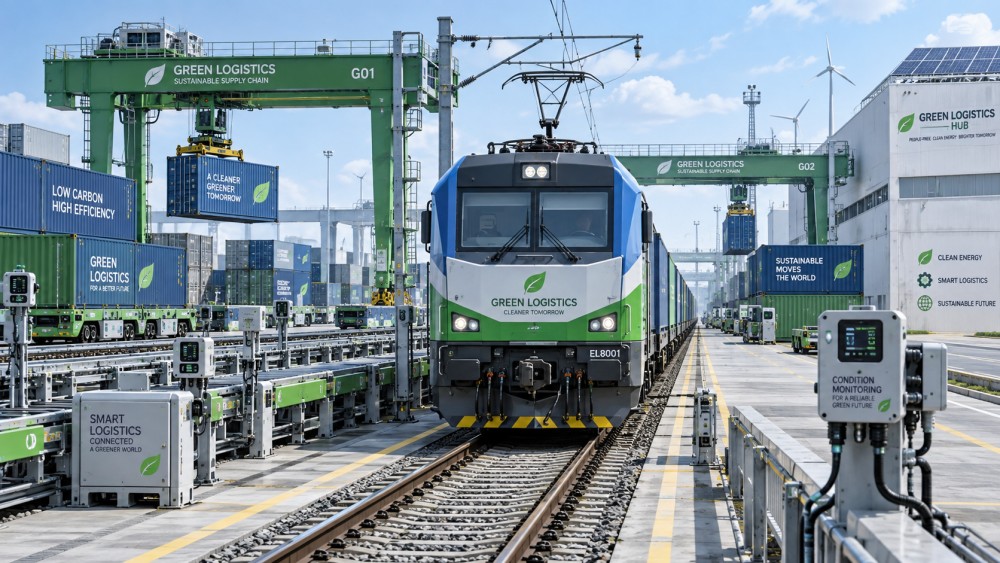
Do green transport upgrades really lower operating costs? In many cases, yes. However, the financial result depends on implementation quality, network conditions, utilization levels, and maintenance capability.
A new traction converter, automated crane, or battery-electric yard locomotive may consume less energy, yet still disappoint financially if downtime, integration delays, or underused capacity erase savings.
The most successful programs treat sustainability investments as operational redesign projects. They combine equipment upgrades with revised maintenance practices, energy management, workforce planning, and measurable performance targets.
For high-volume transport operators, the relevant question is not whether green equipment is technically efficient. It is whether it improves cost per tonne, container, passenger, train-kilometre, or handled unit.
This distinction matters because transport infrastructure operates over long asset lives. A technology that appears expensive during procurement can generate substantial value through lower failures and extended service intervals.
Where Green Upgrades Usually Produce the Largest Cost Reductions
Energy-intensive assets generally offer the clearest opportunity. Electric traction, regenerative braking, efficient motors, variable-speed drives, and automated power controls can reduce avoidable consumption across repeated operating cycles.
Railway rolling stock benefits most when routes have frequent acceleration, braking, gradients, or long annual mileage. These conditions allow energy recovery and optimized traction control to produce repeatable savings.
Urban rail systems are especially suitable for regenerative braking because trains stop frequently. Energy can be returned to nearby accelerating trains, stored locally, or reused through station power systems.
Container ports often gain from electrified rubber-tyred gantry cranes, shore power, automated stacking cranes, and optimized dispatching. These upgrades can reduce diesel use, idle time, and unproductive equipment movements.
Bulk logistics terminals can benefit from high-efficiency conveyor drives, condition monitoring, automated loading systems, and dust-control optimization. Their value often comes from continuous throughput and fewer stoppages.
In all sectors, the largest cost reductions tend to appear where equipment operates intensively. A lightly used asset may reduce emissions, but its capital recovery period can remain unacceptably long.
Energy Savings Matter, but Reliability Often Matters More
Many investment cases begin with fuel or electricity savings because these figures are visible and easy to calculate. Yet energy savings alone rarely tell the full operating-cost story.
An intelligent traction system can reduce power consumption, but its larger contribution may be avoiding overheating, wheel-slip events, component stress, and unscheduled train withdrawals during demanding service periods.
Similarly, a remotely operated port crane may reduce diesel consumption, while the bigger benefit comes from more consistent cycle times, fewer operator interruptions, and improved night-shift productivity.
Reliability improvements create financial value by protecting revenue-generating capacity. A train, crane, conveyor, or metro fleet that remains available during peak demand prevents costly bottlenecks and recovery work.
Operators should quantify the cost of disruption explicitly. This includes overtime, replacement equipment, missed slots, passenger compensation, demurrage exposure, emergency repairs, and lost handling or transport volume.
When these factors are included, green upgrades can justify themselves even where energy prices are relatively low. Operational availability is often more valuable than a modest reduction in kilowatt-hours.
How Automation Changes the Economics of Green Transport
Automation is frequently grouped with green transport because it can reduce idle running, unnecessary movements, excess power demand, and inefficient use of equipment across complex operating environments.
Its economic impact is strongest where dispatching decisions are repetitive, asset fleets are large, and delays in one process create downstream congestion across the wider transport system.
In automated container yards, centralized control can optimize crane sequencing, vehicle routing, stack positions, and charging windows. This reduces travel distance while improving throughput predictability and equipment utilization.
For urban rail, automated train operation can improve dwell-time consistency, headway management, and acceleration profiles. The result may include energy savings alongside higher line capacity and better punctuality.
Automation does not simply replace labor costs. It changes the operating model, requiring new roles in control rooms, maintenance teams, cybersecurity, data governance, and exception management.
That transition must be included in the business case. Underestimating training, systems integration, labor agreements, or contingency operations is a common reason automation returns fall below expectations.
Predictive Maintenance Can Reduce Both Cost and Carbon
Predictive maintenance is one of the most practical green upgrades because it addresses energy efficiency and asset reliability without necessarily requiring immediate replacement of major equipment fleets.
Sensors, onboard diagnostics, thermal monitoring, vibration analysis, and condition-based maintenance platforms can identify degradation before it becomes an expensive operational failure or a safety-related intervention.
For rolling stock, early detection of traction, braking, door, bearing, and HVAC faults can prevent service cancellations. It also allows maintenance teams to schedule work around fleet availability.
For port and bulk handling equipment, condition monitoring can identify gearbox wear, belt misalignment, motor inefficiency, hydraulic leaks, and structural stress before those problems interrupt throughput.
Maintenance savings arise from fewer emergency interventions, better spare-parts planning, and longer component life. Carbon benefits arise because healthy equipment generally consumes less energy and avoids premature replacement.
However, predictive maintenance only works when alerts lead to action. Operators need reliable data, defined maintenance thresholds, trained personnel, and a process for prioritizing interventions by business impact.
The Financial Test: Measure Lifecycle Cost, Not Purchase Price
Green transport projects should be assessed through total lifecycle cost. Procurement price is important, but it represents only one part of the long-term economic impact of an asset.
A robust evaluation includes capital expenditure, installation, commissioning, grid connection, software integration, training, maintenance, energy, spare parts, downtime, residual value, and expected operating life.
For electrification projects, power tariffs and demand charges deserve particular attention. Lower energy consumption can be offset when charging patterns create expensive peak-load exposure or grid upgrades.
For battery-powered equipment, planners should model battery replacement cycles, charging availability, payload effects, weather performance, and the operational consequence of charging queues during peak activity.
For regenerative braking, benefits depend on whether recovered energy can actually be used. Network receptivity, storage capacity, nearby demand, and substation design determine the practical recovery rate.
The best business cases use several scenarios: conservative, expected, and high-performance. This approach prevents a project from depending on perfect utilization, unrealistically low maintenance costs, or ideal energy prices.
What Decision-Makers Should Ask Before Approving an Upgrade
Before approving a green transport upgrade, leadership teams should first identify the operational problem. Is the priority energy cost, asset availability, labor pressure, emissions compliance, throughput, or capacity?
Projects with one clearly defined constraint are easier to justify and manage. Projects designed to solve every challenge at once often become difficult to specify, integrate, and govern.
Second, operators should establish a baseline using verified data. Fuel consumption, electricity use, breakdown frequency, maintenance hours, cycle time, idle time, and lost output should be measured consistently.
Third, the organization should test whether operational practices will change after deployment. New technology cannot deliver its full value when legacy dispatching, maintenance, or staffing processes remain unchanged.
Fourth, leaders should identify dependencies outside their direct control. These can include power supply reliability, rail network rules, charging infrastructure, software vendors, permitting, and labor availability.
Finally, success metrics should be defined before procurement. Measurable targets create accountability and allow teams to distinguish a genuine operating improvement from a technology deployment that merely looks modern.
Common Risks That Can Weaken the Expected Return
The first major risk is integration complexity. Green equipment often depends on digital platforms, charging systems, power infrastructure, signaling interfaces, or legacy control systems that require careful coordination.
The second risk is operational disruption during installation. A technically sound project can lose value when commissioning reduces capacity during critical seasonal demand or causes prolonged service interruptions.
The third risk is vendor lock-in. Proprietary software, specialized parts, and closed data systems can increase lifecycle costs if operators cannot maintain competitive sourcing or access performance information.
The fourth risk is weak data quality. Automated optimization and predictive maintenance models are only as useful as the sensor coverage, maintenance records, operating data, and governance behind them.
Another risk is treating carbon reduction as a substitute for financial analysis. Environmental benefits can support investment decisions, but they should not hide weak assumptions about uptime or utilization.
Mitigation begins with phased deployment. Pilot programs, independent performance verification, interoperable specifications, and contractual availability guarantees can reduce uncertainty before full network or terminal rollout.
Which Upgrades Fit Different Transport Operating Environments?
High-speed rail operators should prioritize traction efficiency, lightweight materials, aerodynamic improvements, condition monitoring, and regenerative braking systems that support demanding availability and safety requirements.
Freight rail operators may find the greatest value in fuel-efficient locomotives, distributed power optimization, hybrid yard operations, automated inspection, and maintenance programs that reduce unplanned wagon removals.
Urban transit agencies should examine energy recovery, automatic train operation, platform systems, efficient HVAC, and fleet analytics. Dense timetables make reliability and headway consistency especially valuable.
Container terminals should consider electrified cranes, automated stacking, remote operations, truck appointment systems, and intelligent energy management. The objective is lower idle time alongside more predictable flow.
Bulk terminals should focus on conveyor efficiency, machine health monitoring, automated reclaiming, optimized loading sequences, and power-management controls that protect continuous handling performance.
There is no universal upgrade sequence. The right choice depends on current asset age, operational pain points, energy exposure, local infrastructure, capital constraints, and expected demand growth.
Turning Sustainability Targets into Operational Value
The strongest green transport strategies connect emissions targets to everyday operating metrics. This creates a practical link between board-level commitments and the decisions made by dispatchers, engineers, and terminal managers.
For example, energy intensity can be measured per passenger-kilometre, tonne-kilometre, container move, or handled tonne. These metrics reveal whether efficiency is improving as volume changes.
Availability, mean time between failures, maintenance cost per operating hour, and energy recovered per braking event can provide a more complete picture of upgrade performance over time.
Leadership should review these metrics regularly after deployment, not just during investment approval. Benefits often emerge gradually as teams learn to use data and refine operating procedures.
TC-Insight’s coverage of rail systems, urban transit, port automation, and bulk handling shows that leading operators increasingly combine engineering upgrades with intelligence-driven lifecycle management.
This approach recognizes that green transport is not a single technology category. It is a disciplined way to improve energy use, reliability, capacity, safety, and long-term asset economics together.
Conclusion: Green Upgrades Pay When They Improve the Whole Operation
Green transport upgrades can genuinely lower operating costs, especially in energy-intensive, high-utilization environments. However, savings are most dependable when they extend beyond fuel or electricity consumption.
Electrification, automation, intelligent traction, regenerative braking, and predictive maintenance create their strongest returns through improved availability, reduced disruption, longer asset life, and better capacity utilization.
Decision-makers should evaluate each project through lifecycle cost, realistic operating scenarios, and verified baseline data. They should also account for integration, workforce, infrastructure, and vendor-management risks.
The practical conclusion is clear: sustainability investments are commercially valuable when they solve a defined operational constraint and deliver measurable performance improvements across the transport value chain.