
How Should Transit Technology Be Maintained After Vendor Handover?





How Should Transit Technology Be Maintained After Vendor Handover?
How do we maintain transit technology after vendor handover? It is a question that often appears late in a project, sometimes only when the original supplier’s support window is ending or a proprietary remote-access connection is due to be disabled. By then, the issue is no longer theoretical. A train may still be running safely, a metro platform screen door may still be opening, and a port crane may still be moving containers—but the operator may not yet have the information, access rights, diagnostic tools, or trained people needed to solve the next serious fault independently.
For mainline railways, urban rail systems, high-speed fleets, container terminals, and bulk-material facilities, handover is not the transfer of a machine. It is the transfer of operational responsibility for a living technical system. Software versions change. Components become obsolete. Cyber threats evolve. Traffic patterns put unexpected stress on equipment. A maintenance strategy that looks complete in a contract appendix can prove thin when an intermittent traction fault appears during peak service or an automated stacking crane loses its interface with the terminal operating system.
The strongest post-handover arrangements treat maintenance as a combination of engineering ownership, information control, operational discipline, and lifecycle decision-making. Manuals and spare parts are necessary. They are not enough.
Vendor Handover Is Not the Same as Operational Readiness
A vendor can formally complete delivery while the owner is still dependent on that vendor for fault interpretation, configuration changes, software recovery, or safety-critical troubleshooting. This gap is especially common in integrated systems. A rolling-stock maintainer may understand mechanical inspections but have limited visibility into traction-control software. A metro operator may own the signalling assets but rely on an external party to decode event logs. In a port, the crane team may maintain hoists and spreaders confidently while automation failures sit between crane controls, wireless networks, positioning systems, and terminal software.
The practical test is simple: if a critical component fails at 02:00, can the operating organization identify the fault boundary, access the correct technical evidence, make the asset safe, restore service within its approved procedures, and decide when specialist escalation is necessary? If the answer is “only if the former vendor responds,” handover remains incomplete.
This does not mean every operator must become an original equipment manufacturer. That is rarely efficient. It means the operator must retain enough technical authority to manage suppliers, challenge recommendations, preserve safe operation, and prevent a single commercial relationship from becoming an uncontrolled operational dependency.
Start with a Maintainable Asset Baseline
The first maintenance task after handover is often administrative, but it has direct consequences in the field: establish a trusted asset baseline. This should connect each physical asset to its actual configuration, maintenance history, interface dependencies, and supporting documents. In practice, this is harder than it sounds because “as-designed,” “as-built,” and “as-operated” information may already differ.
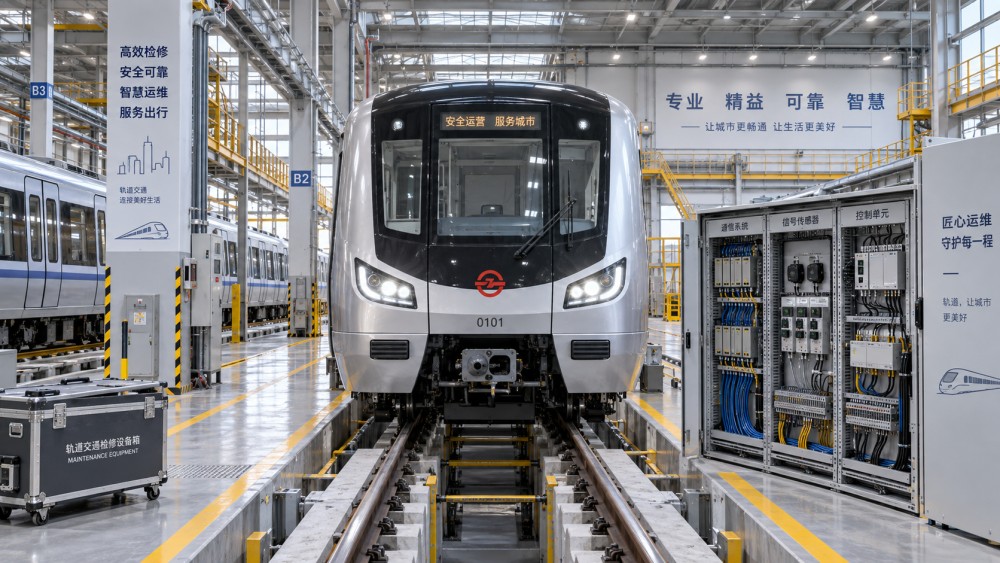
For a train fleet, the baseline should distinguish vehicle numbers, traction converter revisions, brake-system variants, onboard network architecture, approved software releases, and any modifications introduced during commissioning. For a GoA4 metro, it must go further: platform equipment, onboard systems, zone controllers, communications links, supervisory systems, and degraded-mode procedures all need a traceable relationship. In bulk handling, a conveyor drive, programmable controller, condition-monitoring sensor, and emergency-stop circuit cannot be maintained as unrelated items if their failure logic is interdependent.
A document room full of PDFs is not an asset baseline. The useful record answers field questions quickly: Which version is installed? Who approved it? What else does it affect? What maintenance action is permitted? Where is the latest recovery procedure? If these answers require several emails and a former project manager’s memory, the record is not operationally mature.
At minimum, the owner should secure controlled copies of drawings, cable schedules, interface-control documents, software inventories, configuration records, test evidence, fault codes, maintenance instructions, parts lists, tooling requirements, and known-issue registers. Licensing conditions, source-code escrow arrangements where applicable, and rights to use diagnostic software deserve particular attention. A laptop with a vendor-installed tool and an unknown password is not a sustainable support model.
Compare the Three Realistic Maintenance Models
There is no universally correct post-handover model. The right choice depends on asset criticality, installed-base size, local skill availability, spare-part exposure, contractual rights, and the consequences of downtime. The mistake is to select a model purely by annual service cost.
Vendor-led maintenance can make sense for a limited period after commissioning, particularly where diagnostics are highly proprietary or the system is still accumulating reliability evidence. But it should include structured knowledge transfer, not merely a helpdesk. If every recurring fault is solved remotely by the vendor without a local root-cause record, the organization is paying for support while postponing capability.
Full in-house maintenance provides control, but only where the operator can sustain it. This involves more than hiring technicians. It requires engineering governance, access to technical updates, calibrated tools, repair processes, supplier qualification, and a credible plan for rare but severe failures. A depot may be excellent at routine inspection yet unprepared for a converter-control anomaly that appears once a year under a particular voltage or temperature condition.
Hybrid support is often the most workable option. Local teams handle preventive work, first-line diagnosis, standard corrective actions, and operational recovery. Specialist partners support major software changes, complex electronic repairs, safety validation, or events that cross system boundaries. The contract must define those boundaries before the first dispute. “Automation fault” is not a useful responsibility category when the underlying cause could sit in a crane controller, radio network, positioning sensor, database interface, or operating procedure.
Keep Knowledge in the Workflow, Not Only in Training Slides
Training is frequently treated as a handover deliverable: a course is delivered, attendance is recorded, and the project closes. That approach fades quickly under shift patterns, staff turnover, and changing software releases. The better approach places knowledge inside the maintenance workflow.
Technicians need fault trees that reflect the actual installed configuration, not a generic product family. Control-room staff need clear thresholds for when a reset is acceptable, when an asset must be isolated, and when an incident needs engineering review. Engineers need access to historical event data and previous corrective actions, including repairs that did not work. This last point is often overlooked. Failed troubleshooting attempts are valuable evidence, especially in intermittent signalling, communications, and automation faults.
Cross-functional exercises are worth more than another broad presentation. A simulated loss of onboard-to-wayside communication, a traction-system derating event, or a crane remote-control interruption can reveal where procedures are ambiguous. These sessions should include operations, maintenance, cybersecurity, safety, and any external support partner. The technical fault may be narrow; the operational effect rarely is.
Treat Cybersecurity and Remote Access as Maintenance Issues
Modern transit assets are maintained through connected tools: remote diagnostics, condition-monitoring platforms, depot Wi-Fi, onboard networks, industrial controllers, cloud-hosted reporting, and supplier portals. After vendor handover, old accounts, remote tunnels, shared credentials, and unmanaged laptops can become a bigger operational risk than a worn mechanical component.
The owner should know exactly who can connect, from where, for what purpose, and how access is recorded. Remote access should be approved, time-bounded where practical, and removable when support responsibilities change. Equally important, recovery arrangements must be tested. If a software update fails, can the organization restore a known-good configuration without relying on a person who has left the vendor or the project?
Cybersecurity cannot be isolated from availability. A security team may reasonably want rapid patching, while operations may be unable to accept an untested update before morning peak. That tension needs a formal change process: risk assessment, test environment where feasible, rollback planning, operational approval, and evidence that the deployed version is the intended version. The precise requirements will depend on the asset, local regulations, contractual obligations, and applicable rail or industrial-control standards.
Move from Calendar Maintenance to Evidence-Based Decisions
Time-based maintenance remains essential for many safety-critical inspections and wear components. It should not be discarded simply because an asset is connected. Yet fixed intervals alone can be a blunt instrument for high-value equipment operating under variable loads and conditions. A freight locomotive working demanding gradients, a metro fleet facing dense stop-start cycles, and a ship-to-shore crane operating in corrosive coastal air do not age in the same way.
The useful question is not whether to “use predictive maintenance,” but whether available data changes a maintenance decision. Vibration trends may help prioritize bearing inspections. Repeated traction alarms may point to a connector, cooling issue, or control-software interaction. Crane cycle data can expose an emerging pattern before it becomes a terminal-wide disruption. If data only produces dashboards with no defined action owner, it is reporting rather than maintenance intelligence.
A disciplined reliability review should separate symptoms from causes. High failure counts do not automatically justify replacing a component family. The issue may be environmental exposure, installation quality, operating practice, a poor repair loop, or an interface problem. This is where a broader intelligence view helps. Platforms such as TC-Insight are useful not because they replace site engineering, but because they connect equipment developments across rolling stock, urban transit, port automation, and bulk logistics. A local failure still requires local evidence; external market and technology insight can help an operator ask better questions about obsolescence, control architecture, energy use, and maintainability.
Obsolescence Planning Should Begin Before Parts Become Unavailable
Post-handover maintenance usually becomes difficult in stages. At first, a part has a longer lead time. Then a repair centre stops supporting a board or module. Later, an operating system, communication protocol, or sensor family becomes difficult to secure. Waiting for a formal end-of-support notice is risky because qualification, testing, procurement, and deployment can take far longer than expected.
A sensible lifecycle plan ranks assets by operational consequence and technical exposure. For each critical item, identify the single-source components, repairable versus disposable units, remaining stock, alternative suppliers, software dependencies, and qualification constraints. This is not a call to stockpile everything. Excess inventory can expire, degrade, or tie up capital. The aim is to understand which shortages can stop service and which can be managed through repair capability, redesign, fleet rotation, or planned replacement.
Interface equipment deserves special attention. In high-speed EMU integration, urban signalling, and automated ports, a relatively modest communications device or controller can immobilise a much larger asset. These “small” components often create disproportionate risk because their role is hidden inside a wider system.
Measure the Handover by Decision Quality
Availability figures matter, but they do not tell the whole story. A system can appear available because teams are repeatedly resetting faults, borrowing parts, or accepting degraded operation without resolving the underlying condition. After vendor handover, maintenance leaders should also watch repeat failures, mean time to diagnose, time spent waiting for technical information, emergency purchasing, overdue configuration updates, unresolved safety actions, and the percentage of incidents closed with a verified root cause.
The clearest sign of a healthy transition is not that the vendor is never called. It is that the owner knows when to call, arrives with reliable evidence, and can evaluate the advice received. In high-volume transportation, that level of control protects more than equipment uptime. It protects safe service, operational confidence, and the long working life expected from assets that sit at the centre of rail networks, city mobility, ports, and industrial supply chains.
Related News
Related News
- 00
0000-00
How rail logistics in the Middle East is reshaping freight corridor capacity - 00
0000-00
What railway rolling stock market analysis reveals about fleet demand - 00
0000-00
How axle load limits shape mainline railway freight capacity - 00
0000-00
How to match ship loaders to bulk terminal throughput targets - 00
0000-00
How high speed rail system standards shape CBTC interoperability
Weekly Insights
Stay ahead with our curated technology reports delivered every Monday.