
Container Automation Roadmap: From Manual Yard Moves to Integrated Control





Container automation succeeds when it is treated as an operating-model change, not an equipment purchase. Replacing a manual yard tractor with an automated guided vehicle, or adding remote crane control, may remove a visible bottleneck. It will not create a predictable terminal unless work instructions, equipment states, safety rules, and exception handling all operate from the same control logic.
For a project leader, the practical question is not “How automated should the terminal become?” It is: which container moves should be automated first, what operating conditions must be stable, and how will each system make decisions when the plan breaks down? A useful container automation roadmap moves from controlled, repeatable tasks toward integrated control across the yard, quay, gate, maintenance, and terminal operating system.
Start with the yard problem, not the automation label
Manual yard operations often appear flexible because experienced drivers, crane operators, and dispatchers can resolve disruptions informally. That flexibility has a cost. Each handoff can depend on radio calls, local knowledge, paper notes, or an operator’s judgment of which move should happen next. As vessel schedules tighten or yard density rises, those informal decisions become difficult to coordinate.
Before defining a technology scope, map the container journey that causes the most operational friction. This may be the handoff from quay crane to yard, rehandles caused by poor stacking decisions, truck turnaround at the gate, or the recovery process after a machine fault. The objective is to identify where variability is created, not merely where labor is visible.
A terminal with highly variable vessel calls, mixed cargo rules, inconsistent data capture, and frequent layout changes may not be ready for broad automation. It may still benefit from targeted improvements: better equipment dispatching, OCR-supported gate processes, position verification, remote operation for selected cranes, or a standardized exception workflow. These changes can establish the operating discipline required for later automation.
By contrast, a terminal with recurring flows, defined work zones, stable container identification, and clear traffic separation is a better candidate for automated horizontal transport or automated stacking. Repeatability matters because automated equipment depends on reliable inputs and controlled physical conditions. It cannot compensate indefinitely for unclear move orders or unrecorded yard changes.
Build the roadmap around operational maturity
A staged programme reduces delivery risk because each stage proves a specific capability before the next dependency is introduced. The stages do not need to be identical across terminals, but the sequence should respect how container decisions are made in practice.
1. Make the current operation observable
The first deliverable is a dependable operational picture. The terminal operating system should reflect container location, status, planned move, equipment assignment, and relevant holds with sufficient accuracy for dispatch decisions. Field data must also be trustworthy: container identification, vehicle position, crane spreader status, and access-zone occupancy need a consistent source of truth.
This is often the least dramatic part of a container automation project, but it is where many programmes gain or lose credibility. If the system says a box is in one slot while the field team knows it is elsewhere, automation will simply execute incorrect instructions more quickly. Reconcile data processes before introducing autonomous movement. Define who corrects a mismatch, how the correction is logged, and when work is allowed to continue.
Operational visibility should include downtime and exception categories, not just completed moves. A useful control room can distinguish a planned wait from a vehicle obstruction, a communication loss, a misdeclared container, or a crane unable to complete a lift. Without this distinction, the project team cannot tell whether lost productivity comes from equipment, process design, or data quality.
2. Standardize the work before automating it
Automation requires explicit rules for situations that manual teams may handle by convention. Define lane priority, buffer capacity, safe separation, job cancellation, traffic recovery, handover points, and degraded-mode procedures. The right question is not whether a rule exists in a procedure manual; it is whether the operational systems and people can apply it consistently during a busy shift.
At this stage, review the yard layout with the workflow rather than the drawing alone. Automated equipment needs known travel paths, predictable transfer points, protected maintenance access, reliable markings or navigation references, and physical separation from people and conventional vehicles where required. A layout that works for manually driven traffic may create too many ambiguous interactions for automated vehicles.
Standardization also includes container classes. Empty units, out-of-gauge cargo, damaged containers, reefers, dangerous goods, inspection holds, and customs interventions can require different handling logic. An automation scope that assumes all containers are interchangeable will generate expensive exceptions after go-live. It is usually better to specify which container flows are included in each phase and retain a controlled manual path for excluded flows.
3. Introduce automation where the task boundary is clear
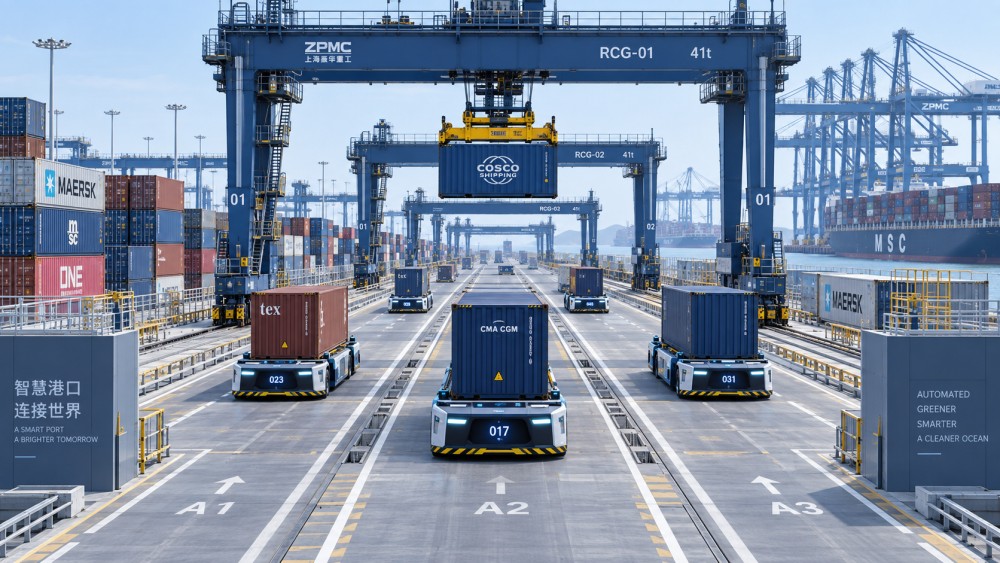
The strongest early candidates are repetitive moves with defined start and end points. Examples include automated transfer between quay-side buffers and a yard block, automated stacking within a dedicated block, or remotely controlled crane operations where the lifting environment can be monitored from a central station.
The equipment choice should follow the operating concept. Automated guided vehicles, autonomous terminal tractors, automated rail-mounted gantry cranes, automated rubber-tired gantry cranes, and remote-controlled ship-to-shore cranes solve different problems. They should not be compared as interchangeable products.
The main procurement error is buying equipment based on a headline capability while leaving interfaces undefined. A vehicle can navigate accurately yet wait unproductively if crane availability, job sequencing, and traffic permissions are not coordinated. A crane can be technically automated but still require frequent operator intervention if the truck handoff zone is poorly designed. Specify the end-to-end move, including empty travel, waiting rules, failed handoffs, and recovery.
Integrated control is the point where separate systems become one operation
Once several automated assets are active, integration becomes the central engineering task. The terminal operating system normally holds the commercial and planning context: vessel plan, yard allocation, truck appointment, holds, and container move orders. Equipment control and fleet-management layers convert those decisions into executable jobs, route vehicles, sequence cranes, and enforce local safety conditions. Sensors, cameras, positioning systems, and machine controls provide the field state that confirms whether work has actually occurred.
These layers need clearly defined authority. For example, the terminal operating system may decide that a container must move to a specific block, while the equipment layer decides which available vehicle and crane can complete that work safely and efficiently. Problems arise when two systems attempt to optimize the same decision, or when neither system owns exception resolution.
Document interface behavior in operational terms, not only message formats. The project should establish answers to questions such as:
- What happens when a container is not present at its expected handoff point?
- Which system can cancel or reprioritize a job after vessel operations change?
- How is a failed automated move returned to the work queue?
- When a vehicle enters a restricted area, who receives the alarm and who has authority to release it?
- What continues to operate during a network interruption, and what must stop safely?
These questions are not edge cases. In an integrated yard, exception management is part of normal production. A realistic design measures recovery quality, not only the nominal performance of equipment under ideal conditions.
Design safety and degraded operations as production requirements
Safety systems must be designed with actual maintenance, inspection, and recovery work in mind. People will enter controlled areas to clear obstructions, inspect loads, service machinery, and respond to faults. Access control, lockout procedures, route restrictions, alarms, and visual confirmation must work together so that the system recognizes both planned entry and unexpected presence.
Remote and automated operation also changes the human role. Operators move from direct equipment control toward supervision, intervention, and recovery. Dispatchers may manage a larger fleet but need clearer information about queue conditions and system constraints. Maintenance teams require diagnostic access and a structured way to return equipment to service. Training should use the actual failure modes expected in the terminal, including degraded communications, sensor faults, failed container identification, and blocked transfer zones.
Do not assume that manual fallback means “continue as before.” A partially automated yard may have different traffic patterns, protected zones, and control permissions. The fallback process must be rehearsed, staffed, and designed into the layout. Otherwise, a temporary manual intervention can create the greatest safety and productivity risk in the operation.
Commission in operational slices, not one large switch-over
Large-scale cutovers are attractive on presentation slides because they offer a clean future-state date. In live terminal operations, they concentrate technical, operational, and commercial risk into one event. A more resilient approach is to commission defined operational slices: one block, a limited vehicle fleet, a specific interface, a restricted time window, or a selected move type.
Each slice should have entry criteria and acceptance criteria that reflect real work. Before expanding scope, verify that job completion is traceable, exceptions are recoverable, operators can intervene without confusion, and maintenance can support the equipment within the operating rhythm. The target is not a demonstration of autonomous motion. It is a repeatable service level under normal variability.
Parallel operation needs strict boundaries. If manual and automated equipment share space, define right-of-way, release conditions, radio or digital authorization, and responsibility at every handoff. Leaving these rules to shift-by-shift interpretation produces inconsistent behavior and makes root-cause analysis difficult.
Measure the system by flow reliability
Move counts alone can hide a fragile operation. A project governance dashboard should connect technical performance to operational outcomes: job cycle consistency, queue duration, rehandle frequency, unplanned interventions, equipment availability, failed handoffs, and time required to recover from an exception. The useful measures depend on the terminal’s constraints, but they should reveal where flow is being lost.
It is also important to separate controllable delay from external disruption. A late vessel, weather restriction, customs hold, or upstream truck congestion may affect output without indicating an automation fault. Conversely, repeated delays caused by poor job sequencing or unreliable location data should not be dismissed as normal terminal variability. This distinction supports better decisions on software tuning, layout changes, spare-parts strategy, and additional equipment.
TC-Insight’s coverage of container port cranes and terminal automation is particularly relevant at this stage because equipment decisions cannot be separated from wider logistics-node performance. A crane, vehicle fleet, or control platform should be assessed as part of the terminal flow it supports, including its interaction with landside demand and supply-chain timing.
Questions to settle before approving the next phase
Before expanding container automation, project leaders should be able to state the operational boundary in plain language: which moves are automated, which remain manual, where responsibility transfers, and how exceptions return to control. They should also confirm that data ownership is clear, layout constraints have been tested in the field, and the maintenance model is ready for sustained operation rather than initial commissioning.
The next phase is justified when it removes a known constraint without creating an unmanageable interface burden. It is not justified merely because another terminal uses a more automated configuration. The right roadmap reflects local vessel patterns, yard geometry, labor model, existing systems, cargo mix, and the terminal’s ability to operate safely when conditions are imperfect. Integrated control becomes valuable when it makes those conditions more predictable, visible, and recoverable across the entire yard.
Related News
Related News
- 00
0000-00
Freight railway technology insights for reducing unplanned downtime - 00
0000-00
How rail logistics in the Middle East is reshaping freight corridor capacity - 00
0000-00
What railway rolling stock market analysis reveals about fleet demand - 00
0000-00
How axle load limits shape mainline railway freight capacity - 00
0000-00
How to match ship loaders to bulk terminal throughput targets
Weekly Insights
Stay ahead with our curated technology reports delivered every Monday.