
What drives bulk transport costs in the Middle East?





For business evaluation teams, the main answer is straightforward: bulk transport costs in the Middle East are driven less by distance alone and more by corridor choice, fuel exposure, port and terminal charges, asset utilization, and the reliability of border and inland connections. A route that looks short on a map can still be expensive if it depends on congested ports, limited rail access, or heavy transshipment. The most useful way to assess cost is to compare total delivered cost, not just freight rate.
What actually drives bulk transport costs in the Middle East?
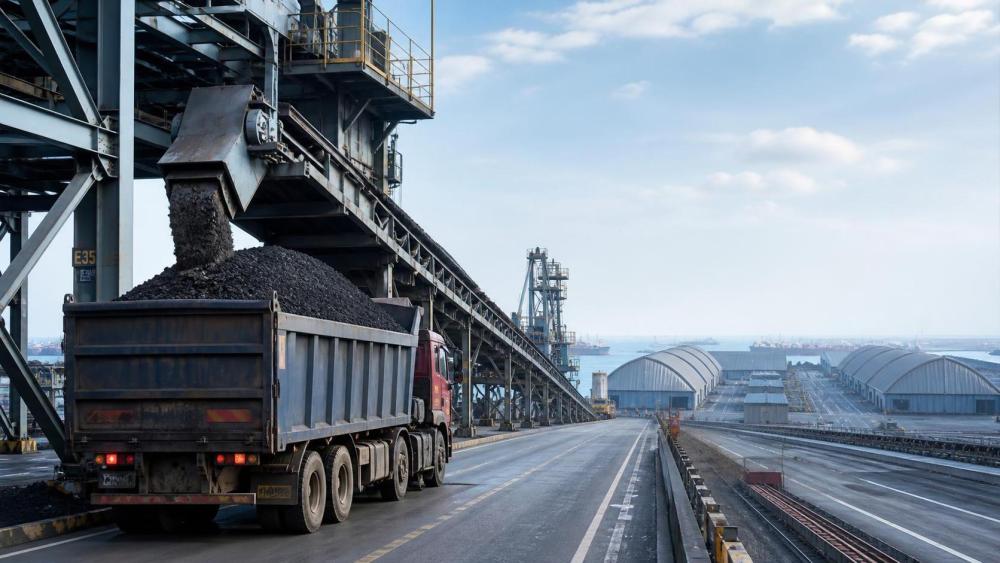 Bulk transport Middle East pricing is shaped by a layered cost structure. Fuel, handling, infrastructure access, equipment cycle time, and regulation all interact. In many cases, the largest cost swing comes from operations, not line-haul distance.
For dry bulk and liquid bulk alike, the region’s economics are tied to how efficiently material moves from mine, plant, or import terminal to export port, industrial user, or inland distribution point. Business teams should evaluate each link, not only the contracted transport rate.
Fuel is often the most visible variable, especially for road haulage. But in practice, port waiting time, terminal productivity, and equipment idle periods can be equally important. When assets sit still, the cost per ton rises quickly.
Why fuel and energy exposure matter so much
Fuel remains a core driver because road transport still carries a large share of bulk volumes across the region. Even when fuel prices are regulated or partially subsidized, volatility in diesel, lubricants, and power usage affects carrier pricing and operating margins.
Energy cost also extends beyond trucks. Conveyors, loaders, pumps, stackers, cranes, and rail yards all consume power. In high-volume operations, small inefficiencies in electricity use or equipment scheduling can materially change the landed cost per ton.
For evaluation teams, the key question is not whether fuel is high or low in a given month. It is how exposed the corridor is to fuel-linked pricing, how often contracts reset, and whether operators can absorb swings without passing them through immediately.
How ports and terminals change the cost base
Port handling fees, storage charges, and vessel turnaround time often create more cost pressure than the inland move itself. In bulk logistics, terminal productivity is a direct financial variable, not just an operational metric.
Where berth availability is limited or scheduling is uneven, ships and trucks queue longer. That waiting time increases demurrage, labor overtime, yard congestion, and equipment wear. The result is a cost stack that expands well beyond the published handling tariff.
Automated bulk terminals, better conveyor integration, and remote-controlled equipment can reduce these costs, but only when utilization is high enough to justify the investment. Low-volume lanes may not recover the capex through savings alone.
What role do rail and road connections play?
Connectivity is often the decisive factor in bulk transport Middle East economics. Corridors with direct rail access can lower cost per ton by reducing truck dependency, improving predictability, and increasing payload consistency. Corridors without rail usually rely on longer road legs and more transshipment.
Road transport offers flexibility, but that flexibility comes at a price. It is more sensitive to congestion, driver availability, axle-load enforcement, and border delays. These variables make cost forecasting harder and can increase the risk of missed delivery windows.
Rail becomes more attractive when volumes are steady, distances are long, and turnaround discipline is strong. For business assessment, the right comparison is usually not rail versus truck in isolation, but which network delivers the lowest total cost with acceptable service reliability.
Why asset utilization changes the economics
Bulk logistics is capital intensive. Trucks, wagons, loaders, silos, and cranes all have high fixed costs, so underused assets push up unit costs quickly. A fleet that runs below expected cycle time can appear cheap on paper and expensive in practice.
Utilization depends on more than equipment count. It also reflects dispatch accuracy, maintenance planning, loading speed, and return-load availability. When any one of these weakens, the entire cost curve rises because fixed costs are spread over fewer tons.
For management teams, utilization is one of the clearest levers to model. A corridor with slightly higher tariff rates can still win if it delivers higher throughput, fewer empty returns, and better asset rotation.
How regulation and border procedures affect total cost
Customs rules, documentation standards, axle limits, safety checks, and permit requirements all influence bulk freight cost. In the Middle East, these rules can vary across national boundaries and between free zones, industrial zones, and inland transport corridors.
Regulatory friction rarely appears as a single fee. It shows up through delays, rework, extra inspections, and the need for local intermediaries. Those hidden costs are often missed in early-stage financial models and later reduce the expected margin.
Business evaluation teams should test corridor risk under realistic compliance assumptions. If one route depends on frequent permit renewals or fragile border coordination, the nominal freight rate may underestimate the real operating burden.
Which bulk types are most sensitive to cost swings?
Different bulk categories respond to different drivers. Coal, ore, cement, grain, fertilizers, and liquid commodities each have their own handling profile, sensitivity to contamination, and storage requirements. Those differences change terminal design and transport cost.
High-density mineral cargoes often favor rail and dedicated port infrastructure because of scale. Agricultural bulk may be more sensitive to moisture control, silo access, and seasonal demand peaks. Liquid bulk depends more on pumping efficiency, safety systems, and tank availability.
The practical takeaway is that a corridor should never be judged only by geography. The cargo profile determines how much cost comes from handling, equipment loss, waiting time, and inventory risk.
How should business teams evaluate a corridor?
Start with delivered cost per ton, then break it into fuel, handling, storage, labor, equipment, compliance, and delay exposure. That gives a clearer view than a single freight quotation, which may hide major downstream charges.
Next, test volume stability. A route that works well at peak throughput may become inefficient at low utilization. Conversely, a corridor with modest headline pricing can outperform if it supports stable flows and predictable asset cycles.
It is also worth comparing resilience. Can the route absorb port congestion, weather disruption, or border slowdowns without severe cost escalation? For many operators, resilience is a financial feature, not just a service feature.
Where the biggest savings usually come from
In most cases, the largest savings come from reducing idle time, improving load factor, and removing unnecessary transshipment. Better scheduling and tighter coordination often produce faster gains than renegotiating transport rates alone.
Automation at terminals, digitized dispatch, and integrated rail-port planning can also lower cost, especially on high-volume corridors. But the investment case should be tied to throughput, not technology enthusiasm. The system must earn its keep.
Companies should also review contract structure. Index-linked fuel clauses, demurrage terms, and performance incentives can either contain risk or magnify it. The wrong contract can erase much of the operational efficiency a corridor otherwise offers.
What should decision makers conclude?
Bulk transport costs in the Middle East are not driven by one factor. They are shaped by the interaction of fuel exposure, port handling, corridor connectivity, utilization, regulation, and the cargo’s own operational requirements. That is why simple rate comparisons are usually misleading.
For business evaluation teams, the strongest approach is to compare full corridor economics under realistic operating conditions. The best route is not always the shortest or cheapest on paper. It is the one that delivers reliable throughput, controlled variability, and the lowest total cost over time.
In that sense, bulk transport Middle East strategy is a logistics decision and a capital decision at the same time. Teams that model both will usually make better investment calls, reduce avoidable cost, and build a more resilient supply chain.
Related News
Related News
- 00
0000-00
What railway rolling stock market analysis reveals about fleet demand - 00
0000-00
How axle load limits shape mainline railway freight capacity - 00
0000-00
How to match ship loaders to bulk terminal throughput targets - 00
0000-00
How high speed rail system standards shape CBTC interoperability - 00
0000-00
How a rail network planning dashboard improves capacity decisions
Weekly Insights
Stay ahead with our curated technology reports delivered every Monday.