
Cross-Border Industrial Logistics: Managing Customs Risk, Capacity, and Delivery Reliability





Cross-border industrial logistics succeeds when freight moves predictably through regulatory, infrastructure, and operational constraints without creating avoidable cost, delay, or customer disruption.
For business evaluators, the central question is not simply whether a provider can transport cargo internationally, but whether its operating model remains reliable under pressure.
Customs exposure, equipment availability, port congestion, rail network capacity, and last-mile coordination can each turn a low-cost route into an expensive supply-chain failure.
A sound assessment therefore connects logistics performance with commercial impact: inventory risk, working capital, production continuity, contract compliance, and long-term asset utilization.
Start With the Total Risk Profile, Not the Freight Rate
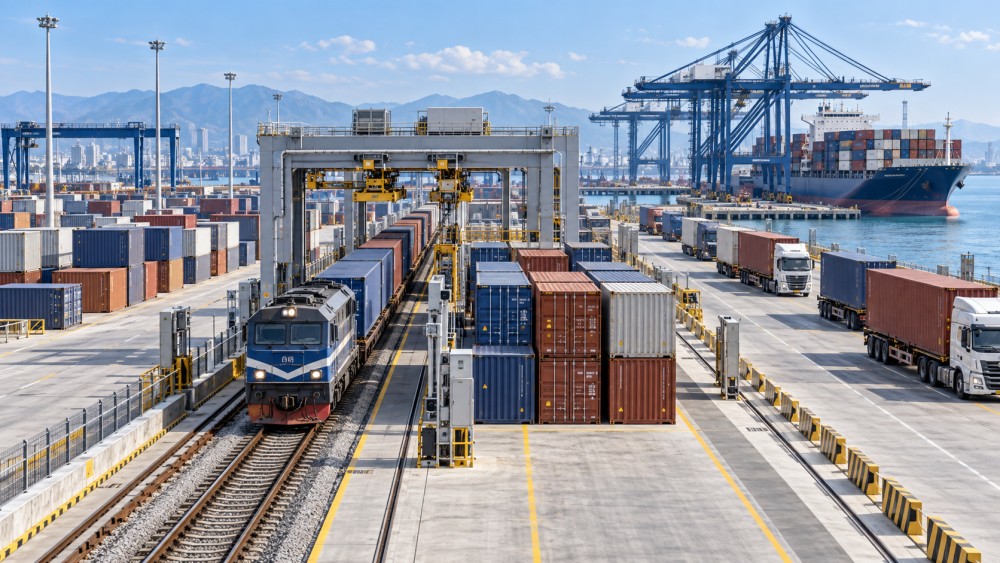
Cross-border industrial logistics should be evaluated as a controlled system rather than a collection of separate transport bookings, customs filings, and terminal handovers.
A quoted freight rate may appear competitive while concealing exposure to demurrage, storage, border delays, emergency trucking, cargo damage, or missed production windows.
Business evaluators should begin by mapping each shipment’s critical path from supplier release through border clearance, terminal transfer, inland movement, and final delivery.
This mapping identifies where a single delayed document, unavailable wagon, crane outage, or capacity restriction could affect plant operations or customer commitments.
Industrial cargo is especially sensitive because loads may be oversized, project-specific, hazardous, high-value, temperature-sensitive, or required for continuous manufacturing processes.
The appropriate decision standard is therefore total landed reliability, combining direct transport cost with the probability and financial consequence of operational disruption.
Providers should demonstrate how they manage exceptions, not merely describe their nominal transit times, network coverage, or international partner relationships.
A mature logistics organization can explain ownership at every handover, escalation procedures, alternative routing options, and the evidence used to measure service recovery.
Assess Customs Risk Before It Becomes a Delivery Failure
Customs risk is often underestimated because clearance appears administrative, although classification, origin, valuation, licensing, and documentation directly determine cargo release timing.
For industrial shipments, product descriptions must be technically accurate enough to support tariff classification without creating inconsistencies across invoices, declarations, and certificates.
Incorrect commodity codes can create duty underpayments, penalties, shipment holds, post-entry audits, and commercial disputes when delivery schedules depend on immediate release.
Evaluators should examine whether the logistics partner has a documented governance process for tariff classification, origin analysis, restricted-party screening, and record retention.
That process should distinguish between routine repeat shipments and complex equipment movements requiring engineering specifications, export-control review, or temporary-import arrangements.
Country-of-origin rules deserve particular scrutiny where components cross multiple borders before final assembly, especially under preferential trade agreements or anti-dumping regimes.
A credible provider maintains current regulatory intelligence and translates changes into operational instructions before affected cargo reaches the border or port gate.
Key evidence includes customs error rates, average release time, inspection frequency, broker performance reviews, audit outcomes, and the value of duty savings captured legally.
Build Capacity Resilience Across Rail, Port, and Road Interfaces
Capacity planning in cross-border industrial logistics cannot rely solely on annual volume forecasts because industrial supply chains face seasonal peaks, project surges, and disruption-driven rerouting.
Rail corridors, container terminals, border crossings, inland depots, and specialized trucking fleets each have different bottlenecks, booking cycles, and recovery capabilities.
Business evaluators should test whether committed capacity is contractual, indicative, or merely dependent on normal market conditions and carrier goodwill.
This distinction matters most for heavy machinery, bulk materials, rail equipment, and oversized loads that cannot be shifted easily to standard alternatives.
For rail-based flows, assess wagon availability, locomotive access, interchange reliability, terminal slot allocation, loading limits, and cross-border gauge or traction constraints.
For port-linked flows, evaluate crane productivity, yard dwell time, berth congestion, empty-container positioning, gate appointment performance, and customs inspection space.
Effective providers maintain route alternatives that are operationally validated, including substitute terminals, border crossings, inland hubs, carriers, and approved multimodal connections.
Capacity resilience also requires realistic contingency budgets, since an alternative route is commercially irrelevant when its premium cost cannot be authorized quickly.
Measure Delivery Reliability at the Handover Points
Delivery reliability should be measured across the full chain because an on-time vessel departure does not compensate for late terminal release or failed inland coordination.
The most useful performance metric is often delivery against the customer-required date, supported by milestone accuracy rather than a single end-to-end transit average.
Critical milestones may include factory pickup, export clearance, terminal receipt, loading completion, border arrival, import release, rail departure, and consignee delivery.
Each milestone should have an agreed owner, timestamp source, target tolerance, and documented escalation path when planned execution begins to deviate.
Evaluators should ask how often the provider updates estimated arrival times after disruption, since outdated forecasts can be as damaging as the delay itself.
Reliable forecasting enables manufacturers to adjust production sequencing, communicate with customers, reserve labor, and avoid emergency procurement or inventory stockouts.
Equipment reliability is equally important in industrial logistics, particularly where automated cranes, reach stackers, bulk conveyors, or rail handling systems determine throughput.
Maintenance records, unplanned downtime rates, spare-parts strategies, and operator response procedures reveal whether terminal productivity claims are likely to hold during peak demand.
Use Commercial Metrics That Connect Operations to Value
Business evaluation should convert logistics performance into financial terms, allowing procurement, operations, finance, and executive teams to compare options using shared priorities.
Total cost should include freight, duties, brokerage, insurance, terminal handling, detention, demurrage, storage, compliance administration, and expected disruption expense.
Expected disruption expense can be estimated by combining delay probability with consequences such as line stoppage, lost sales, expedited transport, and contractual penalties.
This approach prevents apparently inexpensive providers from winning decisions through narrow pricing structures that transfer risk to the shipper’s operations team.
Working-capital impact also matters when extended or volatile transit times increase inventory buffers, delay asset commissioning, or postpone revenue recognition for delivered equipment.
For capital projects, reliability should be evaluated against commissioning milestones because a missing component can delay installation of an entire integrated system.
Useful scorecards balance cost, customs compliance, capacity assurance, delivery accuracy, visibility quality, sustainability performance, and recovery effectiveness during major exceptions.
Weightings should reflect the shipment’s business criticality, since routine consumables and production-critical traction components require fundamentally different service standards.
Demand Visibility That Supports Decisions, Not Just Tracking
Digital visibility is valuable only when it provides reliable operational signals that enable earlier intervention, clearer accountability, and better decisions across international logistics networks.
A tracking portal showing a generic shipment status is insufficient when users need to understand clearance blockers, capacity constraints, dwell risk, and recovery actions.
Evaluators should look for milestone-level data integration across customs brokers, carriers, rail operators, terminals, warehouses, and final-mile transport providers.
Data quality depends on common definitions, timely event capture, and disciplined exception management rather than the visual sophistication of a dashboard.
For example, “arrived at terminal” should indicate whether cargo is gated in, available for loading, subject to inspection, or waiting for missing documentation.
Operational dashboards should separate confirmed events from predicted events, making it clear when an estimated delivery date relies on uncertain assumptions.
Alerting should prioritize commercially meaningful exceptions, including customs holds, missed rail cutoffs, extended dwell, equipment failure, and imminent delivery-date breaches.
TC-Insight readers assessing automation-led terminals should also consider whether data systems connect equipment condition, yard planning, crane productivity, and shipment-level commitments.
Evaluate Sustainability Without Ignoring Service Reality
Low-carbon transport decisions increasingly influence industrial logistics sourcing, especially where companies report Scope 3 emissions or face customer procurement requirements.
Rail and inland waterway options can reduce emissions substantially, but business evaluators should validate capacity, frequency, terminal access, and schedule reliability first.
A lower-emission route that repeatedly requires emergency road transport may fail both its environmental objective and its expected cost profile.
Providers should disclose how emissions are calculated, including methodology, transport mode assumptions, load factors, distance sources, and treatment of transshipment activities.
More advanced industrial logistics strategies combine modal shift with terminal automation, energy-efficient handling equipment, optimized empty repositioning, and reduced congestion dwell.
These improvements can support both environmental performance and operational resilience when they are implemented with realistic infrastructure and maintenance planning.
Decision-makers should avoid treating sustainability as a separate scorecard category disconnected from network design, customer service, cost, and asset utilization.
The strongest proposals show where emissions reduction aligns with stable lead times, efficient handling, reduced fuel exposure, and durable cross-border capacity.
Choose Providers Through Operational Proof, Not Broad Claims
When selecting a partner, prioritize evidence from comparable lanes, cargo types, border regimes, and operating conditions instead of relying on global network scale alone.
Request examples of difficult shipments involving inspections, congestion, border closures, damaged equipment, documentation corrections, or sudden capacity loss.
The provider’s response should explain decisions, timelines, communications, costs, and root-cause improvements rather than presenting a simplified success narrative.
Reference checks should include operations stakeholders, not only procurement contacts, because service quality becomes visible most clearly during disruption and recovery.
Contract terms should define measurable service levels, data-sharing obligations, claims responsibilities, customs liability boundaries, escalation timings, and change-management procedures.
Where volumes justify it, joint governance reviews can track lane performance, regulatory developments, capacity forecasts, equipment constraints, and continuous-improvement commitments.
Conclusion: Reliable Cross-Border Logistics Is a Managed Business Capability
Cross-border industrial logistics creates value when customs discipline, secured capacity, reliable handling equipment, and transparent delivery control operate as one coordinated system.
For business evaluators, the decisive comparison is not the lowest transportation quote, but the provider’s demonstrated ability to protect continuity and predictability.
Assess customs governance, network alternatives, handover performance, equipment uptime, data quality, commercial risk, and recovery capability using evidence from relevant operating conditions.
Organizations that make these factors part of supplier selection can reduce costly surprises while building more resilient international flows for industrial growth.
Related News
Related News
- 00
0000-00
Freight railway technology insights for reducing unplanned downtime - 00
0000-00
How rail logistics in the Middle East is reshaping freight corridor capacity - 00
0000-00
What railway rolling stock market analysis reveals about fleet demand - 00
0000-00
How axle load limits shape mainline railway freight capacity - 00
0000-00
How to match ship loaders to bulk terminal throughput targets
Weekly Insights
Stay ahead with our curated technology reports delivered every Monday.