
Cutter Suction Dredger Orders: Defining Factory Acceptance Tests





A cutter suction dredger can pass a factory demonstration and still leave the buyer with unresolved performance risks. An engine running smoothly, a rotating cutter head and responsive winches do not establish that the dredger will deliver the contracted output through the intended discharge pipeline. Factory acceptance tests, or FATs, need to separate what the factory can prove from what must be verified after installation at the operating site.
For procurement teams, the practical task is to define those boundaries before placing the order. The purchase specification should identify the equipment being supplied, the operating conditions behind performance commitments, the evidence required for acceptance and the consequences of an unsuccessful test. Otherwise, the FAT may become a visual inspection rather than a meaningful delivery checkpoint.
Start with the dredging duty, not the demonstration
A useful acceptance plan begins with the proposed work: excavation depth, sediment characteristics, pipeline arrangement, discharge elevation and operating constraints. These conditions affect equipment selection and the interpretation of performance claims. The U.S. Army Corps of Engineers’ manual Dredging and Dredged Material Management provides background on dredging equipment, material characteristics and project planning.[1]
Buyers should distinguish slurry flow from solids production. A pump moving water at an agreed rate has not demonstrated the same volume of excavated solids. Site output also depends on material concentration, excavation conditions and how consistently the cutter can feed the suction inlet. Any contractual production commitment should define the material basis, measurement method and operating conditions rather than state an unexplained hourly capacity.
The duty schedule should also describe the pipeline used for the performance assessment. Length alone is insufficient: internal diameter, elevation changes, bends, fittings and the discharge arrangement all belong in the agreed hydraulic assumptions. If the supplied pipeline differs from the calculation basis, the buyer needs a documented reassessment rather than an unchanged output promise.
Where sediment information is incomplete, record that uncertainty. A procurement team may require additional investigation, agree a defined operating envelope or reserve production verification for a site trial. Treating unknown ground conditions as settled facts simply transfers the disagreement to commissioning.
Resolve equipment identity before approving the order
The first inspection check is documentary consistency. The quotation, technical schedule, general arrangement drawing, equipment list and acceptance procedure should identify the same configuration. Model names alone are not enough; the signed schedule should establish the pump, drive, cutter assembly, ladder, spuds, winches, controls and supplied pipeline scope.
For a requisition naming a YLCSD300 cutter suction dredger, reconcile the model designation with the supplier’s signed documentation before using a product page as technical evidence. The supplied landing-page address contains a different model identifier, “ylcsd400.” That discrepancy does not establish what equipment will be delivered, but it does require clarification. Acceptance criteria should reference the contracted configuration, not an assumed match between a search label and a web address.
Review substitutions at this stage as well. A proposed alternative engine, hydraulic component or control device should come with an assessment of its effect on performance, interfaces, maintenance and spare parts. The contract can require written buyer approval for changes to acceptance-critical components, preventing the FAT from becoming the first occasion on which the buyer discovers a revised build.
Turn the FAT plan into measurable acceptance criteria
Each test should answer a purchasing question: does the supplied assembly conform to the approved design, does it function correctly, and what evidence supports its claimed performance? A practical inspection and test plan records the procedure, test conditions, instruments, acceptance limits, witness arrangements and required report for each check.
A statement such as “hydraulic system satisfactory” leaves too much open to interpretation. A stronger requirement identifies the circuits to be operated, the loads applied, the readings recorded and the permitted limits taken from approved component data and design documents. It also explains whether the test demonstrates unloaded movement, representative loading or only a partial factory simulation.
Inspection points should distinguish between records the buyer reviews, tests the buyer may witness and hold points requiring approval before work proceeds. Define notice periods and the procedure if a witness cannot attend. These are proposed contractual controls, not automatic obligations imposed by a generic FAT standard.
Specify what the pump test actually proves
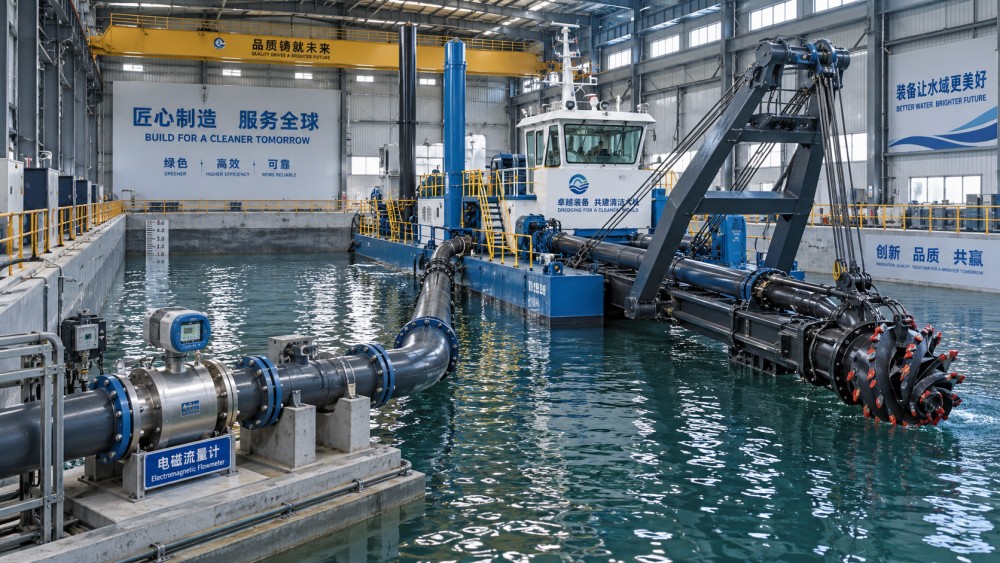
Pump performance deserves a separate acceptance section because it is easy to confuse an equipment test with a dredging production guarantee. ISO 9906:2012, Rotodynamic pumps — Hydraulic performance acceptance tests — Grades 1, 2 and 3, provides a framework for hydraulic acceptance testing of applicable rotodynamic pumps.[2] Where appropriate, the parties should agree the applicable grade, test arrangement and guaranteed points before testing.
The test record should identify the pump configuration, impeller, rotational speed, test liquid, instruments and measurement locations. Results should include the quantities needed to assess the agreed guarantee, such as flow, head and power. Calibration evidence and measurement uncertainty matter where the result is close to an acceptance boundary.
Require the supplier to state whether testing covers the assembled dredger installation or only the pump on a separate stand. A stand test may provide useful evidence of pump performance, but it does not automatically validate the vessel’s suction arrangement, drive installation or proposed discharge system. Likewise, a report for another configuration should not silently substitute for testing the contracted equipment.
If a factory cannot reproduce the intended duty, agree what alternative evidence is acceptable and what remains provisional. That could involve an independently witnessed component test, a documented calculation and a later site verification. Any correction or extrapolation should be explained and approved; it should not appear only after a result misses the contractual requirement.
Inspect structure, machinery and maintainability together
Before the FAT, review the manufacturing evidence required by the order. Depending on the design and applicable rules, this may include material certificates, welding records, dimensional checks, coating records and specified nondestructive examination reports. Tie each requested document to a defined component or requirement rather than asking for an unspecified “quality certificate.”
The physical inspection should follow the approved drawings and access arrangements. Examine the ladder, spud guides, machinery foundations, piping supports and removable connections for conformity. Check whether dismantled transport sections are identifiable and whether the reassembly instructions establish alignment and connection requirements.
Maintenance access deserves attention before delivery. Ask the supplier to demonstrate access to wear components, lubrication points, filters and inspection openings. Check the documented removal method for major service items and identify which tools or lifting arrangements the buyer must provide. A component can meet its specification while still being awkward to service in the supplied layout.
During functional testing, record cutter rotation direction, ladder movement, winch operation and spud movement against the approved operating sequence. Where only unloaded operation is possible, label the result accordingly. Do not treat smooth movement in the factory as proof of cutter torque under excavation load or winch performance under the intended working conditions.
Make safety checks traceable to the design
Safety acceptance should follow the machine’s documented risk assessment rather than a generic checklist copied from another dredger. ISO 12100:2010 describes principles for machinery risk assessment and risk reduction.[3] Buyers can use that framework when requesting evidence of how identified hazards have been addressed, without implying that a factory inspection alone certifies the complete vessel.
For hydraulic systems, ISO 4413:2010 addresses general rules and safety requirements for hydraulic fluid power systems and components.[4] Where applicable to the specified equipment, the FAT procedure should connect the design requirements to checks of pressure-control functions, circuit operation, leakage observations and isolation arrangements. Test pressures and limits must come from the approved procedure, not an improvised instruction at the factory.
Define emergency-stop and fault-response tests by function. The procedure should establish what stops, what remains active and how suspended or loaded equipment is controlled. An abrupt loss of power may create a different hazard from continued movement, so the intended response needs design justification. Any simulated fault should use an approved method that does not introduce an uncontrolled condition.
The procurement team should also establish which vessel, electrical, occupational safety and destination requirements apply. Machinery standards are not substitutes for applicable marine rules or local legal requirements. Where classification or statutory approval is required, identify the responsible authority and required deliverables in the contract.
Keep site acceptance separate from shipment release
Factory testing and site acceptance should have different purposes. The FAT can verify the supplied configuration, workmanship, controls and performance within the documented test arrangement. Site acceptance can address reassembly, the installed pipeline and operation under the agreed dredging conditions.
A site production trial needs its own protocol. Define the test area, sediment basis, operating depth, pipeline configuration, measurement method and treatment of interruptions. Specify whether the result concerns slurry throughput, dry solids mass or another agreed measure. These quantities are not interchangeable, and the chosen method should be settled before the trial begins.
Allocate responsibility for site readiness. Water availability, fuel, discharge arrangements, permits, suitable test material and trained personnel may sit outside the supplier’s scope. A delayed trial should not automatically become a failed equipment test, but neither should unavailable site conditions convert an unverified performance commitment into an accepted result.
Close defects with evidence, not assurances
The FAT report should identify the tested configuration, procedures, raw readings, instrument records, photographs where useful and every deviation. Each defect needs an owner, corrective action and closure evidence. If a repair affects a previously tested function, the relevant test should be repeated under the agreed procedure.
Agree defect categories before attendance. Items affecting safe operation, contractual performance or equipment identity may justify withholding shipment release. Minor documentation or finish issues may be handled differently if the contract permits it and a completion deadline is recorded. Commercial pressure near the shipping date should not determine the classification.
The final release package should include the approved operating and maintenance documents, as-built information, component identification, agreed spare-parts scope and outstanding-item register. Procurement should be able to trace each acceptance-critical requirement to evidence or to an explicitly agreed later verification. That traceability makes the FAT a defensible purchase decision rather than a ceremonial sign-off.
Sources
- [1] U.S. Army Corps of Engineers, EM 1110-2-5025, Dredging and Dredged Material Management.
- [2] International Organization for Standardization, ISO 9906:2012, Rotodynamic pumps — Hydraulic performance acceptance tests — Grades 1, 2 and 3.
- [3] International Organization for Standardization, ISO 12100:2010, Safety of machinery — General principles for design — Risk assessment and risk reduction.
- [4] International Organization for Standardization, ISO 4413:2010, Hydraulic fluid power — General rules and safety requirements for systems and their components.
Related News
Related News
- 00
0000-00
Which signaling standards apply to a new U.S. freight rail line? - 00
0000-00
How to assess wheel wear during freight rolling stock maintenance - 00
0000-00
Can digital freight logistics lower costs by reducing empty miles? - 00
0000-00
How bogie condition monitoring can reduce rolling stock downtime - 00
0000-00
How passenger capacity shapes rail equipment selection for metro
Weekly Insights
Stay ahead with our curated technology reports delivered every Monday.