





What rail safety evidence should suppliers provide? Operators, procurement teams, and integrators need traceable proof that equipment satisfies applicable safety requirements throughout its intended lifecycle.
Certificates alone cannot establish suitability. Credible submissions connect identified hazards with implemented safeguards, verified performance, operating limitations, and responsibilities for maintaining safety after delivery.
This guide from TC-Insight explains how to evaluate evidence for rolling stock, signaling, and critical subsystems, and identify gaps before they delay acceptance or create operational risk.
The practical starting point is a contractual evidence schedule: specify what suppliers must demonstrate, which configuration each submission covers, and who can authorize acceptance.
What Must a Supplier’s Safety Evidence Package Contain?
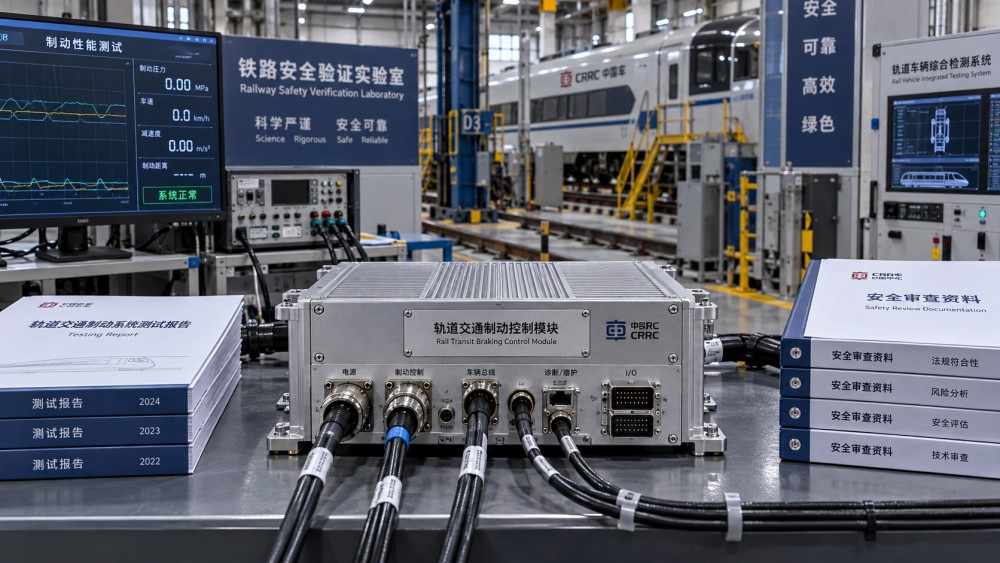
A useful package answers four questions: what could go wrong, how the design controls that risk, what demonstrates effectiveness, and which conditions keep that conclusion valid.
For safety-related equipment, request the following evidence categories. Their depth should reflect the application, hazard severity, regulatory requirements, and the supplier’s allocated responsibilities within the system.
Not every supplier needs a standalone system safety case. A component manufacturer may instead provide analyses, test reports, and application conditions supporting the integrator’s overall justification.
Require an evidence index listing document identifiers, revisions, approval status, and applicable product versions. This makes missing submissions visible and prevents obsolete reports entering acceptance decisions.
Each document should identify its scope and limitations. A report covering one converter variant, software build, or installation arrangement cannot automatically support every subsequent configuration.
The strongest package makes review efficient: a buyer can follow each significant safety claim to its supporting evidence without reconstructing the supplier’s engineering process.
Which Standards and Approvals Actually Apply?
Start with the intended railway, jurisdiction, subsystem, and procurement specification. There is no universal certificate that establishes safety for every rail product and application.
Ask suppliers for an applicability matrix explaining which requirements govern their scope, which editions apply, how compliance is demonstrated, and why any requirements are excluded.
For many European projects, EN 50126 provides a railway RAMS lifecycle framework. Signaling applications may additionally require evidence structured around EN 50129 safety assurance.
Software requirements may reference EN 50716 or predecessor standards, depending on project baselines and transition arrangements. Confirm the contractual edition instead of assuming automatic substitution.
Rolling stock may also require evidence addressing braking, structural integrity, fire behavior, electromagnetic compatibility, or accessibility. Relevant obligations depend on vehicle type and authorization route.
In the European Union, applicable technical specifications for interoperability and national rules may influence acceptance. Assessment responsibilities vary with the change, subsystem, and authorization process.
Quality certification, including ISO 22163, can support confidence in management processes. It does not independently demonstrate that a particular product meets its allocated safety requirements.
Can You Trace Every Significant Hazard to a Verified Control?
The hazard record is central because it connects risk identification with accountable action. It should cover credible failures, foreseeable misuse, operating modes, and relevant interfaces.
Request the analysis methods, assumptions, risk evaluation criteria, and supporting results. Depending on the equipment, these may include failure analyses, fault trees, or interface assessments.
Every significant hazard should have an owner, allocated safety requirements, implemented controls, and a defined closure basis. Status labels alone do not demonstrate that risk is controlled.
For a braking subsystem, review hazards such as insufficient braking, unintended application, and loss of control communication. Check how each is addressed across relevant operating modes.
A supplier may transfer an obligation to the integrator or operator. For example, an installation constraint might require physical separation of cables serving redundant channels.
Such transfers need explicit acceptance by the receiving party and incorporation into project documentation. An assumption buried in an appendix can otherwise leave a control unimplemented.
Ask reviewers to sample complete hazard chains. If they cannot navigate from hazard to requirement, design provision, test result, and closure decision, traceability needs improvement.
Do Test Reports Demonstrate Safety in the Intended Application?
A test certificate is useful only when its scope matches the purchasing decision. Review the tested specimen, configuration, methods, acceptance criteria, results, and deviations.
Require identification of hardware revisions, software versions, test equipment, and environmental conditions. Reports should also distinguish direct measurements from calculations, simulations, and engineering judgments.
Representative conditions matter. Equipment intended for tunnels, coastal routes, severe winter operation, or high vibration may need evidence addressing exposures absent from standard laboratory testing.
For rolling stock, relevant demonstrations may include braking performance, structural strength, running behavior, and fire properties. The necessary evidence depends on the actual supply scope.
For signaling, examine fault response, degraded operation, timing behavior, and interface handling. Nominal functional demonstrations alone cannot establish adequate behavior when safety-related failures occur.
Review unsuccessful tests and anomalies alongside successful results. Suppliers should explain corrective actions, affected requirements, regression testing, and whether unresolved findings restrict the proposed application.
Reuse of previous evidence requires a documented comparison. Changes in loading, interfaces, installation, or operating conditions may invalidate conclusions even when the product designation remains unchanged.
How Should Software, Electronics, and Cybersecurity Be Addressed?
For programmable equipment, request evidence of lifecycle controls as well as final testing. Requirements, architecture, implementation, verification, and release records should form a consistent chain.
Where a safety integrity level is allocated, ask how the allocation was derived and satisfied. A level claimed for one function does not cover unrelated functions.
Hardware evidence should address relevant failure mechanisms and architectural assumptions. Software evidence should demonstrate systematic development controls appropriate to the applicable requirements and safety significance.
Ask how tools, third-party components, and pre-existing software were evaluated. Their acceptance should reflect their role, potential failure consequences, and the governing project requirements.
Cybersecurity evidence should explain how security threats could affect safety-related functions, including unauthorized configuration changes, compromised communications, and loss of essential services during operation.
Security assessments and safety analyses should exchange relevant assumptions and findings. A secure update mechanism, for example, also needs controls preventing installation of an incompatible release.
Suppliers should identify supported versions, vulnerability handling arrangements, and update responsibilities. Buyers need to understand how fixes will be assessed before deployment to operational equipment.
What Does Independent Assessment Add—and What Are Its Limits?
Independent assessment can strengthen confidence where required by regulation, standards, or contract. Its value depends on competence, independence, scope, and access to relevant evidence.
Request the assessment scope, applicable criteria, report status, findings, and unresolved conditions. A favorable conclusion must be interpreted alongside exclusions and assumptions stated by the assessor.
Distinguish product certification, laboratory testing, conformity assessment, and independent safety assessment. These activities answer different questions and should not be treated as interchangeable forms of approval.
Check whether the assessment covers the supplied version and intended application. A report for a generic platform may leave project interfaces and installation conditions unassessed.
For complex systems, request a structured safety argument showing how evidence supports the acceptance claim. Document volume does not compensate for missing links in that argument.
Independent review also does not remove the buyer’s integration responsibilities. Someone must confirm that supplier assumptions remain valid within the assembled railway system and operational environment.
How Can Buyers Confirm the Delivered Equipment Matches the Evidence?
Safety conclusions attach to controlled configurations. Procurement teams should therefore require a configuration baseline connecting assessed designs, verified software, manufacturing records, and delivered assets clearly.
Useful records include part numbers, revision identifiers, serial numbers, firmware versions, and approved deviations. The required detail should reflect the component’s safety significance and traceability needs.
Manufacturing evidence should address processes that influence safety characteristics. Welding, material control, special processes, and inspection records may be critical for particular mechanical components or assemblies.
Type testing demonstrates characteristics of a representative design. Routine inspections and production tests provide separate evidence that manufactured units meet their specified requirements consistently in production.
Require a change notification process covering substitutions, design revisions, software updates, and manufacturing changes. Suppliers should explain when changes trigger renewed analysis, testing, or assessment.
Before acceptance, reconcile the delivered configuration against the evidence index. Unapproved substitutions or unidentified software versions can undermine otherwise credible test results and assessment conclusions.
What Evidence Is Needed to Keep Equipment Safe After Handover?
Maintenance documentation should identify safety-critical tasks, inspection intervals, wear limits, replacement criteria, and required competence. These requirements must follow from the design’s safety assumptions explicitly.
Ask suppliers to justify consequential maintenance intervals using appropriate analysis, testing, or service evidence. Unsupported intervals can create excessive operating cost or leave deterioration insufficiently controlled.
Installation and commissioning instructions should define required checks, interface settings, and acceptance limits. Incorrect parameterization can compromise equipment whose standalone design has already been verified.
Operators also need procedures for degraded operation, fault diagnosis, recovery, and return to service. Instructions should make restrictions clear enough for practical implementation under operating pressure.
Agree arrangements for field incident reporting, failure investigation, and safety notices. Evidence should remain usable when experience reveals a new failure mechanism or invalidates an assumption.
For long-lived fleets, clarify spare-part substitution, obsolescence management, and retention of records. Maintaining an approved configuration may become harder as original components leave production over time.
How Should Procurement Teams Decide Whether the Package Is Acceptable?
Define evidence deliverables before contract award, with milestones linked to design maturity and acceptance decisions. Early agreement reduces disputes over documentation that suppliers never priced.
Prioritize review by consequence and uncertainty. Novel safety-related functions, complex interfaces, and weak operational history generally deserve closer examination than established equipment in equivalent applications.
Use three review questions: is the evidence applicable, is it technically sufficient, and are remaining obligations assigned? Treat unresolved safety-critical gaps as acceptance blockers until resolved.
Other gaps may permit conditional acceptance only where the project’s authorized process allows it. Conditions need owners, deadlines, restrictions, and a clear route to closure.
For commercial evaluation, compare the total effort needed to achieve acceptance and sustain operation. A lower purchase price may conceal expensive integration work or unsupported maintenance obligations.
Suppliers should provide a traceable, application-specific safety justification supported by controlled evidence. Buyers should accept equipment when that evidence covers the delivered configuration and operating conditions.
The decisive question is whether another competent reviewer can follow the argument and reach the same conclusion. That is the practical test of credible rail safety evidence.