
A Project Manager’s Framework for Delivering Bulk Loading Systems Without Delays





A Project Manager’s Framework for Delivering Bulk Loading Systems Without Delays
A bulk loading system rarely slips because one conveyor arrives late. More often, the delay has been building quietly for months: the railcar geometry was not frozen, dust collection was treated as a secondary package, the loading chute supplier received an outdated material specification, or the controls team discovered too late that the terminal’s operating logic could not support the promised loading sequence.
That is why effective bulk loading project management is less about chasing individual contractors and more about managing dependencies. A loading station sits at the intersection of civil works, structural steel, mechanical handling equipment, electrical distribution, automation, safety systems, rail or truck operations, and the operator’s day-to-day practices. Each discipline can appear to be on schedule while the overall asset is becoming harder to commission.
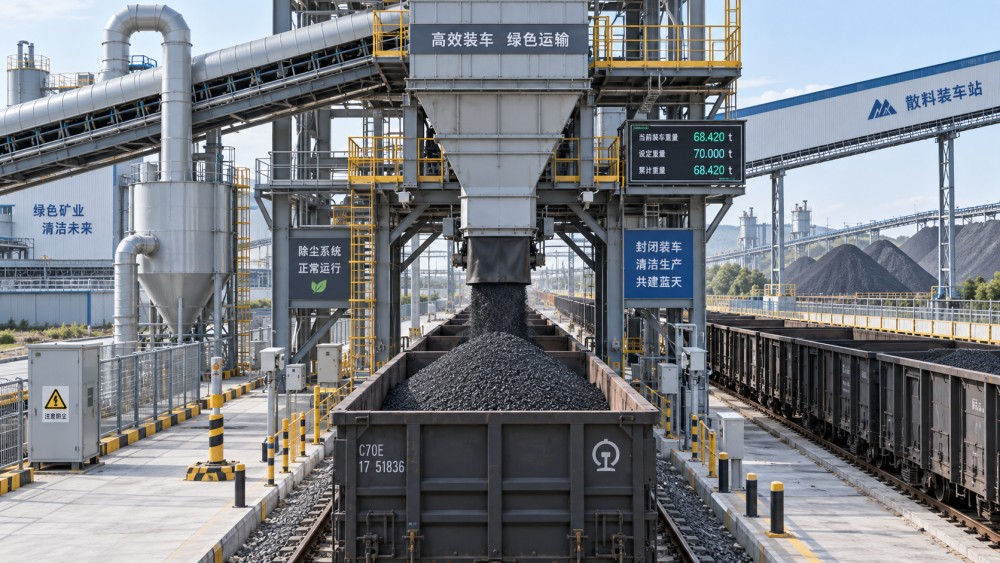
This is especially true in mines, coal terminals, grain facilities, cement plants, and port-side bulk logistics operations, where equipment must move large volumes continuously and safely. A system that looks complete on a construction progress chart is not necessarily ready to load product at the required rate, within legal weight limits, without excessive spillage, dust, or operator intervention.
The practical framework below is built around the decisions that tend to determine whether a bulk loading project reaches handover smoothly—or enters a long, expensive period of “almost ready” commissioning.
Start With the Operating Scenario, Not the Equipment List
The first project-control document should not be a procurement register. It should be an operating scenario that everyone can test against. Before the design is released, the owner, operations team, engineering lead, and automation lead need to agree on what a normal loading cycle actually looks like.
For a rail loading system, this may include train arrival position, wagon identification, allowable train movement during loading, target mass per wagon, trim requirements, loading sequence, operator interventions, and the response to an overweight or underweight condition. For truck loading, the key questions may be different: vehicle positioning, driver access, weighbridge integration, product segregation, loading authorization, and traffic control around the station.
The material itself deserves equal attention. Bulk density can vary. Moisture changes flow behavior. Fine material can create dust and carryback problems; sticky material can bridge in hoppers or foul chute liners. Lump size affects transfer design and belt loading. If the project team uses a single “design material” description but operations expects the plant to handle several real-world conditions, the disagreement will emerge during commissioning, when changes are slow and costly.
A good early workshop produces more than a capacity target. It records operating modes, abnormal modes, start-up and shutdown sequences, maintenance access needs, and the assumptions behind availability expectations. That document becomes the reference point when scope questions begin to appear later.
Turn Interfaces Into Managed Deliverables
Most serious schedule risk in a bulk loading project lives at the boundaries between packages. The civil contractor may finish foundations, but anchor bolt locations may not match the final structural arrangement. The mechanical supplier may deliver a loading spout, but the electrical contractor may not have the local isolation arrangement, cable routes, or instrument connections ready. The PLC can be energized, yet the weigh scale may still be awaiting calibration and the train-position signal may not be available.
Treat each interface as a deliverable with an owner, acceptance criteria, required input, and due date. A simple interface register is usually more useful than a large general risk register because it forces the project team to name the handoff clearly.
- Civil-to-mechanical: foundation elevations, embedded items, drainage, access platforms, and construction tolerances.
- Mechanical-to-controls: motor lists, instrument lists, interlock requirements, permissives, alarm philosophy, and local control stations.
- Controls-to-operations: loading recipes, manual override rules, reporting needs, alarm response responsibilities, and operator screens.
- Project-to-site: outage windows, tie-in permits, rail possessions, traffic diversions, lifting plans, and commissioning access.
The important point is that an interface is not “closed” because a drawing was issued. It is closed when the receiving party has what it needs, has checked it, and can proceed without making assumptions. This sounds obvious, but it is one of the most common weak points in multi-vendor material-handling projects.
Build the Schedule Around Decisions and Physical Constraints
A conventional schedule often shows engineering, procurement, construction, and commissioning as successive blocks. Real delivery is messier. Long-lead equipment may need to be ordered while civil design is still progressing. Automation development may begin before final field device selection. Site installation may depend on an operating terminal releasing a narrow shutdown window.
The schedule should therefore identify both physical predecessors and decision predecessors. A loading head cannot be finalized until railcar or truck envelope data is accepted. Dust extraction sizing may depend on transfer-point geometry and material properties. Functional testing cannot begin until power, field instruments, communications, guarding, and emergency-stop circuits are all complete—not merely “substantially complete.”
Project managers should pay particular attention to dates that are difficult to recover once missed: access to an active rail corridor, a port shutdown, heavy-lift availability, utility cutovers, seasonal weather constraints, and owner approvals for changes affecting operations. These are not ordinary milestones. They are schedule gates. If a gate is at risk, the mitigation plan needs to be specific: resequence work, create a temporary operating arrangement, secure an alternative access window, or change installation methodology. “Expedite” is not a mitigation plan.
Use design maturity as a release condition
Early procurement is sometimes necessary, but it should not become an excuse to buy against unresolved assumptions. Release packages when the decisions affecting them are mature enough. Structural steel may be released before all cable routing is final; a specialized loading chute should not be released before the material range, loading envelope, and dust-control concept are understood.
This is a matter of judgment, not bureaucracy. Buying too late creates lead-time pressure. Buying too early turns normal design development into variation orders, rework, and arguments over responsibility.
Control Scope Changes Before They Become Site Changes
Bulk loading systems invite late requests because the equipment is visible and operational teams can easily imagine improvements once the structure begins to take shape. A better camera angle, an extra dust hood, revised wagon recognition, another sampling point, or a different maintenance platform may each appear modest in isolation. Their combined impact can be substantial, particularly once fabrication and controls programming are underway.
A disciplined change process does not mean rejecting useful improvements. It means separating four questions that are often blurred together: Is the request required for safe operation? Is it necessary to meet the original performance basis? Is it a genuine operational enhancement? And what does it do to design, procurement, installation, testing, and handover?
The project manager should insist that changes are assessed across disciplines. A request for automatic wagon positioning, for example, may affect sensors, communication architecture, rail operating rules, civil locations, safety zoning, software logic, and operator procedures. When a change is approved, update the baseline documents promptly. Site teams should never have to infer which of several issued drawings is now authoritative.
Commission in Layers, Not in One Final Push
Commissioning is where hidden incompleteness becomes visible. Leaving all testing until mechanical completion creates a crowded endgame: electricians are still terminating cables while controls engineers are troubleshooting signals, operators are seeing the system for the first time, and construction teams are trying to clear punch-list items around live tests.
A better approach is to divide commissioning into deliberate layers. Verify installation quality first. Then prove individual devices and drives. Test interlocks and safety functions before introducing material. Run dry sequences to confirm logic, communication, alarms, and operator interfaces. Only then progress to controlled wet commissioning with product.
This sequence matters because material can conceal faults. A conveyor may run with product while a speed switch is incorrectly scaled, a chute may appear acceptable until a wetter product is introduced, or an automated loading cycle may work once but fail when a wagon is slightly out of position. The goal is not merely to demonstrate movement. It is to show that the system responds predictably to the conditions operators will face.
Define acceptance tests early, ideally while the control philosophy and performance requirements are still being written. The owner should know what evidence will be required for handover: test records, calibration documentation where applicable, safety verification records, operating manuals, maintenance information, drawings reflecting the installed condition, training completion, and an agreed defect-management process.
Operational Readiness Is Part of Delivery
A loading station is not finished when the contractor leaves site. It is finished when the operating team can start it, run it, stop it safely, recognize abnormal conditions, maintain it, and recover from predictable interruptions without relying on the project team.
This is where experienced project managers involve operations and maintenance personnel earlier than many projects do. Invite them to design reviews. Ask them to walk through access routes, isolation points, chute inspection locations, belt-cleaning arrangements, and likely fault scenarios. They will often identify practical issues that are invisible on a general arrangement drawing.
Training should also be linked to the actual operating philosophy rather than treated as a final contractual event. An operator needs to understand why an interlock prevents loading, what a permissive means, which alarms require an immediate stop, and when manual intervention is allowed. Maintenance teams need spare-parts logic, troubleshooting information, and realistic access to the components they are expected to service.
Keep Stakeholders Aligned With a Shared View of Readiness
The most useful project reporting is not the report with the most colors. It is the one that makes readiness visible. Senior stakeholders need to see what is genuinely complete, what is blocking the critical path, what decisions are overdue, and what operational assumptions remain untested.
For complex transport and logistics assets, that perspective should extend beyond one package or one site. TC-Insight’s coverage of bulk material handling, container-port automation, rail equipment, and wider logistics nodes reflects a practical reality: throughput is shaped by connected systems. A highly capable loader still loses value if rail availability, stockyard flow, port dispatch, power reliability, or control-room coordination becomes the limiting factor.
The strongest bulk loading project management teams therefore manage the asset as an operating system, not a collection of purchased equipment. They freeze the right decisions early, expose interfaces before construction, protect critical access windows, test in layers, and bring operators into the process before handover pressure peaks.
Delays cannot always be eliminated; active industrial sites have too many moving parts for that promise to be credible. But surprises can be reduced sharply when the project team asks a more useful question at every stage: what must be true for this system to load product safely and reliably on its first real operating day?
Related News
Related News
- 00
0000-00
How a rail network planning dashboard improves capacity decisions - 00
0000-00
Comparing bulk handling solutions by throughput reliability - 00
0000-00
What determines port crane intelligence pricing for terminal upgrades? - 00
0000-00
Rail equipment intelligence in Southeast Asia is reshaping fleet investment - 00
0000-00
Selecting Abrasion Control Systems for High-Wear Mining Transfer Points
Weekly Insights
Stay ahead with our curated technology reports delivered every Monday.