
How Steel Cord Conveyor Belt Construction Affects Splice Strength and Belt Life





Splice failure is rarely caused by a single bad joint. In many bulk material systems, the root cause starts much earlier—with belt construction choices that determine how load is transferred through the carcass, how evenly the splice can be built, and how the belt responds to repeated bending, impact, and tension cycles over time. For technical evaluators, that makes construction details more than a catalog issue. They are a service-life issue, a maintenance planning issue, and often a downtime risk issue.
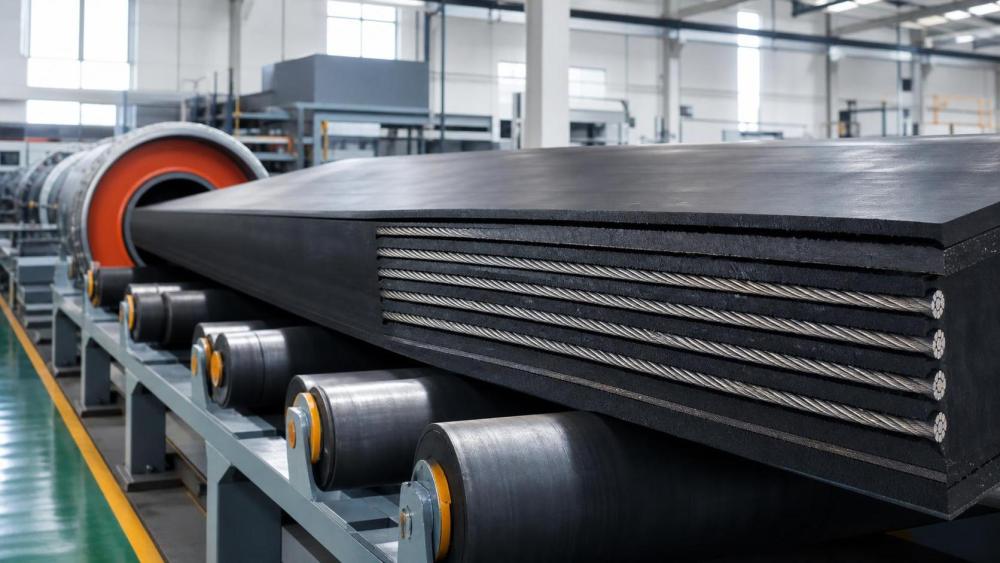
Steel cord belts are selected when high tension, long centers, heavy tonnage, or demanding conveying routes make fabric belts less suitable. Yet belts with similar nominal ratings can behave very differently in the field. The reason is that splice strength and belt life do not depend only on rated tensile capacity. They depend on how the steel cords are arranged, protected, bonded into the rubber matrix, and supported by the top and bottom covers.
Why construction matters more than nominal strength
A belt may meet the required working tension on paper and still create problems in service. The splice is the most sensitive region because it interrupts the continuity of the cords and relies on controlled load transfer through the stepped splice geometry and rubber adhesion. If the original belt construction makes that load transfer uneven, the splice becomes vulnerable to local stress concentration, edge separation, or gradual cord pull-out.
This is why evaluators usually need to look beyond tensile class and cover grade. Construction affects three linked outcomes:
- How predictable the splice procedure will be during installation
- How much effective splice efficiency can be achieved in real site conditions
- How well the belt resists aging mechanisms that weaken the splice zone over time
In practice, a belt with more stable cord positioning, cleaner rubber penetration around the cords, and more consistent gauge control often gives maintenance teams a wider process window during splicing. That does not remove the need for skilled workmanship, but it reduces the chance that a small process deviation turns into a short splice life.
Cord layout and spacing: the foundation of load sharing
The internal cord arrangement is one of the first things that influences splice behavior. In a steel cord carcass, each cord carries part of the total belt tension. For the splice to perform well, those cords need to be positioned consistently across the width, with controlled spacing and minimal deviation from the intended line.
If spacing varies too much, the splice steps may not distribute load evenly. Some cords begin carrying more tension earlier than others, and local overstressing develops. That can accelerate rubber shear fatigue between adjacent cords or create uneven elongation behavior in the splice area. The result may not be immediate breakage; more often it appears as progressive splice degradation, especially in high-cycle conveyors.
Evaluators reviewing a steel cord conveyor belt for long overland systems, high-tension trunk conveyors, or heavy mine transfer points often pay close attention to whether the manufacturing process appears capable of maintaining cord alignment and spacing consistency. This relates directly to the practicality of splice preparation in the field, where technicians depend on a predictable cord pattern when stripping rubber and forming the splice steps.
Cord diameter and cord construction also matter. Larger or stiffer cords may provide the required tensile performance, but they can also affect troughability, bending behavior over pulleys, and the shear stresses developed in the splice. A belt that is optimized only for static strength may place higher demands on pulley diameter, transition design, and splice workmanship.
Rubber penetration and adhesion at the cord interface
The steel cords themselves do not make a durable belt unless the surrounding rubber fully penetrates and bonds to the cord structure. This interface is where much of the hidden durability is decided. Poor penetration can leave micro-voids or poorly bonded zones. Under repeated loading, those areas become starting points for separation, moisture ingress, and corrosion-related damage.
From a splice-strength perspective, adhesion quality influences how smoothly tension is transferred through the stepped splice geometry. In service, the bond must tolerate not only tensile loading but also flexing, impact, and temperature variation. Weak or inconsistent bonding may allow individual cords to debond gradually, reducing splice integrity before visible external damage appears.
For belt life, the same interface controls resistance to one of the most damaging long-term mechanisms in steel cord belts: corrosion progression after cover damage or edge injury. If moisture finds a path along poorly bonded cord channels, deterioration can travel farther than the visible defect suggests. In harsh environments—wet aggregate handling, ports, fertilizer, mining, or any operation with abrasive carryback and frequent washdown—this risk deserves close review.
Manufacturing quality checks are especially relevant here. Technical teams often ask how cord treatment, calendering control, and adhesion verification are managed, because the effect is not always visible from a finished belt sample. The belt may look acceptable externally while hiding variability at the steel-rubber interface that later affects both splice durability and carcass life.
Cover rubber is not only about abrasion
Top and bottom covers are often discussed mainly in terms of abrasion resistance, but their role in splice and carcass durability is broader. Cover thickness protects the cords from impact, trapped material, and progressive wear that can eventually expose the carcass. Cover compound selection affects resistance to heat, oil, ozone, aging, and cut growth. Those factors directly influence belt life, and they also affect how well the splice area survives after vulcanization.
A very thin cover may reduce weight and cost, yet it leaves less damage allowance over the belt’s service life. In impact zones, that can mean earlier propagation of cuts into the carcass. Once the belt structure near a splice or along the running length is compromised, the splice no longer operates under the stable conditions it was designed for.
Bottom cover design deserves equal attention. The underside experiences pulley contact, idler interaction, and sometimes significant heat build-up. If the bottom cover is too thin for the pulley arrangement or if the compound hardens prematurely in service, repeated bending can increase stress in the carcass and in the splice region. On high-speed conveyors, even moderate changes in dynamic stiffness can alter fatigue behavior over time.
Belt thickness, stiffness, and pulley interaction
Splice life is strongly influenced by bending fatigue. Every time the belt passes over a pulley, the carcass and splice are flexed. Construction decisions that increase overall stiffness may be acceptable on large-diameter pulleys, but they can shorten life where pulley diameters are close to the minimum design limit or where the conveyor includes multiple pulleys in short succession.
Technical evaluators usually examine these interactions together rather than in isolation:
- Carcass stiffness versus actual pulley diameters
- Cover thickness versus heat generation and flex fatigue
- Cord construction versus dynamic performance at operating speed
- Transition length and trough geometry versus edge tension distribution
When these factors are mismatched, the splice may become the first area to show distress, even if the root cause lies in system design. That is why belt evaluation should include the conveyor layout, not just the belt specification sheet.
Manufacturing equipment consistency and what it means in the field
The added note on manufacturing equipment and quality checks points to an important procurement issue: construction quality is not only a design intent, but a production control issue. In steel cord belts, equipment used for cord arrangement, calendering, lamination, and vulcanization influences dimensional consistency and bond uniformity.
For evaluators, the practical question is not whether a producer owns a certain machine type, but whether the process can hold repeatable results. Cord misalignment, gauge variation, trapped air, uneven pressure, or non-uniform curing can all show up later as splice variability or shortened belt life. None of these defects needs to be catastrophic to be costly; even moderate inconsistency can narrow the installation margin and increase the probability of early maintenance intervention.
Quality checks worth reviewing usually include:
- Verification of cord spacing and belt width consistency
- Control of cover and intermediate rubber thickness
- Monitoring of adhesion-related process conditions
- Inspection for surface and edge defects before shipment
- Traceability of production batches for later issue analysis
These checks matter because field splicing depends on a stable starting condition. If the stripped cord ends reveal inconsistent embedment or spacing from one section to another, even an experienced splice crew may struggle to reproduce the intended geometry accurately.
Common failure patterns and what they often indicate
Observed splice damage can provide clues about the underlying construction issue, although diagnosis should always consider operating conditions and workmanship as well.
Edge separation near the splice
This may point to uneven cord loading across the width, poor transition geometry, mistracking, or edge-related manufacturing inconsistency. Belts with insufficient edge stability can become more vulnerable in installations with frequent side loading or poor skirt sealing.
Cord pull-out or localized debonding
This often suggests problems at the steel-rubber interface, inadequate splice cure control, or moisture-driven deterioration after service damage. It may also be aggravated by repeated shock loading.
Premature splice cracking over pulleys
Dynamic stiffness, pulley diameter, cover hardness changes in service, and excessive belt thickness relative to the system can all contribute. The splice may be correctly built yet still fatigue early if the belt construction is not well matched to the pulley regime.
Hidden corrosion spreading from small cover damage
This usually indicates that water ingress has found a path along the cord interface. In many applications, the visible surface cut is less serious than the unseen propagation beneath the cover.
What technical evaluators should ask before approval
Selection decisions improve when the belt is reviewed as a system component rather than a nominal-strength item. A useful technical review often includes the following questions:
- How stable is the cord layout across the full belt width and along production length?
- Is the cover design adequate for the expected wear life, impact level, and environmental exposure?
- Does the carcass stiffness suit the actual pulley diameters and transition distances?
- What production controls are in place to maintain adhesion and thickness consistency?
- Will the selected construction make field splicing more tolerant or less tolerant of normal site variation?
- How will damage progression be managed if the application includes moisture, corrosive carryback, or frequent cleaning?
These questions are useful during supplier comparison because two belts can share a similar headline rating while carrying different operational risks. One may be easier to splice reliably and more forgiving in difficult site conditions; the other may require tighter control throughout installation and operation to reach the same life target.
The practical takeaway for belt life and splice reliability
When steel cord belt performance is assessed only by tensile strength and cover grade, important durability drivers remain hidden. Cord spacing, embedment quality, adhesion, cover protection, and production consistency all shape how the splice carries load and how the belt ages in service. In demanding conveyors, those factors often determine whether the belt delivers a stable maintenance interval or becomes a recurring source of shutdowns.
For technical evaluation, the better question is not simply whether a belt is strong enough, but whether its construction supports repeatable splicing and predictable fatigue life under the actual conveyor conditions. That shift in focus usually leads to better specifications, more meaningful supplier review, and fewer surprises after commissioning.
Related News
Related News
- 00
0000-00
How port machinery systems reduce container handling bottlenecks - 00
0000-00
How smart port logistics systems reduce container dwell time - 00
0000-00
How transport equipment intelligence analysis identifies bottlenecks - 00
0000-00
How rail technology advancements are reshaping signaling standards - 00
0000-00
What is driving growth in the global EMU market size?
Weekly Insights
Stay ahead with our curated technology reports delivered every Monday.