





Road Transport vs Rail Transport: Which Fits Time-Critical Cargo?
When evaluating time-critical cargo, the road transport vs rail transport decision extends beyond transit speed. Business assessors must weigh route flexibility, network reliability, shipment volume, last-mile access, cost exposure, and disruption risk.
The practical answer is rarely that one mode is universally faster. Road usually wins for urgent, smaller, door-to-door movements, while rail can outperform on planned, high-volume corridors.
Start With the Delivery Promise, Not the Mode
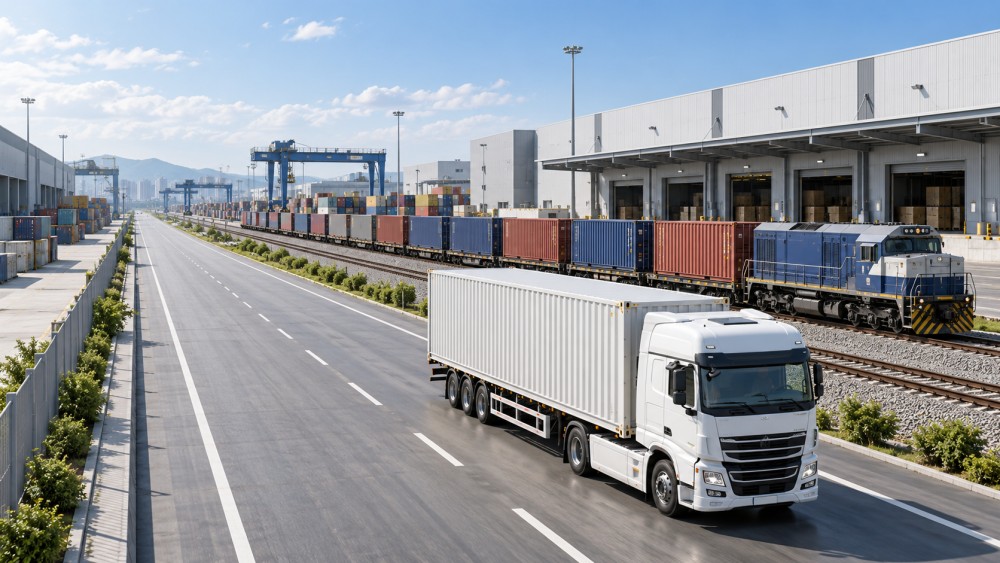
For time-critical cargo, the first question is not whether trucks or trains travel faster. It is whether the shipment can reliably meet its required delivery window.
A shipment with a four-hour service commitment has different transport requirements from freight that must arrive before a factory's next production shift. Both may be urgent, but their risk profiles differ.
Road transport generally offers the shortest elapsed time for local and regional shipments because it avoids terminal transfers, fixed departure schedules, and most last-mile handoffs.
Rail transport becomes competitive when cargo moves over long, established corridors, particularly where dedicated freight services, frequent departures, and efficient terminals reduce handling delays.
Business assessors should distinguish between physical transit time and total lead time. A fast rail line does not automatically create a fast shipment if loading, drayage, and terminal dwell are slow.
The most useful metric is end-to-end delivery performance: collection time, terminal processing, line-haul movement, arrival handling, final delivery, and the probability of missing the promised slot.
This perspective changes the road transport vs rail transport comparison from a generic speed debate into a commercial decision about service reliability and operational consequences.
Why Road Transport Usually Leads for Immediate Cargo
Road freight is the default choice when cargo must be collected quickly, delivered directly, or rerouted in response to changing customer, production, or traffic conditions.
A truck can often be dispatched within hours, loaded at the shipper's site, and driven to the consignee without requiring a rail terminal appointment or consolidation process.
That directness is especially valuable for replacement parts, healthcare supplies, high-value electronics, retail replenishment, maintenance materials, and components stopping a production line.
Road transport also supports smaller shipment sizes efficiently. A dedicated vehicle, less-than-truckload service, or controlled-temperature truck can match a specific urgency and handling requirement.
For assessors, flexibility has measurable value. It reduces the need to hold excess inventory, gives customer service teams more recovery options, and improves response during supply disruptions.
However, road speed should not be assumed. Driver-hours rules, congestion, border queues, weather, road closures, and vehicle availability can turn an urgent road movement into an expensive exception.
Road pricing can also become volatile during peak seasons. Spot-market rates, fuel surcharges, tolls, detention, and premium dispatch charges may materially affect the delivered cost.
Therefore, road is strongest when urgency is genuine, shipment volume is moderate, origin and destination are road-accessible, and the economic cost of delay exceeds the premium freight rate.
When Rail Is the Better Time-Critical Choice
Rail is often overlooked for urgent freight because managers associate it with bulk commodities and longer planning cycles. That assumption is increasingly incomplete on mature freight corridors.
For large shipments moving hundreds or thousands of kilometres, rail can provide predictable capacity and lower exposure to highway congestion, driver shortages, and fuel-price volatility.
Rail is particularly relevant when cargo is containerized, high-volume, repeatable, and moving between locations that already have rail terminals or dependable drayage connections.
Scheduled intermodal rail services can offer a stable arrival pattern for production networks, import distribution, retail flows, automotive parts, and industrial materials with defined cut-off times.
The critical condition is schedule fit. If a shipper misses a train departure, the next available service may create a delay that road transport could have avoided.
Rail may also be the smarter choice when the buyer values resilience over the fastest possible dispatch. Reserved capacity and fixed corridors can protect planned flows during highway disruption.
For large volumes, a rail solution may reduce the number of trucks required, simplify carrier management, and limit the operational exposure created by repeated road dispatches.
The strongest rail business case combines adequate transit performance with volume consolidation, reliable terminal operations, lower unit cost, and emissions benefits that support corporate transport targets.
Compare Total Journey Time, Including Every Handover
A credible road transport vs rail transport assessment must map the shipment's complete journey. Line-haul speed alone is usually the least useful comparison for commercial decisions.
For road, total journey time includes vehicle sourcing, loading, route planning, driving, mandated rest periods, border formalities, unloading, and possible waiting at the receiving site.
For rail, it includes pre-carriage to a terminal, gate-in, container or wagon handling, train cut-off, rail departure, network transit, terminal discharge, and final-mile delivery.
Terminal dwell is often the deciding factor. A rail service can be operationally sound but commercially unsuitable if containers wait too long before departure or collection.
Assessors should request actual historical performance rather than provider averages. Measure median transit time, on-time percentage, late-delivery frequency, and the size of delay when performance fails.
A mode with a slightly longer planned transit time can be preferable when its delivery variance is low. Predictable arrivals allow inventory, labour, production, and customer appointments to be managed accurately.
Conversely, a nominally fast service with frequent exceptions may require costly buffer stock and contingency transport. This can erase savings that appeared attractive in a simple rate comparison.
Use a defined service window, such as collection-to-delivery within 36 hours. Then compare each mode's ability to meet that window under normal and disrupted operating conditions.
Volume, Frequency, and Network Design Matter More Than Distance Alone
Distance influences mode choice, but it should not determine it alone. The same distance can favor road or rail depending on shipment density, network quality, and terminal location.
Road normally retains an advantage for dispersed origins and destinations because each movement can follow a tailored route. Rail is better suited to concentrated flows between established logistics nodes.
A daily flow of full containers between two inland hubs may justify rail even when road can deliver faster. High frequency allows planners to build dependable replenishment cycles.
Irregular shipments are harder for rail to serve economically. If cargo arrives unpredictably, waits for consolidation, or regularly misses cut-off times, road flexibility is likely more valuable.
Business assessors should analyze weekly volume, shipment size, seasonality, commodity characteristics, and demand volatility. A mode should fit the pattern of demand, not merely the annual tonnage.
Rail becomes increasingly attractive as volumes rise because its fixed handling requirements can be spread over more units. It may also provide capacity where road fleets are constrained.
Road can remain commercially superior for lower volumes because it avoids terminal charges, handling risk, and the cost of coordinating multiple transport providers across the journey.
For strategic sourcing, segment freight into lanes rather than selecting one mode globally. Different lanes often require different service designs, carrier contracts, and recovery procedures.
Calculate Cost of Delay, Not Just Freight Cost
Price comparisons often overstate the apparent advantage of rail or road because they focus on the quoted freight charge rather than the financial impact of service failure.
The relevant calculation includes transport cost, terminal fees, packaging, inventory carrying cost, working capital, insurance, detention, expediting, customer penalties, and lost production value.
For a critical spare part, a high road rate may be insignificant compared with the cost of an idle plant. In that case, speed and recovery capability justify premium transport.
For repeat industrial flows, a modestly slower rail service may create greater value if it lowers annual logistics spending, stabilizes capacity, and supports planned inventory levels.
Assessors should assign an estimated cost to late delivery. Even a simple range helps expose whether a lower transport rate truly compensates for higher delay exposure.
Consider the value of inventory in transit as well. Longer rail journeys or uncertain terminal dwell can increase working capital requirements, especially for high-value components and imported goods.
Contract structure matters too. Road agreements may offer flexible capacity but variable surcharges, while rail agreements can provide longer-term rates with stricter booking commitments.
A financially sound decision combines landed logistics cost with service risk. The cheapest mode per kilometre is not necessarily the lowest-cost option for the business.
Evaluate Disruption Risk and Recovery Options
Time-critical transport decisions should include a disruption assessment. Reliability is not only about routine punctuality; it is about how quickly the network recovers when events go wrong.
Road networks offer rerouting options, alternative carriers, and direct collection points. These strengths are useful when traffic incidents, weather, port delays, or customer changes occur unexpectedly.
Rail networks can be vulnerable to infrastructure outages, capacity conflicts, terminal congestion, industrial action, and missed connections. Recovery may depend on the next scheduled departure.
Yet road networks face their own systemic risks, including driver scarcity, border restrictions, major highway closures, and sudden capacity shortages during retail, harvest, or holiday peaks.
Ask providers how they manage exceptions. Useful evidence includes control-tower visibility, escalation processes, alternative terminal options, substitute equipment, and documented communication timelines.
For critical lanes, establish trigger points before disruption occurs. Define when a shipment should remain on rail, transfer to road, use a dedicated vehicle, or notify the consignee.
Dual-mode planning can be commercially sensible. Rail can handle baseline volume, while contracted road capacity protects urgent orders, missed departures, and high-priority customer commitments.
This blended approach reduces dependence on a single network and allows companies to capture rail efficiency without sacrificing the responsiveness needed for genuinely urgent freight.
A Practical Decision Framework for Business Assessors
Begin by classifying cargo according to consequence of delay, shipment size, value density, handling sensitivity, origin and destination access, and required delivery precision.
Next, define the service requirement in measurable terms. Specify the latest acceptable delivery time, acceptable variance, collection lead time, communication standard, and recovery expectation.
Then map actual lane performance for both modes. Use provider operational data, not marketing claims, and include terminal dwell, border events, seasonal capacity, and final-mile constraints.
Score each option against total cost, delivery reliability, flexibility, capacity assurance, disruption resilience, carbon performance, and compatibility with customer or production requirements.
Road should usually score highest where direct movement, rapid dispatch, flexible routing, and short delivery windows dominate. This is common for urgent regional and last-mile flows.
Rail should score strongly where shipment volumes are substantial, routes are stable, terminals are efficient, lead times are planned, and predictable capacity matters more than immediate dispatch.
Do not treat sustainability as an isolated criterion. Lower-emission rail transport may improve tender performance, customer reporting, and long-term compliance while supporting cost and capacity objectives.
Finally, review the decision regularly. Network performance, energy prices, terminal capacity, regulations, and customer demand patterns change, so the optimal transport mix can change as well.
Conclusion: Match Urgency to the Right Transport Design
In the road transport vs rail transport decision, road is generally the stronger option for immediate, flexible, door-to-door deliveries where every hour has commercial significance.
Rail is often the stronger option for scheduled, high-volume, long-distance cargo where reliable corridors, lower unit costs, capacity stability, and lower emissions create sustained business value.
The key is to assess end-to-end performance rather than comparing vehicle speed or headline freight rates. Terminal handling, departure frequency, final-mile access, and recovery capability shape actual results.
For time-critical cargo, the best answer may be a segmented network: rail for predictable base volume and road for urgent exceptions, last-mile delivery, and high-consequence shipments.
Business assessors who quantify delay risk, test provider performance, and align transport design with operational priorities can make decisions that are faster, more resilient, and commercially defensible.