
What Causes Unexpected Freight Logistics Costs After Launch?





Unexpected freight logistics costs after launch usually arise because the budget covers the planned transport movement, while the operation pays for the conditions under which that movement actually occurs. A quoted rate may assume predictable shipment sizes, available equipment, prompt customs clearance, and on-time collection. Once any of those assumptions fails, additional charges appear—even when the base freight rate remains unchanged.
The key distinction is between an incomplete cost baseline, a change in operating conditions, and an avoidable execution failure. Fuel adjustments, terminal storage, missed rail connections, and equipment downtime can all increase spending, but they require different responses. Renegotiating a rate will not solve a documentation delay, and better scheduling will not remove a surcharge explicitly allowed by the contract.
Why does the launch budget differ from the first freight invoices?
A freight quotation is not necessarily an end-to-end cost commitment. Its scope may cover only a port-to-port movement, a terminal-to-terminal rail service, or a standard truck delivery. Origin handling, destination charges, customs brokerage, inspections, unloading, and empty-container return may sit outside that scope.
The mismatch becomes visible after launch because planning and invoicing use different boundaries. The budget may record “freight per shipment,” while suppliers invoice separately for the ocean leg, terminal activity, inland movement, equipment use, and exceptional handling. Charges can also arrive after the associated shipment has been delivered, making the first operating month look cheaper than it actually was.
A useful comparison separates costs into:
- Omitted baseline costs: required services that were never included in the budget.
- Variable contractual costs: fuel, currency, peak-period, or other adjustments permitted under agreed terms.
- Event-driven costs: storage, waiting, rehandling, failed delivery, or recovery transport triggered by an operational event.
- Billing discrepancies: duplicate charges, incorrect rates, or fees inconsistent with the applicable agreement.
This distinction prevents every unfavorable invoice from being treated as a carrier price increase. It also separates a forecasting problem from a service-performance problem.
How do shipment volumes and cargo characteristics create extra costs?
Launch forecasts can assume a shipment pattern that actual orders do not support. A business may plan full-container movements but release smaller orders more frequently. The freight cost per shipment may fall, yet the cost per saleable unit rises because consolidation, documentation, collection, and destination handling are spread across fewer units.
The reverse creates problems too. Higher-than-planned volumes can exceed reserved capacity, requiring spot purchases or alternative departures. A volume commitment does not necessarily guarantee space on every sailing or train; capacity rights and booking conditions need to be checked separately.
Cargo characteristics introduce another gap. Dimensions, gross weight, packaging, stackability, and handling requirements determine the usable capacity of a container, trailer, or rail wagon. Nominal equipment capacity is not the same as commercially usable payload. Weight distribution, route restrictions, loading rules, and cargo protection can limit what fits safely and legally.
For parcel and less-than-truckload movements, dimensional weight or freight classification may affect billing. For bulk cargo, moisture content, density, and product segregation can change the relationship between tonnes shipped and equipment required. Comparing actual invoices against a budget built on inaccurate cargo data will therefore produce apparent “surprises” that originate in the planning assumptions.
Why do delays generate several charges rather than just one?
A delay can activate multiple cost mechanisms because cargo, equipment, vehicles, and storage space are controlled by different parties. A container that cannot leave a terminal may incur terminal storage and a carrier equipment-related charge under the applicable terms. A truck arriving before release may incur waiting time or require a second trip. A missed rail departure can extend the container’s dwell and push delivery into a more expensive recovery movement.
In container shipping, demurrage generally relates to container time within a terminal beyond the applicable free period, while detention generally relates to equipment retained outside it. Terminology and combined charging arrangements vary by carrier, terminal, and jurisdiction. Terminal storage may be billed separately. The relevant tariff and contract—not the label alone—determine the trigger, clock, and liability.
Free time also requires careful interpretation. Calendar days and working days are not interchangeable, and different clocks may apply to terminal storage and container use. A customs release does not automatically mean the container is physically available for collection, and an available container does not guarantee a truck appointment.
The operational sequence matters:
Cargo availability → customs and commercial release → collection appointment → inland departure → unloading → equipment return.
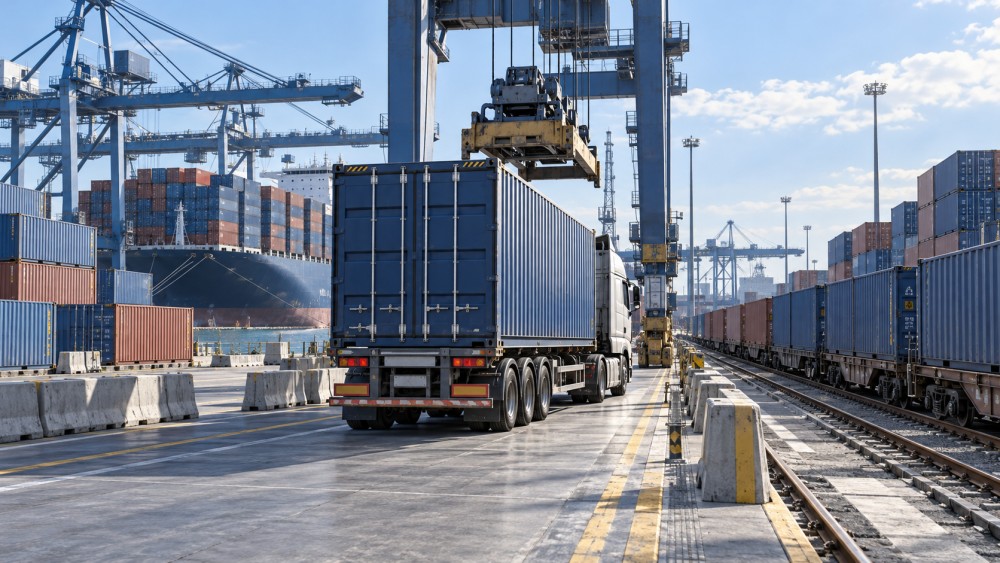
A failure at one handoff can consume the remaining buffer at every later stage. Preventing charges therefore requires visibility into the release conditions and deadlines across that sequence, not just the vessel’s estimated arrival time.
What makes rail, port, and bulk-handling costs difficult to predict?
Intermodal networks depend on connections. A rail rate can be competitive while the total journey becomes expensive because terminal dwell, drayage, equipment repositioning, or a missed train was excluded from the comparison. If a container misses the booking cutoff or is unavailable for loading, the next departure may not fit the delivery commitment. The resulting expense comes from lost connection reliability rather than a higher rail tariff.
Port congestion creates a similar distinction between transport time and usable availability. A vessel’s arrival is only one milestone. Discharge, yard placement, inspection, release, and gate access determine when cargo can move inland. Scheduling trucks against an arrival forecast without confirming availability can create waiting, cancellations, and repeat collection costs.
For bulk operations, handling throughput must be matched across the entire chain. A conveyor’s rated capacity cannot compensate for a slower feeder, restricted stockpile access, or limited loading windows. Equipment stoppages reduce effective throughput and can extend vessel, wagon, or truck occupancy. Ship demurrage, where applicable under the charter arrangements, follows different contractual rules from container demurrage.
The relevant planning capacity is sustainable throughput under actual operating conditions, not nameplate capacity. Availability, material characteristics, maintenance access, and downstream constraints determine whether the planned transport schedule is achievable.
Can contracts and trade terms explain costs that seemed included?
Yes. A quoted price may be fixed for the main transport service while allowing defined adjustments and additional services. Fuel mechanisms can specify an index, adjustment interval, baseline, and scope of application. Currency clauses can introduce exposure even when the headline rate appears stable. A rate expressed in one currency should not be compared with a budget in another without identifying the conversion basis.
Accessorial charges deserve equal attention. Waiting time, special equipment, out-of-hours service, delivery restrictions, and unsuccessful collection may each have separate charging rules. Their significance depends on how closely the actual operation matches the quotation assumptions.
Incoterms® rules allocate specified obligations, costs, and risks between buyer and seller, but they do not replace the transport contract or determine every supplier charge. The chosen rule, its version, and the precisely named place matter. A broad location description can leave uncertainty about which inland movement or handling activity was expected.
Nor should legal liability be confused with immediate payment. One party may pay a charge to release cargo and later seek recovery from another. That creates working-capital exposure even if the expense is ultimately recoverable. Preventability, contractual liability, and the party initially invoiced are separate questions.
How do documentation and compliance problems become freight costs?
Documentation failures create logistics costs through elapsed time and additional handling. Incorrect weights, inconsistent descriptions, missing permits, incomplete commercial invoices, or inaccurate customs information can prevent release or require correction. The direct administration charge may be small compared with the storage and equipment costs accumulated while the shipment waits.
Some inspections are outside the shipment team’s control. Others are associated with declarations that need clarification or cargo that requires specific treatment. The cost assessment should distinguish an unavoidable intervention from a preventable data problem rather than assuming every customs delay has the same cause.
Changes to classification, declared value, or eligibility for a trade preference can also alter duties and taxes. These are landed-cost items rather than freight-service charges, but they can appear in the same cash-flow picture. Keeping them separate is essential: a transport-rate negotiation will not correct a customs classification issue.
For regulated, hazardous, oversized, or temperature-sensitive cargo, required declarations and handling arrangements must be reflected before booking. Discovering a requirement after arrival can force storage, rebooking, repacking, or a different transport service.
How can the actual cause be identified without blaming every overrun on congestion?
Start with a shipment-level reconciliation rather than a monthly total. Aggregate spending can rise because more cargo moved, the cargo mix changed, or service performance deteriorated. These explanations have different business implications.
For each material exception, connect the charge to the relevant shipment, contract provision, and operational milestone. Useful evidence includes the booked rate, cargo-ready date, release timestamps, appointment records, free-time allowance, equipment-return confirmation, and invoice calculation. A charge code alone explains what was billed, not why the event occurred.
Preserve the event sequence as well as the amounts. If a missed collection was caused by a late release, recording only “truck unavailable” assigns the problem to the wrong part of the operation. Conversely, a congestion notice does not establish that every invoiced delay was unavoidable.
Which changes reduce repeat costs after launch?
The most effective correction targets the point where the operating assumption failed. Incomplete quotations require a clearer cost baseline. Release delays require earlier document validation and milestone ownership. Low loading utilization requires a review of order consolidation and packaging. Repeated missed connections require a more realistic schedule or a different service design.
Budget comparisons should use both total spend and a suitable normalized measure, such as cost per delivered tonne, container, or saleable unit. Keep the cargo and service scope consistent. Otherwise, a move toward smaller orders or faster delivery can look like supplier inflation when it is actually a change in operating requirements.
Alerts are useful only when someone can act before the cost threshold is crossed. Visibility into expiring free time has value when collection capacity, release authority, and escalation responsibility are already arranged. A dashboard that reports a missed deadline after invoicing provides evidence, not prevention.
Contingency should cover credible residual uncertainty, not conceal known recurring charges. Once an expense repeatedly follows from the chosen shipping pattern, it belongs in the operating baseline. The decisive test is whether the overrun remains after correcting shipment mix, contract scope, and billing errors. What remains identifies the reliability gap—or the deliberate service trade-off—that the freight budget must address.
Have questions about the global trade trends discussed here, or planning your expansion and supply chain strategy? Leave a message below and let the trade experts at TTC-Insight guide you.
We respect your privacy. Your information is strictly confidential.
Related News
Related News
- 00
0000-00
How public funding shapes the urban rail transit market - 00
0000-00
How do terminal operations systems coordinate crane scheduling? - 00
0000-00
Evaluating Skeletal Container Chassis Capacity for Loaded Boxes - 00
0000-00
How much outreach does a container terminal crane need? - 00
0000-00
Which rail safety technology standards apply to CBTC systems?
Weekly Insights
Stay ahead with our curated technology reports delivered every Monday.