
Which Data Quality Issues Can Undermine Digital Intelligence Projects?





Digital intelligence projects rarely fail because an operator lacks dashboards, artificial intelligence, or automation tools. They fail when the information beneath those tools is unreliable. In rail, metro, port, and bulk-material operations, a small data defect can travel far: a wrong asset identifier can distort maintenance history, a delayed berth update can weaken crane scheduling, and an incomplete signaling event record can create false confidence in a performance review.
The data quality problems that can undermine digital intelligence projects are not all equally dangerous. Some primarily reduce reporting accuracy; others can affect planning, maintenance priorities, capacity decisions, and operational assurance. The practical task is to distinguish a tolerable reporting imperfection from a defect that changes a decision.
For high-volume transportation systems, the most damaging issues are usually inaccuracy, incompleteness, inconsistency, latency, poor integration, unclear data ownership, and weak context. These problems often appear together. A project may have highly accurate sensor readings, for example, but still produce weak intelligence because the readings are attached to the wrong vehicle, use a different time reference, or cannot be connected to maintenance and operating records.
Not every data defect creates the same operational risk
A useful comparison is to consider what each quality issue changes in practice. A missing value in a monthly management report may be inconvenient. The same missing value in an anomaly-detection model for a traction converter can cause the model to miss a developing fault or incorrectly flag healthy equipment. Severity depends on the decision, the speed of the workflow, and whether people have time to challenge the result.
Inaccuracy: when clean-looking data is simply wrong
Accuracy is often discussed as a sensor problem, but it is wider than sensor calibration. A value may be numerically plausible while being assigned to the wrong asset, copied from an outdated configuration, mapped to the wrong location, or interpreted using the wrong unit. These errors are especially difficult because they can pass simple validation checks.
Consider rolling stock condition monitoring. Temperature, vibration, current, and fault-code data can be collected continuously, but a traction event has little diagnostic value if the system cannot identify the correct vehicle, subsystem, operating mode, and maintenance state. A reliable temperature record from the wrong bogie is still misleading intelligence.
Port automation has a similar issue. A crane may report an apparently valid cycle time, but the number becomes unsuitable for productivity analysis if the job type, container-handling exception, weather interruption, or remote-control state has not been captured correctly. Comparing those cycles with ordinary moves can lead managers to diagnose a performance issue that does not exist.
The appropriate control is not merely “check the data.” Teams need validation rules tied to the physical operation: permitted ranges, sensible rate-of-change limits, asset-to-system relationships, expected event sequences, and checks against an independent source when the decision is consequential. Automated validation should identify questionable records, not silently overwrite them.
Missing data is more than empty fields
Incomplete data is often treated as a technical nuisance because most analytical tools can handle blanks in some form. That approach becomes risky when absence is meaningful. A missing inspection result may mean no inspection occurred, the inspection system was unavailable, the data transfer failed, or the result was recorded under a different identifier. Those are very different operational conditions.
In a metro environment, gaps in operational event records can make dwell-time or service-reliability analysis appear better than it is. In bulk handling, missing periods in belt, stacker, or loader data can conceal the conditions leading up to an interruption. For a maintenance model, omitted records can systematically bias training toward assets that are easier to observe rather than assets that are most problematic.
The comparison that matters is between random missingness and patterned missingness. Random gaps may reduce confidence but leave broad trends usable. Patterned gaps are more dangerous. If data disappears during bad weather, peak traffic, equipment alarms, connectivity losses, or shifts with different work practices, the resulting dataset excludes precisely the situations the intelligence project needs to understand.
Before selecting a model or visualization, establish a completeness profile. Which fields are mandatory? Which events should always create a record? At what interval is telemetry expected? Which gaps are acceptable for retrospective analysis but not for live decisions? A single completeness percentage cannot answer those questions.
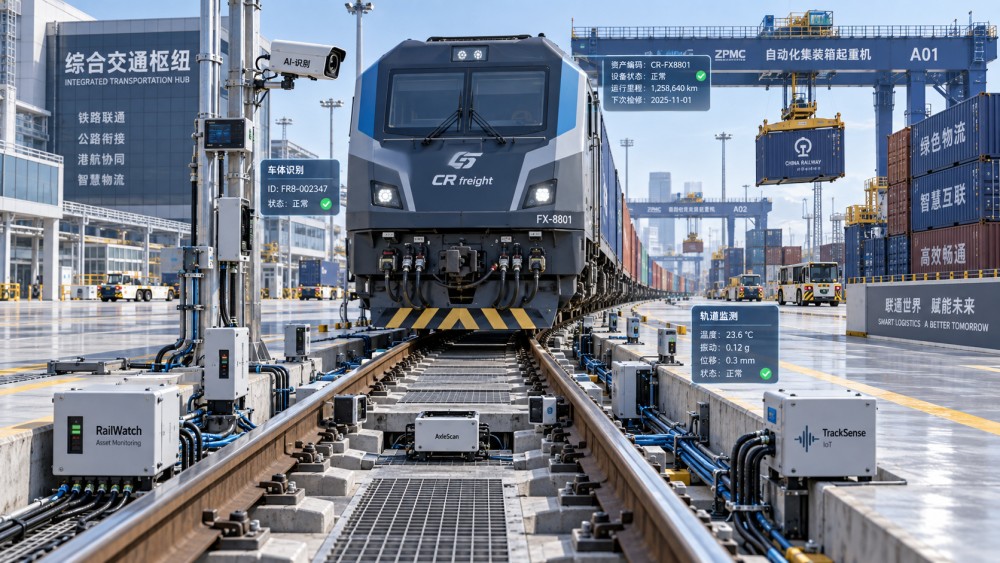
Inconsistent definitions can defeat a well-funded data platform
Digital intelligence depends on comparison: one fleet against another, one terminal against another, current performance against a baseline, or expected behavior against actual behavior. Comparisons collapse when systems use different definitions for the same label.
“Available,” “in service,” “delayed,” “unplanned downtime,” and “completed move” sound straightforward until they are used by different teams. A train may be technically available but unavailable for passenger service because of crew, route, or depot constraints. A crane may be available from an asset-management view but unavailable to the terminal operating system while awaiting an operational release. Both statements can be valid, but they answer different questions.
Unit inconsistency creates another familiar problem. One source may store energy in one unit, another in a related unit, while a third provides a calculated value over a different time period. Converting units is easy; discovering that two metrics represent different boundaries or calculation rules is harder.
Data standards should therefore define more than field names. They should state the business meaning, source system, time basis, unit, valid values, ownership, and intended use of each important metric. This is less glamorous than an analytics launch, but it prevents a dashboard from becoming a polished argument over whose numbers are right.
Timeliness must match the decision window
Late data is not automatically poor data. A strategic asset review can often use data refreshed daily or weekly. Remote supervision, disruption management, automated yard coordination, and fast-turn maintenance decisions cannot. The quality requirement is determined by the point at which a decision can still alter the outcome.
A common project error is to describe a feed as “real time” without defining the actual operational expectation. Is the record available quickly enough to support an alert? Does it arrive in the right sequence? Can late events revise a previous status? Does the recipient know that a displayed state is several minutes old?
For GoA4 metro operations and other safety-sensitive environments, intelligence systems should not blur the boundary between decision support and certified operational control. A late or incomplete analytical feed may still be useful for post-event review, but it should not be presented as a trustworthy live representation of a control state. The same distinction applies to port equipment: an operations dashboard can inform coordination while the machine-control and safety systems retain their own authoritative logic.
Measure latency as a chain, not a single timestamp. Collection, transmission, processing, integration, publication, and user access can each add delay. A fast sensor connection does not solve a bottleneck created by batch processing or an approval queue downstream.
Disconnected systems produce partial truths
Transport organizations often possess more data than they can use coherently. Fleet systems, signaling records, maintenance applications, enterprise resource planning tools, port community platforms, weather feeds, energy systems, and supplier records may each be credible on their own. The intelligence problem begins when their relationships cannot be established reliably.
Predictive maintenance illustrates the difference. Sensor data can identify abnormal behavior, but useful action usually requires the asset hierarchy, component configuration, work history, operating duty, spare-parts position, and service plan. Without these links, the system may predict “an anomaly” but cannot support a maintenance decision that is specific enough to schedule, investigate, or prioritize.
Integration should not mean copying every dataset into one large repository. It means establishing dependable identifiers and governed relationships for the decisions that matter. A stable asset ID, consistent location reference, common event keys, and a controlled master record are often more valuable than adding another external data feed.
This is also where industry intelligence has a limited but useful role. A platform such as TC-Insight can help teams compare technology trends, rail-network plans, terminal automation developments, and broader equipment demand signals. External intelligence is valuable when its source, date, scope, and methodology are clear. It should complement internal operating data, not be mixed into operational metrics as though both sources have the same authority or refresh cycle.
Context and lineage determine whether a result can be trusted
Data can be accurate, complete, and timely yet still be misleading when it lacks context. A higher energy consumption figure may indicate poor performance, a heavier load, a steeper route, lower ambient temperature, a different timetable, or a changed operating strategy. Raw comparison without operating conditions creates false rankings.
Lineage answers a different question: where did this number come from, what transformations were applied, and which source is authoritative? When a planner challenges a forecast or an engineer questions an asset-health score, the organization needs an answer that is traceable. “The platform calculated it” is not sufficient for a decision with material operational consequences.
Models need the same discipline. Training data should represent the conditions in which the model will be used. A model trained mainly on normal operating periods may perform poorly during disruptions, degraded equipment states, peak handling periods, or unusual traffic patterns. The risk is not only an inaccurate prediction; it is misplaced confidence in a prediction presented without its limitations.
Choose controls based on the use case, not a generic maturity checklist
Different digital intelligence projects need different quality thresholds. Trying to make every dataset perfect delays useful work. Treating every source as “good enough” creates a system that looks comprehensive but cannot be defended. The practical middle ground is to classify data by decision impact.
- Operational control and safety-adjacent decisions: require strict source authority, clear timing, traceability, exception handling, and human escalation rules.
- Maintenance prioritization: requires dependable asset identity, configuration history, work-order links, and a clear distinction between missing and negative observations.
- Network, terminal, and capacity planning: requires consistent definitions, comparable time periods, documented assumptions, and enough historical context to explain variation.
- Market and strategic intelligence: requires credible sourcing, transparent scope, date awareness, and separation of observed facts from interpretation.
This comparison helps prevent a frequent mistake: applying the same dashboard-quality standard to every workflow. A senior planning review can tolerate a slower refresh if definitions are stable and comparable. A live dispatching tool cannot compensate for a late feed with an attractive chart.
A practical way to find the weak point before scaling
Teams preparing to expand a digital intelligence project should start with one decision, not one technology. Define the operational question, the person accountable for acting on it, the latest point at which the answer remains useful, and the consequence of a wrong answer. Then trace backward through the required data.
- List the source records, sensors, external inputs, and manual entries behind the decision.
- Check whether each record has a stable identity, a meaningful timestamp, an owner, and a known business definition.
- Test the data under normal conditions and under conditions where the operation is stressed, disrupted, or changing.
- Identify how errors are surfaced, corrected, and retained for audit rather than hidden through silent cleansing.
- Only then decide whether the use case is ready for automation, predictive analytics, or wider rollout.
The most useful outcome is not a claim that the data is perfect. It is a clear statement of what the data can support, where it cannot yet be trusted, and which remediation work will improve a real decision. That discipline makes digital intelligence more credible across railway rolling stock, urban rail systems, high-speed operations, container terminals, and bulk logistics assets.
Questions that often change the decision
Can artificial intelligence compensate for poor source data?
It can detect some anomalies, reconcile some formats, and estimate missing values, but it cannot reliably recover facts that were never captured or resolve conflicting business definitions without rules and context. AI can amplify weak assumptions as efficiently as it finds patterns.
Is a data lake enough to solve fragmented transport data?
No. Centralizing records can make access easier, but it does not create common identifiers, consistent definitions, source ownership, or trusted lineage. Those controls must be designed and maintained separately.
Which issue should be fixed first: accuracy, completeness, or integration?
Start with the defect that most changes the target decision. For asset-health analytics, wrong asset mapping may be more urgent than broad integration. For network planning, inconsistent definitions across regions may be the first constraint. The priority should follow decision risk, not the easiest technical fix.
Related News
Related News
- 00
0000-00
Comparing bulk handling solutions by throughput reliability - 00
0000-00
What determines port crane intelligence pricing for terminal upgrades? - 00
0000-00
Rail equipment intelligence in Southeast Asia is reshaping fleet investment - 00
0000-00
Selecting Abrasion Control Systems for High-Wear Mining Transfer Points - 00
0000-00
Designing Agricultural Port Loading Systems to Protect Grain Quality and Cut Spillage
Weekly Insights
Stay ahead with our curated technology reports delivered every Monday.