





For procurement professionals, learning how to reduce rail transportation costs without compromising delivery reliability is essential in volatile supply chains. From optimizing wagon utilization and fuel efficiency to negotiating smarter contracts and improving intermodal coordination, practical cost-control measures can protect budgets while keeping freight on schedule. This guide explores actionable strategies for lowering rail transport expenses, managing long-cycle assets, and strengthening logistics resilience.
Procurement teams rarely need the cheapest rail rate alone. They need predictable landed cost, sufficient capacity, clear accountability, and shipments that arrive when production, customers, or ports require them.
The strongest savings usually come from removing avoidable variability before negotiating price. Empty mileage, poor wagon turns, weak forecasts, accessorial surprises, and terminal congestion often cost more than headline freight rates.
A practical rail-cost strategy therefore combines commercial discipline with operational visibility. Buyers should evaluate each decision against total transport cost, service reliability, inventory exposure, and disruption recovery capability.
This approach is especially important for bulk commodities, intermodal containers, industrial equipment, construction materials, and other freight categories where rail schedules influence wider supply-chain performance.
Start With the Cost Drivers That Actually Affect the Purchase Decision
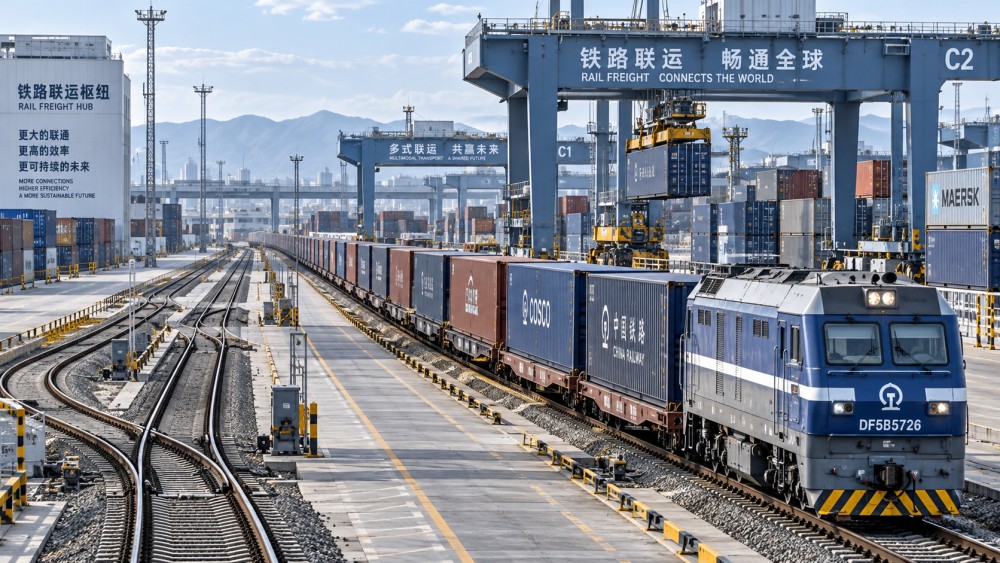
Before changing suppliers or seeking rate reductions, map the complete cost structure for every major rail lane. Separate base freight charges from fuel, equipment, terminal, storage, and disruption-related costs.
Base line-haul rates matter, but they are only one component. A lower quoted rate can become expensive when it requires additional drayage, longer dwell time, less reliable equipment, or higher inventory.
Procurement should request lane-level data covering origin, destination, commodity, shipment frequency, wagon type, average load weight, transit time, and service exceptions. This creates an evidence-based negotiation position.
Review demurrage, detention, storage, reconsignment, diversion, weighing, cleaning, switching, and minimum-volume charges separately. These items frequently appear after contracts are signed and can distort apparent savings.
For private fleets or dedicated wagons, include maintenance reserves, lease payments, insurance, empty repositioning, inspections, and asset downtime. Ignoring these long-cycle costs makes owned equipment appear cheaper than it is.
Calculate cost per delivered tonne, container, cubic meter, or production-relevant unit rather than relying only on cost per railcar. A useful metric reflects actual usable payload and final delivery requirements.
Also measure cost-to-serve by customer segment. A lane serving a time-sensitive plant may justify a higher transport rate when it prevents line stoppages, emergency trucking, or costly safety-stock requirements.
Once cost categories are visible, rank them by financial impact and controllability. Focus first on recurring leakage that procurement, operations, and logistics partners can jointly influence.
This baseline answers the central question behind how to reduce rail transportation costs: which expenses are structural, which are negotiable, and which result from internal planning failures?
Increase Wagon Utilization Before Asking Carriers for Lower Rates
Improving payload utilization is often the fastest way to reduce unit transport cost without weakening service. Empty space and underloaded wagons consume capacity, traction energy, and terminal resources.
Compare actual loading weights with legal axle limits, wagon capacity, route restrictions, and commodity density. A recurring gap may indicate avoidable loading practices rather than unavoidable equipment constraints.
Work with loading sites to standardize weighing, loading sequences, moisture controls, and documentation. Small improvements in average payload can generate meaningful annual savings across high-volume rail programs.
For lighter or irregular cargo, review wagon selection carefully. High-capacity equipment can be inefficient when volume limits are reached long before weight capacity is used.
Where compatible commodities and regulations permit, consolidate shipments across plants, suppliers, or business units. Consolidation can reduce partial consists, improve train frequency, and strengthen volume commitments during negotiations.
Procurement should avoid volume targets that reward shipping early simply to meet quarterly commitments. Premature dispatches may improve rail utilization while creating excess inventory and working-capital pressure elsewhere.
Instead, use a shipment calendar that connects production plans, customer demand, loading capacity, rail cutoffs, and warehouse limits. Reliable forecasts allow carriers to position equipment efficiently.
Monitor loaded-to-empty ratios and wagon turnaround time for each lane. A wagon that spends unnecessary days waiting for loading, unloading, inspection, or release raises effective transport cost.
When evaluating suppliers, ask how they improve asset circulation during disruption. Faster recovery after weather events or congestion can be more valuable than a small reduction in nominal rates.
Reduce Empty Mileage and Improve Equipment Turnaround
Empty movements are a major source of rail inefficiency, especially for specialized wagons, bulk equipment, temperature-controlled assets, and routes with imbalanced directional demand.
Identify where equipment returns empty and investigate whether backhaul cargo, equipment pooling, triangulation, or alternate unloading locations can reduce unproductive repositioning miles.
Pooling arrangements deserve careful governance. Shared fleets can improve availability and lower capital requirements, but responsibilities for damage, cleaning, maintenance, and priority access must be explicit.
Use turnaround dashboards that track arrival, placement, loading, release, departure, unloading, and empty return times. Procurement needs this operational evidence before assigning responsibility for delays.
Delays at customer sites are not always carrier failures. Limited unloading crews, unavailable cranes, closed gates, paperwork errors, or storage congestion can immobilize expensive rail assets.
Set site-level release targets and escalation procedures. For example, receiving locations should confirm unloading slots early enough for dispatchers to adjust train plans and equipment allocations.
Consider incentives that reward rapid release and penalties that reflect controllable dwell. Balanced provisions encourage both parties to protect equipment circulation without creating unreasonable operational pressure.
For leased wagons, compare lease economics against actual utilization, not theoretical utilization. A lower daily lease rate may be poor value if equipment sits idle due to incompatible network coverage.
Reduced empty mileage also supports emissions objectives. This can improve total procurement value where customers, investors, or public tenders require credible low-carbon logistics reporting.
Build Contracts Around Service Outcomes, Not Only Published Tariffs
Rail contracts should translate procurement priorities into measurable operating commitments. Price schedules matter, but service definitions determine whether the commercial agreement performs under real-world pressure.
Specify transit-time ranges, equipment supply windows, loading cutoffs, notification standards, exception reporting, and recovery responsibilities. Vague service language makes it difficult to manage delays constructively.
Negotiate pricing mechanisms that match the freight profile. Fixed rates can suit stable lanes, while indexed formulas may be preferable when fuel, energy, labor, or regulated access charges fluctuate.
Ask carriers to explain every index, trigger, adjustment frequency, cap, floor, and pass-through category. Transparent formulas reduce budget surprises and prevent disputes after market conditions change.
Volume commitments should include realistic tolerance bands. Demand forecasts can shift because of seasonal production, customer changes, commodity markets, weather, or infrastructure interruptions.
A contract that punishes reasonable volume variability may encourage inefficient shipping decisions. Better agreements define forecast updates, flex capacity, and remedies for both shipper and carrier performance failures.
Use competitive bids strategically, but do not treat procurement as a one-time auction. Incumbent performance data, local terminal knowledge, fleet availability, and contingency capacity have material economic value.
For critical lanes, maintain qualified alternatives or pre-agreed contingency rates. Switching providers during a disruption is generally slower and more expensive than activating an established backup arrangement.
Include governance meetings in the agreement. Monthly operating reviews and quarterly commercial reviews help identify deteriorating service before it produces demurrage, missed production windows, or customer claims.
Control Fuel, Energy, and Route Costs Through Better Network Choices
Fuel surcharges are often unavoidable, but procurement can reduce exposure by understanding how energy consumption varies across route design, train composition, handling events, and network congestion.
Longer routes are not automatically more expensive. A route with fewer handoffs, fewer terminal stops, and more dependable capacity can lower total cost despite additional line-haul distance.
Compare routing options using total transit variability rather than average transit time alone. Unreliable routes require higher safety stock, more expediting, and greater planner intervention.
Ask rail providers whether specific lanes face recurring speed restrictions, construction windows, border delays, locomotive shortages, crew constraints, or seasonal operating limitations.
For bulk shipments, examine train size and frequency together. Larger unit trains may lower cost per tonne, yet they can create inventory spikes or unloading bottlenecks at destination facilities.
For containerized freight, assess whether block-train departures, shared intermodal services, or less frequent consolidated departures offer the best balance between cost and delivery commitments.
Electric traction, regenerative braking, modern locomotive fleets, and optimized train handling can support lower energy intensity. However, buyers should request verifiable performance data instead of accepting generic sustainability claims.
Where carbon pricing or emissions reporting is relevant, include emissions intensity in bid evaluations. The lowest transport price may not remain the lowest commercial cost under evolving compliance requirements.
Prevent Terminal and Intermodal Delays From Erasing Rail Savings
Rail transportation costs often increase at interfaces rather than on the railway itself. Ports, inland terminals, warehouses, truck appointments, and customs processes can create expensive dwell.
Map every handoff from supplier collection through final delivery. Record responsibility, standard lead time, operating hours, document requirements, appointment rules, and escalation contacts for each interface.
Intermodal savings disappear when containers miss rail cutoffs and wait for the next departure. Procurement should verify terminal cutoffs against realistic drayage lead times, not planned best-case timings.
Coordinate truck providers, rail operators, terminal managers, and warehouse teams using shared shipment milestones. Fragmented communication is a common reason for missed pickups and avoidable storage charges.
For port-connected flows, monitor vessel schedules and rail availability together. A container can arrive on time at port but still incur costs if rail evacuation capacity is unavailable.
Use appointment systems, pre-clearance, digital documentation, and exception alerts where available. These tools are most valuable when teams have clear authority to act on alerts quickly.
Do not optimize one mode in isolation. A low-cost rail leg that creates premium trucking, extra warehousing, or missed customer deliveries is not a successful sourcing outcome.
When comparing bids, require suppliers to show the complete origin-to-destination operating model. This makes hidden interface assumptions visible before procurement commits volume.
Use Data and Supplier Reviews to Protect Savings Over Time
Rail procurement should not end when the contract is awarded. Savings erode when operational conditions change, accessorial charges accumulate, or service exceptions become normalized.
Create a concise scorecard for each major provider and lane. Include cost per delivered unit, on-time performance, wagon supply, dwell, payload utilization, claims, emissions, and invoice accuracy.
Track both averages and exceptions. Average transit time can look acceptable while a small number of severe late deliveries creates disproportionate production and customer-service costs.
Invoice audits should compare billed movements against contracted rates, fuel formulas, route terms, equipment charges, and approved services. Recovering billing errors can generate immediate savings.
Use quarterly business reviews to discuss root causes, not only scorecard results. Repeated delays may arise from poor forecasts, terminal bottlenecks, wagon shortages, or unrealistic operating assumptions.
Share reliable demand forecasts with strategic providers, especially for seasonal peaks and project cargo. Better visibility helps rail partners allocate crews, locomotives, wagons, and terminal capacity appropriately.
For long-cycle assets, review lifecycle value annually. Changes in maintenance condition, network demand, commodity mix, and technology can alter the economics of ownership, leasing, or pooling.
TC-Insight-style market intelligence can support these reviews by connecting equipment trends, rail-network changes, terminal automation developments, and broader logistics capacity signals to procurement decisions.
Choose Savings Measures That Match the Risk Profile of Each Lane
Not every rail lane needs the same strategy. Procurement should classify movements by volume, service criticality, commodity sensitivity, equipment requirements, network alternatives, and consequence of delay.
High-volume, stable bulk flows usually benefit from dedicated equipment, optimized loading, long-term capacity commitments, and detailed turnaround management. Their largest savings are often operational rather than transactional.
Time-critical industrial flows require stronger service guarantees, inventory coordination, and contingency planning. Paying slightly more for dependable rail capacity may be justified by avoided production disruption.
Lower-volume or irregular movements may benefit from shared services, flexible contracts, intermodal consolidation, and frequent market testing. Dedicated capacity can be unnecessarily expensive in these cases.
International corridors require extra attention to border processes, documentation, gauge changes, customs timing, and political or infrastructure risks. Route redundancy can be a commercial necessity.
Before implementing a cost initiative, estimate savings, implementation effort, operational risk, ownership, and measurement method. This prevents teams from pursuing attractive ideas that cannot be sustained.
Prioritize measures with measurable savings and low service risk first: invoice accuracy, payload improvement, dwell reduction, forecast quality, and clearer accessorial controls.
Then address structural opportunities such as network redesign, fleet pooling, terminal investments, equipment upgrades, or multi-year capacity agreements after validating their lifecycle economics.
Conclusion: Lower Rail Costs by Making Reliability a Procurement Requirement
The most effective answer to how to reduce rail transportation costs is not simply demanding lower freight rates. It is designing a transport program that removes waste without introducing delays.
Procurement professionals should first understand total delivered cost, then improve payloads, equipment turns, contract controls, terminal coordination, and supplier performance management.
Reliable rail service protects budgets by reducing emergency trucking, excess inventory, demurrage, production interruptions, and customer penalties. Those avoided costs often outweigh small rate concessions.
For every major lane, choose the operating model that best balances price, capacity, resilience, and lifecycle value. A disciplined decision framework creates savings that survive changing market conditions.