
Remote Control Cranes Need More Than a Better Interface





Remote control cranes promise faster cycles and safer yards, but for aftersales maintenance teams, performance depends on far more than a smoother screen. Real reliability comes from control logic, sensor health, communication stability, and maintainable automation architecture. Understanding these hidden layers is essential to reducing downtime, improving fault response, and keeping terminal equipment productive under demanding operating conditions.
The market signal is changing: remote control cranes are now judged by maintainability, not interface novelty
Across container ports, bulk terminals, and intermodal hubs, expectations around remote control cranes are shifting. Operators once focused heavily on the operator cabin replacement story: fewer people in hazardous zones, better visibility through camera systems, and more centralized control. That narrative still matters, but it is no longer enough. The newer question is whether remote control cranes can deliver stable performance over long operating cycles while remaining serviceable under real field conditions.
For aftersales maintenance personnel, this change is especially important. A crane that looks advanced on the user interface can still become a burden if fault tracing is fragmented, sensor calibration drifts too often, wireless latency disrupts motion consistency, or software updates create integration conflicts. In other words, the commercial value of remote control cranes increasingly depends on lifecycle support quality rather than front-end user experience alone.
This shift reflects a broader pattern in transport equipment and logistics automation. As terminals pursue higher throughput with lower labor risk, equipment selection is moving from “Can it be remotely controlled?” to “Can it be remotely controlled reliably, diagnosed quickly, and maintained without extended downtime?” That distinction is now shaping procurement criteria, service agreements, spare-parts planning, and digital retrofit strategies.
Why this trend is accelerating in terminal operations
Several forces are pushing remote control cranes toward deeper technical scrutiny. First, labor and safety pressures continue to influence terminal modernization. Remote operation reduces exposure to height, weather, moving loads, and fatigue-heavy cabin work. Second, throughput volatility means equipment must recover quickly from faults. Even short interruptions in quay, yard, or bulk handling workflows can create cascading delays across truck queues, vessel windows, and storage planning.
Third, automation layers are becoming denser. A modern remote control crane may rely on vision systems, anti-sway logic, position sensors, PLC coordination, networked safety functions, and links to terminal operating systems. Each additional layer can improve precision and productivity, but it also creates more dependencies. For maintenance teams, that means fault isolation is no longer a purely electrical or mechanical exercise. It often becomes a systems engineering task.
Finally, asset owners are paying closer attention to whole-life economics. The true cost of remote control cranes includes software support, communication infrastructure, training refresh, firmware compatibility, and the time required to restore service after abnormal events. In this environment, easy-to-maintain architecture is becoming a competitive advantage.
For intelligence platforms such as TC-Insight, this pattern matches a wider movement across transport equipment: digital control systems are judged less by presentation and more by their resilience under continuous industrial use. The same logic applies whether the asset is a port crane, an urban rail subsystem, or a bulk logistics machine. Once digitalization enters core operations, maintainability becomes strategic.
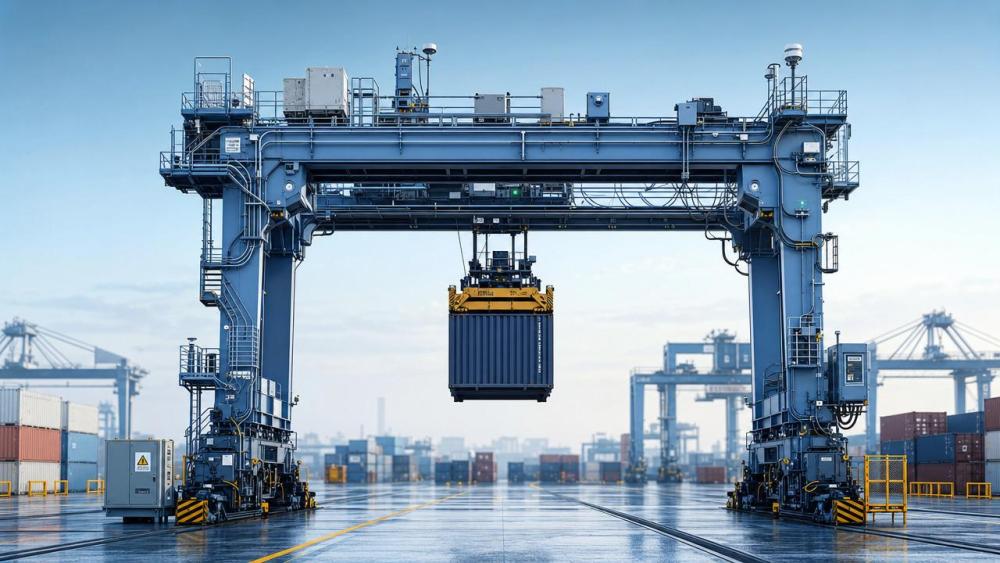
The hidden layers behind reliable remote control cranes
When performance complaints arise, the visible screen often gets blamed first. Yet the interface is only the surface. In practice, remote control cranes succeed or fail through several less visible layers that maintenance teams must understand.
1. Control logic consistency
Control logic determines how operator commands are translated into hoist, trolley, gantry, spreader, or grab movements. If tuning is inconsistent, operators may report sluggish response, overshoot, uneven deceleration, or unstable anti-sway behavior. These symptoms may appear to be human-machine interface issues, but the root causes often sit in parameter settings, motion profiles, or coordination logic between drives and supervisory controls.
2. Sensor quality and calibration stability
Remote control cranes rely heavily on accurate sensing. Load position, trolley location, wind conditions, camera alignment, spreader status, and obstacle awareness all affect remote operation confidence. A drifting encoder, contaminated lens, or misaligned limit reference can degrade both safety and productivity. For maintenance teams, sensor health is not a background issue; it is part of the main performance chain.
3. Communication robustness
The communication link between crane and remote station is a make-or-break factor. Latency spikes, packet loss, roaming instability, or electromagnetic interference can create inconsistent command feedback, video lag, and operator hesitation. Even if average network performance looks acceptable, intermittent drops can still hurt operations. Maintenance teams increasingly need network diagnostics skills alongside electrical and mechanical competence.
4. Software architecture and update discipline
As remote control cranes become more software-defined, service complexity increases. Version mismatches between PLC programs, HMI applications, safety systems, and camera software can introduce subtle faults that are difficult to reproduce. A maintainable architecture should support traceable logs, clear module boundaries, rollback options, and predictable update windows. Without these, maintenance teams spend too much time restoring basic compatibility.
5. Fault transparency
A good system does not simply alarm; it helps technicians find the cause. Remote control cranes with poor fault transparency can flood teams with generic warnings while revealing little about sequencing, subsystem status, or prior triggering events. Better fault trees, timestamp synchronization, and alarm prioritization reduce mean time to repair and improve maintenance confidence.
How the trend affects aftersales maintenance teams most directly
Among all stakeholders, aftersales maintenance personnel are often where the consequences of poor system design become most visible. They face customer pressure during downtime, carry responsibility for restoring operation quickly, and must bridge hardware, software, and operations language at the same time. The evolution of remote control cranes is therefore changing the maintenance role itself.
One major implication is training. Traditional crane maintenance expertise remains essential, but remote control cranes demand additional literacy in industrial Ethernet, wireless behavior, sensor validation, cybersecurity hygiene, and data interpretation. Another implication is tooling. Teams increasingly need diagnostic software, trace logs, signal recorders, and standardized test procedures rather than relying only on manual inspection and replacement experience.
There is also a workflow impact. In the past, a crane fault could often be assigned to mechanical, electrical, or operator categories. With remote control cranes, many issues cut across these lines. A camera alignment problem may trigger operator hesitation; a network fluctuation may appear as motion inconsistency; a control parameter drift may look like a drive fault. That means maintenance organizations need clearer escalation logic and better cooperation between field service, controls engineering, and terminal operations.
What signals deserve the closest attention in the next phase
The next development stage for remote control cranes will likely be defined by supportability metrics rather than by visual features alone. Several signals deserve close monitoring.
- Whether OEMs provide clearer subsystem health visibility, not just alarm lists.
- Whether communication architecture includes redundancy and better event correlation.
- Whether software updates can be staged, validated, and rolled back safely.
- Whether remote control cranes support predictive maintenance based on meaningful operating data rather than raw data overload.
- Whether service contracts begin to define response obligations for controls, networking, and software incidents as clearly as for mechanical failures.
Another signal is the growing convergence between remote operation and semi-automation. Many terminals do not move from manual to full automation in one step. Instead, they build hybrid environments where remote control cranes coexist with automation aids such as sway control, stack guidance, automated positioning, and safety envelopes. For maintenance teams, hybrid systems may be harder to support than fully manual equipment because they mix human decisions with machine-generated constraints. This makes clear system boundaries and diagnostic transparency even more important.
Practical judgment criteria for maintenance-led evaluation
If a terminal, service provider, or equipment owner wants to judge the long-term value of remote control cranes, maintenance-led questions should be part of the evaluation from the start. The goal is not to resist modernization, but to separate durable capability from attractive demonstration performance.
These criteria are valuable not only for new procurement, but also for retrofit decisions. Many sites are extending the life of existing crane assets by adding remote operation packages rather than replacing complete machines. In those cases, interface quality can look impressive during commissioning, yet structural weaknesses often emerge later where old wiring practices, inconsistent sensor histories, or mixed-generation subsystems meet new software demands. Maintenance feedback should therefore be treated as a strategic input, not a post-installation complaint stream.
A realistic response strategy for the coming years
For organizations working with remote control cranes, the most effective response is usually staged rather than dramatic. First, map recurring failures by subsystem and event sequence, not just by alarm code. Second, strengthen baseline health checks for cameras, encoders, network quality, and synchronization accuracy. Third, align service teams with controls engineers so that intermittent faults can be investigated using shared evidence rather than assumptions.
It is also wise to review support models. As remote control cranes become more digitally dependent, on-site service alone may be too slow for certain issues, while remote support alone may miss physical causes. A hybrid service structure, combining field verification with remote diagnostics and disciplined software governance, is becoming the more resilient model.
Most importantly, maintenance teams should help redefine what “good” looks like. A good remote control crane is not simply one with a modern interface. It is one that keeps command response predictable, preserves sensor integrity, exposes useful fault data, and allows technicians to restore operation efficiently under pressure. That is the trend line now shaping value in terminal automation.
Final takeaway for teams assessing remote control cranes
The direction of travel is clear: remote control cranes are moving from being a visible modernization symbol to becoming a deeper test of system engineering maturity. For aftersales maintenance teams, this change creates both pressure and influence. Pressure, because failures are more cross-functional and less obvious. Influence, because long-term performance depends heavily on whether maintainability has been built into the crane’s controls, communications, sensing, and service architecture.
If your organization wants to judge how this trend may affect its own operations, focus on a few practical questions: Are our remote control cranes easy to diagnose across subsystem boundaries? Can we verify communication quality before it becomes a productivity issue? Do our service teams have the tools and authority to manage software-related faults? And when we compare suppliers or retrofit plans, are we measuring lifecycle support strength as seriously as interface design? Those answers will do more to protect uptime than any screen upgrade alone.
Related News
Related News
- 00
0000-00
How port machinery systems reduce container handling bottlenecks - 00
0000-00
How smart port logistics systems reduce container dwell time - 00
0000-00
How transport equipment intelligence analysis identifies bottlenecks - 00
0000-00
How rail technology advancements are reshaping signaling standards - 00
0000-00
What is driving growth in the global EMU market size?
Weekly Insights
Stay ahead with our curated technology reports delivered every Monday.