
Freight Logistics Costs Rise Fast When Dwell Time Is Ignored





Freight logistics costs can escalate far faster than most finance teams expect when dwell time is overlooked. For approval decision-makers, every idle container, delayed wagon, or congested terminal process quietly erodes margins, cash flow, and asset utilization. This article explains why dwell time has become a critical hidden cost driver and how sharper visibility can turn operational delay into measurable financial control.
What does dwell time really mean in freight logistics, and why are finance teams paying more attention to it?
In freight logistics, dwell time is the period during which cargo, containers, rail wagons, trucks, or handling equipment remain idle between active transport stages. It may happen in a port yard, inland rail terminal, warehouse gate, customs checkpoint, cross-dock, or bulk transfer point. Operational teams often treat this as a scheduling issue. Finance approvers should treat it as a cost amplifier.
The reason is simple: dwell time consumes resources without producing transport progress. A loaded container sitting for two extra days still incurs storage charges, equipment occupancy, labor coordination overhead, and delayed billing. A rail wagon waiting too long at a loading point reduces asset turns. A queue at a terminal crane or automated yard can trigger demurrage, detention, missed vessel windows, and emergency rescheduling costs.
For organizations managing high-volume transportation, dwell time also weakens forecast accuracy. Budget assumptions may look reasonable when based on line-haul rates alone, yet actual freight logistics performance deteriorates because inventory remains trapped in transit nodes longer than expected. This creates a gap between contracted transport spend and true landed cost.
That is why strategic intelligence platforms such as TC-Insight matter. In sectors tied to mainline railways, port automation, and bulk material handling, the most important cost story is rarely visible from rate cards alone. It sits inside node efficiency, equipment utilization, and transfer timing.
Why does ignored dwell time make freight logistics costs rise so fast?
Because dwell time creates stacked costs rather than a single charge. Finance leaders often approve freight logistics budgets by category: transport, handling, storage, labor, and exceptions. Dwell time cuts across all of them at once.
First, there are direct charges. These include storage fees, yard occupancy, demurrage, detention, reefer power, wagon standing charges, and penalty costs from missed slots. Second, there are indirect costs such as extra planning labor, customer service interventions, premium truck dispatch, and inventory financing. Third, there are strategic costs: reduced network capacity, lower asset productivity, and weaker service reliability that may force businesses to hold more safety stock.
In rail-linked and terminal-linked freight logistics, dwell time can spread quickly through the network. One delayed unloading cycle can hold a wagon set, disrupt a crane sequence, postpone a feeder truck appointment, and create congestion for inbound cargo. The financial effect is not linear. Once a node crosses its efficient handling threshold, every additional hour of delay can cost more than the previous hour because recovery requires overtime, reprioritization, and lower schedule discipline.
This is especially relevant in global supply chain environments where mainline rail, urban freight access, container terminals, and bulk handling systems interact. When approval teams ignore dwell time, they may believe they are controlling cost while actually approving a structurally inefficient logistics model.
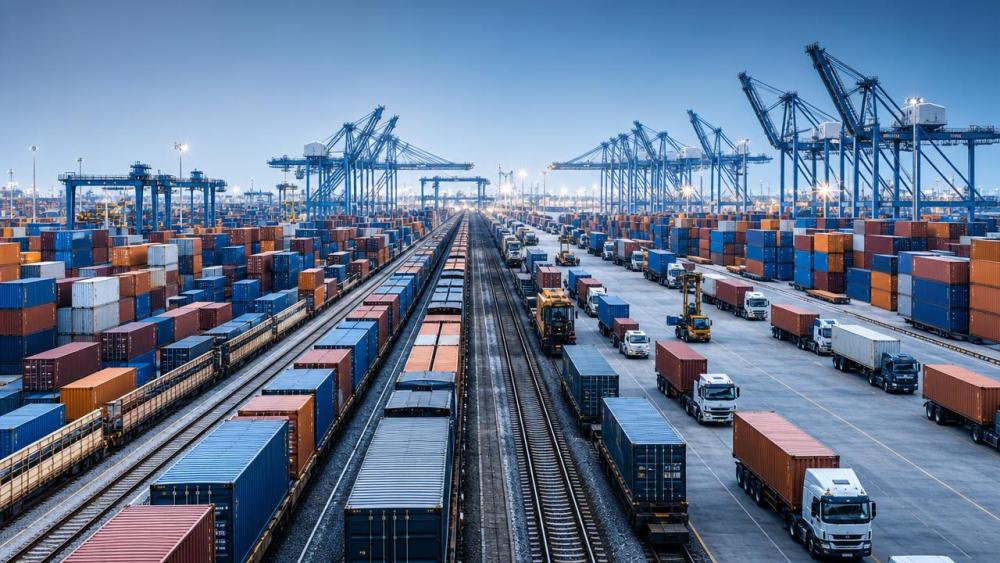
Which freight logistics scenarios are most exposed to dwell time risk?
Not every shipment is affected equally. Dwell time becomes a serious financial issue when freight logistics depends on synchronized assets, fixed schedules, or constrained nodes. The following scenarios deserve priority review:
- Intermodal rail-to-port flows, where delay at one interface affects wagon release, crane planning, and vessel cut-off compliance.
- High-throughput container yards, where automated stacking, gate appointments, and limited storage capacity make idle cargo expensive.
- Bulk material handling operations, where continuous-flow systems are designed around throughput, not prolonged queuing.
- Cross-border freight logistics, where customs clearance and documentation gaps create hidden inventory time.
- Urban distribution connections, where restricted delivery windows and terminal congestion can lock assets into low-value waiting cycles.
For finance approvers, the warning sign is operational dependency. If the transport chain relies on tight handoffs among rail equipment, terminal machinery, and digital scheduling systems, dwell time is not a side issue. It is a primary determinant of cost efficiency.
How can a finance approver tell whether dwell time is a hidden problem or a manageable exception?
The best way is to stop asking only, “What is the freight rate?” and start asking, “How long does each asset and shipment wait at every node?” In freight logistics, the hidden problem usually appears in variance patterns rather than in one obvious invoice line.
Review whether actual transit duration is drifting above contracted expectations, whether storage and exception charges are increasing faster than shipment volume, and whether invoicing cycles are delayed because proof-of-delivery or gate-out events occur later than planned. Also compare equipment utilization against schedule assumptions. A terminal or rail operation can appear busy while remaining financially inefficient if too much time is spent waiting rather than moving.
A practical screening table can help decision-makers identify where freight logistics dwell time deserves immediate attention:
What are the most common mistakes companies make when reviewing freight logistics costs?
A frequent mistake is evaluating freight logistics as if transport price were the only cost that matters. A low line-haul rate can hide expensive dwell conditions at ports, rail yards, inland terminals, or customer sites. Another mistake is separating operations data from finance review. If a finance team sees only invoices but not terminal timestamps, wagon cycle time, or crane productivity trends, it cannot distinguish one-off disruption from persistent inefficiency.
Some companies also underestimate the role of automation logic and scheduling quality. In a modern supply chain, dwell time is heavily influenced by how digital systems coordinate gates, cranes, stacking, train formation, and cargo release. Delays are not always caused by insufficient physical capacity. They may result from poor sequencing, low data quality, or weak exception handling.
Another costly error is accepting average transit time as a sufficient KPI. Average figures can hide severe delay pockets. For approval decisions, percentile performance and node-specific variance are more useful. A route that averages five days but regularly swings between three and nine days creates financing and service risk that a simple average will never reveal.
Finally, organizations often wait too long to challenge “normal delay.” In many freight logistics networks, repeated waiting becomes culturally accepted. Once that happens, hidden cost becomes embedded in standard operating assumptions and is no longer escalated for correction.
What data should be reviewed before approving a freight logistics plan, contract, or optimization project?
Before approving spend or a new operating model, finance leaders should ask for evidence at the node level. That means timestamp-based visibility across shipment arrival, gate-in, unloading start, unloading end, customs release, yard transfer, gate-out, and final delivery. In rail-oriented freight logistics, wagon release and turnaround time are equally important. In port-linked operations, crane productivity, yard density, and appointment compliance are key indicators.
It is also useful to request a dwell cost waterfall. Instead of presenting a single total logistics number, break cost into transport, waiting, storage, handling, exception recovery, and working capital impact. This makes it easier to see whether a proposed savings plan is real or merely shifting cost from one category to another.
For strategic sectors covered by TC-Insight, such as railway rolling stock, automated port cranes, and bulk material systems, the best decisions often come from combining commercial metrics with operational intelligence. A contract may look competitive, but if the supporting equipment network lacks reliable throughput, the total freight logistics outcome may still be poor.
Useful pre-approval questions include:
- Where does dwell time occur most often, and what is the median versus worst-case delay?
- Which costs rise directly when a node slows down?
- Is the issue caused by capacity, process, documentation, or scheduling logic?
- What visibility tools exist to monitor corrective performance after approval?
- How will lower dwell time improve asset turns, invoice timing, and service stability?
How can companies reduce dwell time without creating new freight logistics risks?
The goal is not simply to force faster movement everywhere. The goal is to remove non-value waiting while protecting reliability and safety. In freight logistics, the most effective improvements usually come from better visibility, tighter node coordination, and smarter asset scheduling.
Start by identifying the highest-cost waiting points rather than trying to optimize the whole network at once. For example, if a container terminal regularly delays rail connection release, focus on rail-port handoff rules, gate appointment discipline, and crane sequencing. If bulk flows are delayed by inconsistent downstream receiving capacity, align dispatch timing with actual unloading readiness. If documentation is causing cross-border dwell, automate data validation before cargo arrival.
Technology can help, but only when tied to business decisions. Exception alerts, yard analytics, IoT tracking, and terminal operating data are valuable because they reveal where freight logistics loses time and money. Yet the real benefit comes when those insights change approvals, contracts, service-level commitments, and accountability rules.
For financial stakeholders, success should be measured in reduced accessorial cost, higher asset turns, shorter cash conversion cycles, and more predictable delivery windows. These are easier to defend in budget reviews than vague claims about efficiency.
What should decision-makers ask first if they want a more resilient freight logistics strategy?
Start with questions that connect operations to financial control. Which nodes create the most waiting? Which delays are visible in real time, and which are discovered only after invoicing? Which assets are expensive when idle: wagons, containers, cranes, trucks, or inventory itself? Which partners can prove throughput performance instead of only quoting transport rates?
A resilient freight logistics strategy is rarely built on cheaper movement alone. It is built on lower friction between rail networks, terminal systems, automation processes, and cargo release events. That is why intelligence on equipment utilization, terminal efficiency, and network timing matters to finance just as much as to operations.
If you need to confirm the right next step, prioritize discussion around four items: node-level dwell benchmarks, cost attribution by delay source, visibility infrastructure, and expected payback from shorter idle time. Those questions create a far better basis for approval than headline rate comparisons. For organizations evaluating partners, projects, or optimization initiatives, that is also where a specialized intelligence source can add value by linking transport technology realities with measurable commercial outcomes.
Related News
Related News
- 00
0000-00
How port machinery systems reduce container handling bottlenecks - 00
0000-00
How smart port logistics systems reduce container dwell time - 00
0000-00
How transport equipment intelligence analysis identifies bottlenecks - 00
0000-00
How rail technology advancements are reshaping signaling standards - 00
0000-00
What is driving growth in the global EMU market size?
Weekly Insights
Stay ahead with our curated technology reports delivered every Monday.