
Remote Control Cranes and the Safety Gaps Sites Miss First





Remote control cranes are changing how ports, terminals, and bulk logistics sites operate. They reduce operator exposure in hazardous zones, support longer operating windows, and create a path toward higher automation. But for quality and safety managers, the first question is not whether remote control improves productivity. It is whether the site has identified the new safety gaps that appear when the operator is moved away from the machine.
The answer at many sites is no. The earliest failures in remote control crane projects rarely come from the core drive system alone. They come from reduced line-of-sight, delayed video feedback, unclear authority between field crews and remote operators, weak emergency-stop logic, poor human-machine interface design, and maintenance routines that were built for cabin cranes rather than distance-based operation.
That makes the real issue straightforward: remote control cranes can improve safety, but only if the site redesigns its risk controls around remote work, not around traditional crane habits. For safety leaders and quality teams, the priority is to spot those gaps before an incident, near miss, or throughput disruption exposes them in live operations.
Why the first safety gaps in remote control cranes are often missed
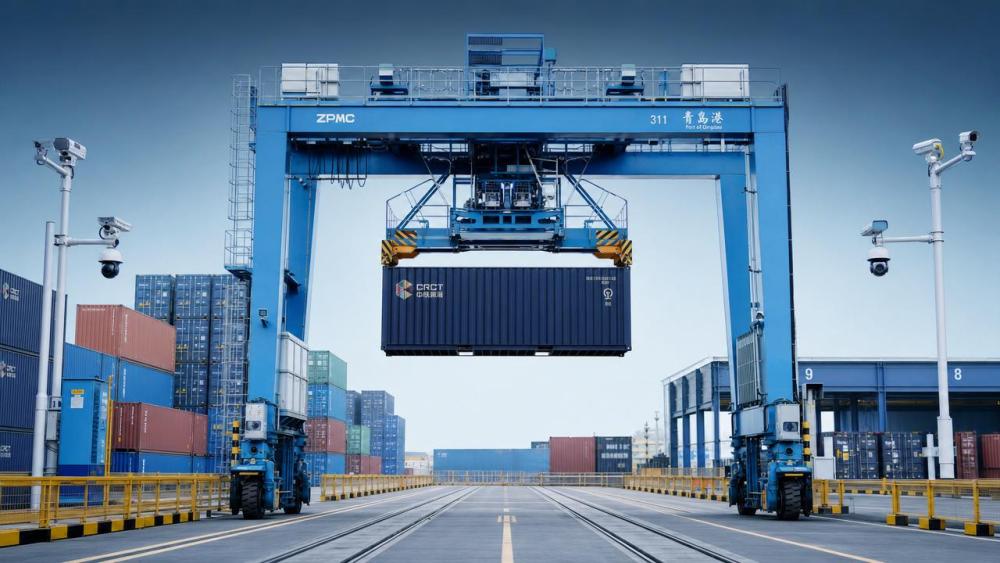
Many sites begin a remote control crane upgrade with a technology mindset. They focus on radio links, camera systems, automation modules, and control room layout. Those elements matter, but the first hidden risk usually sits in the operating model. A remote control crane changes how people perceive movement, judge distance, communicate intent, and intervene during abnormal conditions.
In a cabin, an operator can combine direct sight, vibration, machine sound, and instinctive spatial awareness. In remote mode, that sensory envelope is compressed into screens, alarms, and control logic. If the site treats remote control cranes as a simple relocation of the operator, it misses a basic truth: the task itself has changed. That creates exposure in risk assessment, training, supervision, and incident response.
Quality and safety managers often see this pattern during commissioning. Acceptance tests may show that the crane functions correctly under normal loads, yet the operating team remains vulnerable during edge cases such as blind lifts, weather shifts, equipment interference, mixed manual-automatic operations, or pedestrian intrusion into exclusion zones. The crane may pass technical tests while the site still fails operational safety readiness.
What quality and safety managers should worry about first
If your site is introducing or expanding remote control cranes, the first concern should not be headline automation performance. It should be whether the new risk profile has been mapped in practical terms. Several issues deserve early attention because they repeatedly appear across ports, intermodal yards, and bulk handling sites.
1. Visibility gaps. Camera coverage can look adequate on paper and still fail in practice. Glare, rain, dust, low light, dirty lenses, shadow zones, and poor depth perception can weaken operator judgment. A remote operator may see enough to continue movement, but not enough to confirm clearance, hook position, swing path, or personnel proximity with confidence.
2. Latency and signal instability. Even small delays in video or control transmission can change safe stopping distance and timing. This becomes more serious when handling containers, grabs, magnets, or heavy irregular bulk loads. Sites that measure average latency but ignore peak delay during network congestion are leaving a dangerous blind spot in their controls.
3. Unclear command authority. In traditional lifting, responsibility is often understood through long-established routines between operator, signaler, rigger, and supervisor. Remote control cranes disrupt that familiarity. If there is any uncertainty about who can authorize movement, pause operations, or declare a safe restart after an interruption, incident potential rises quickly.
4. Weak field-zone protection. Remote operation only works safely when the site can reliably separate people from crane travel paths, suspended loads, and machine envelopes. Physical barriers, geofenced alarms, access control, and interlocked zones become more important, not less, because the operator is no longer physically immersed in the local scene.
5. Emergency intervention logic. A remote system must define exactly how emergency-stop commands behave, who can trigger them, how the crane enters a safe state, and how restart authorization is controlled. Many sites test emergency stop as a button function but do not test the full chain of safe response under realistic operating conditions.
How remote control changes the site’s real safety logic
The biggest mistake is assuming that old procedures can simply be digitized. Remote control cranes require a different safety logic because hazards are no longer managed mainly through operator proximity and visual familiarity. They are managed through engineered visibility, communication discipline, software rules, and strong separation of people and moving equipment.
For example, in a manned crane, an operator may stop because something “does not feel right.” In remote operation, that intuition must be supported by system design. You need camera views that reveal uncertainty, alarms that are prioritized rather than noisy, and procedures that allow the operator to stop work without production pressure overriding caution.
This shift also changes the role of frontline supervision. Supervisors can no longer rely only on observing the crane from the ground and assuming the operator sees the same scene. They must verify whether the remote workstation, video architecture, and field communications allow the same or better level of hazard recognition. If not, the site is operating on false confidence.
The most common hidden failure points during daily operation
Once remote control cranes move beyond pilot mode, the safety gaps often become operational rather than technical. These are the failure points that quality and safety teams should audit repeatedly.
Camera dependency without camera governance. Sites invest in cameras but fail to create standards for lens cleaning, image quality thresholds, redundancy, fault response, and minimum visibility before lift continuation. If camera degradation does not trigger a clear operating restriction, risk becomes normalized.
Alarm overload. Too many alerts reduce operator attention. A remote operator handling multiple information streams needs hierarchy: which warnings require immediate stop, which need confirmation, and which are advisory only. Poor alarm design can be just as dangerous as missing alarms.
Mode confusion. Hybrid sites often shift between manual, semi-automatic, and remote control states. If mode status is not unmistakable at both the crane and control station, workers may act under false assumptions. Many near misses happen during transitions, not during stable operation.
Maintenance isolation gaps. Lockout-tagout and maintenance access procedures must reflect remote restart risk. A worker on or near the crane structure should never depend on informal radio confirmation alone. Isolation status must be physical, digital, and visible to all relevant parties.
Fatigue in remote operation. Distance-based control can look ergonomically easier than cabin work, but cognitive fatigue can be higher. Continuous screen attention, repetitive control inputs, and reduced physical variation affect perception and reaction quality. Safety performance depends on shift design, interface ergonomics, and break management.
How to evaluate whether a site is truly ready for remote control cranes
For quality personnel and safety managers, readiness should be judged through evidence, not vendor promises or isolated trial results. A useful evaluation framework starts with five questions.
Can the operator always confirm load path and personnel clearance? This is the first readiness gate. If visibility depends on ideal weather, clean lenses, and perfect crew positioning, the system is not robust enough.
Are all communication roles unambiguous? Every movement authority, stop command, handover, and restart decision should be defined. Field workers must know when visual signals, radio commands, or system permissions take precedence.
Does the site control degraded modes? Remote control cranes should have explicit rules for operation under partial camera loss, network instability, sensor faults, or automation mismatch. Degraded mode is where mature sites separate themselves from risky ones.
Have emergency scenarios been rehearsed, not just documented? Tabletop procedures are not enough. The site should simulate communication loss, intrusion alarms, sway events, power interruptions, and emergency stops under operationally realistic conditions.
Is there traceable learning from near misses? A modern remote crane system generates data. If the site is not using event logs, alarm history, operator feedback, and maintenance findings to identify recurring weak points, it is losing one of the biggest safety advantages of digital operation.
Practical controls that close the earliest safety gaps
The good news is that the first safety gaps in remote control cranes are manageable when sites act early. The strongest controls usually combine engineering, procedures, and behavior rather than relying on any single layer.
Start with visibility assurance. Define mandatory camera health checks, minimum image standards, redundant viewpoints for critical movements, and weather-response rules. Add regular validation from operators and field teams, not just maintenance sign-off.
Strengthen zone control. Separate people from machine envelopes through barriers, access gates, detection systems, and permit discipline. Remote operation is safest where pedestrian presence in active crane zones is structurally minimized rather than managed through verbal caution alone.
Improve control-room ergonomics. Screen layout, joystick response, seat position, lighting, and alarm prioritization all influence safe decision-making. If the workstation makes operators work harder to build situational awareness, errors become more likely over time.
Build mode management rules. Every manual-to-remote or remote-to-automatic transition should have confirmation steps, visible status indication, and stop criteria if any prerequisite is missing. Transition discipline is a major predictor of safe performance.
Finally, develop joint training for operators, maintainers, supervisors, and field crews. Remote control cranes fail when training is fragmented by department. Everyone involved must understand the same hazard model, command logic, and abnormal response expectations.
What good governance looks like after deployment
Installing remote control cranes is not the end of the safety effort. In many cases, the higher risk period begins after the project team leaves and routine production pressure takes over. Sites need governance that keeps the system safe as conditions change.
That means tracking the right indicators. Traditional injury metrics are too late. Better leading indicators include camera fault frequency, communication interruptions, emergency-stop activations, mode-transition errors, exclusion-zone breaches, deferred maintenance on visibility systems, and repeated operator complaints about blind spots or alarm clutter.
It also means auditing work as actually performed. Procedures may say one thing while crews develop practical shortcuts under schedule pressure. Safety managers should review playback data, observe handovers, inspect field-zone discipline, and compare intended process with real behavior. In remote operations, drift can happen quietly because the operator is physically separated from the field.
From a quality perspective, governance should connect safety findings to operational stability. Poor visibility, weak communication, and unclear restart rules do not only create incident potential. They also slow cycle times, increase hesitations, create rework, and damage trust in automation programs. In that sense, safety maturity and productivity reliability are closely linked.
Why this matters for terminal modernization and long-term operational trust
For ports, rail-linked terminals, and bulk logistics hubs, remote control cranes are part of a wider shift toward intelligent equipment, data-based supervision, and leaner yard operations. But every modernization project depends on trust. If operators, maintainers, or frontline supervisors believe the system is technically impressive but operationally unsafe, adoption stalls and informal workarounds appear.
That is why early safety gap identification matters so much. It protects people, but it also protects the business case. A site that closes visibility gaps, clarifies authority, secures exclusion zones, and rehearses degraded operation will gain more stable throughput and stronger confidence in future automation steps.
For quality and safety managers, the best approach is not to ask whether remote control cranes are safe in theory. Ask whether your site has redesigned its controls for the realities of distance, delay, and distributed decision-making. That is where the first overlooked risks usually sit, and where the biggest practical gains can be made.
Conclusion: safer remote control cranes depend on redesigned controls, not just better technology
Remote control cranes can reduce exposure and improve logistics efficiency, but only when sites recognize that removing the operator from the cabin creates a new safety environment. The most common gaps appear in visibility, latency, authority, field separation, emergency response, and maintenance isolation. These are not minor details. They are the foundation of safe remote operation.
For quality professionals and safety managers, the priority is clear: evaluate the real operating model, test abnormal scenarios, strengthen zone controls, and govern the system with leading indicators rather than assumptions. When those steps are taken seriously, remote control cranes become more than an automation upgrade. They become a safer and more trusted part of modern terminal performance.
Related News
Related News
- 00
0000-00
How port machinery systems reduce container handling bottlenecks - 00
0000-00
How smart port logistics systems reduce container dwell time - 00
0000-00
How transport equipment intelligence analysis identifies bottlenecks - 00
0000-00
How rail technology advancements are reshaping signaling standards - 00
0000-00
What is driving growth in the global EMU market size?
Weekly Insights
Stay ahead with our curated technology reports delivered every Monday.