Smart Logistics Projects Stall When Data Rules Stay Vague





Smart logistics projects often promise faster throughput, better visibility, and stronger returns, yet many stall when data ownership, access rights, and governance standards remain unclear. For project managers and engineering leaders, vague data rules can quietly delay integration, inflate costs, and weaken cross-system coordination. This article examines why clear data frameworks are becoming essential to keeping complex logistics initiatives on schedule and operationally aligned.
Why do smart logistics projects slow down even when the technology looks ready?
In many smart logistics programs, the visible layer gets most of the attention: sensors, automation software, control towers, warehouse systems, rail dispatch interfaces, crane telemetry, and predictive dashboards. However, the hidden layer often determines success. That hidden layer is data governance. A project can have capable vendors, strong hardware, and a realistic business case, yet still lose momentum because no one has clearly decided who owns operational data, who can edit master records, which system is the source of truth, or how external partners can connect.
For project managers, this is not a purely legal or IT issue. It directly affects scope, schedule, testing, and acceptance. If the transport management platform says one thing, the terminal operating system says another, and the maintenance platform stores data in a third format, then every integration meeting turns into a rules negotiation. Smart logistics depends on reliable information flows across assets, teams, and nodes. When those rules stay vague, delivery slows because every milestone becomes conditional.
This challenge is especially visible in sectors connected to high-volume transportation. Rail freight corridors, urban transit interfaces, container terminals, and bulk material handling systems all rely on synchronized timing, equipment status, and event reporting. TC-Insight has long observed that operational intelligence creates value only when the underlying data relationships are defined early enough to support execution, not just reporting.
What exactly are “data rules” in a smart logistics project?
In practical terms, data rules are the operating agreements that make digital coordination possible. They include ownership, access control, naming standards, update frequency, validation methods, retention periods, cybersecurity boundaries, and exception handling. In a smart logistics environment, these rules must cover both business data and machine data. Shipment events, maintenance logs, route assignments, yard positions, energy usage, and equipment alarms all need consistent treatment.
Many teams assume APIs alone solve the problem. They do not. APIs can move data, but they cannot resolve conflicts about whether a timestamp from a locomotive subsystem outranks a timestamp from a yard gate, or whether a port automation partner may reuse throughput data for analytics training. Those are governance decisions. If they are postponed, technical design becomes unstable.
A useful way to understand data rules is to divide them into four layers:
- Business authority: who creates, approves, and changes records.
- Technical structure: formats, interfaces, schemas, and synchronization logic.
- Security and compliance: identity, permissions, audit trails, and cross-border controls.
- Operational accountability: who fixes errors, how quickly, and with what escalation path.
When these layers are documented, smart logistics projects move from “integration by assumption” to “integration by design.” That difference is often what separates a scalable deployment from a pilot that never expands.
Which project scenarios are most exposed when data governance is weak?
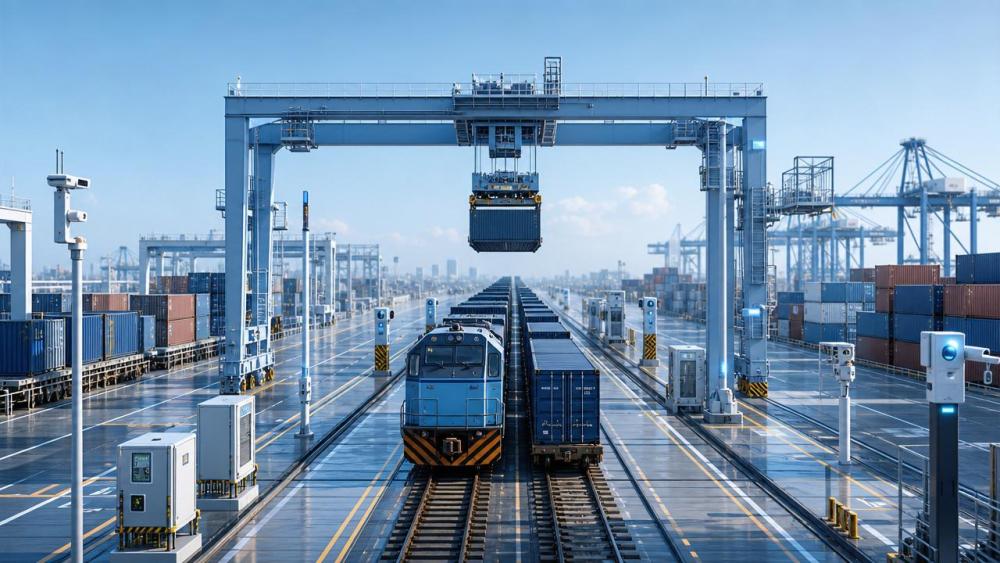
Not every project suffers equally. The highest-risk cases are usually multi-party, multi-asset, and real-time. That includes rail-to-port interfaces, smart yard scheduling, fleet visibility across contractors, automated bulk handling lines, and urban logistics hubs linking several operating systems. In these scenarios, smart logistics is valuable precisely because it reduces friction across boundaries. If the boundaries remain undefined from a data perspective, the promised efficiency becomes difficult to capture.
Engineering leaders should be especially alert in three common situations. First, when legacy platforms must connect to new analytics or automation layers. Second, when a project includes public and private stakeholders with different reporting obligations. Third, when vendors provide proprietary subsystems and hesitate to expose full data access. Each of these conditions can create delays that are not obvious in the early procurement phase.
For example, a smart logistics control platform may be intended to optimize train arrival slots, crane cycles, and truck dispatch sequencing. If one subsystem shares only periodic summaries while another offers live event streams, then optimization quality drops. If the project team discovers this during commissioning instead of concept design, cost and timeline pressure rise quickly.
How can project managers tell whether vague data rules are already becoming a delivery risk?
The warning signs usually appear before formal escalation. Repeated interface workshops with no final ownership matrix, unresolved arguments over naming conventions, shifting definitions of asset status, and unclear responsibility for data cleansing are all strong indicators. Another signal is when vendors keep saying integration is possible “after alignment.” That phrase often means the project has not yet agreed on the operating rules needed for implementation.
A disciplined review can help teams identify exposure early. The table below summarizes practical checks for smart logistics programs.
If two or more of these questions cannot be answered clearly, the project may already be carrying hidden delivery risk. In smart logistics, ambiguity tends to compound because every new interface inherits the same unresolved assumptions.
What are the most common mistakes teams make when planning smart logistics data frameworks?
One frequent mistake is treating governance as a late-stage documentation task instead of a design input. Teams may believe they can finalize data rules after selecting software, but by then architecture choices, vendor dependencies, and budget allocations are already set. A second mistake is assuming one central platform will automatically normalize every inconsistency. In reality, poor upstream definitions usually create more downstream complexity.
A third mistake is focusing only on system-to-system exchange while ignoring operational ownership. Smart logistics does not run itself simply because data is connected. Someone must still approve changes, investigate anomalies, and decide how exceptions are handled during disruptions. If that human governance model is missing, even advanced automation can become fragile.
Another common error is underestimating commercial sensitivity. Throughput rates, equipment productivity, dwell times, and route performance may be strategically valuable. Partners may hesitate to share them without clear limits on reuse, storage, and benchmarking. For organizations operating across international transport corridors, this is even more important because data rules may intersect with local cybersecurity requirements and customer confidentiality obligations.
What should engineering leaders define first to keep smart logistics programs on track?
The first priority is not building the biggest dashboard. It is deciding what data is mission-critical for operational coordination. Usually, that starts with a narrow set of shared objects and events: asset identity, location, status, job assignment, completion confirmation, exception codes, and time references. Once these are agreed, the team can define ownership, quality thresholds, and exchange mechanisms around them.
Next, project leaders should create a data responsibility map that mirrors the delivery structure. Every critical flow in a smart logistics project should have a clear answer to five questions: who creates the record, who validates it, who consumes it, who can change it, and who resolves disputes. This avoids the common pattern where technical teams are asked to settle business conflicts they do not control.
It is also wise to define a minimum governance pack before integration starts. That pack can include a master data list, interface dictionary, permission matrix, audit requirements, and issue escalation path. The goal is not bureaucracy. The goal is reducing decision latency. When problems emerge during testing, teams need agreed rules more than extra meetings.
For organizations involved in rail equipment, urban transit intelligence, port machinery automation, or bulk logistics systems, this discipline supports a broader strategic benefit: better interoperability over the full asset lifecycle. That aligns with the intelligence-centered mission championed by TC-Insight, where operational value depends on linking equipment behavior, scheduling logic, and macro-logistics efficiency through trusted information.
Does stronger data governance increase cost and slow innovation?
In the short term, yes, it adds effort. Teams must define standards, review contracts, and align stakeholders earlier. But in project terms, this is usually preventive cost rather than extra cost. Most smart logistics overruns tied to data issues appear later, when redesign is expensive and go-live pressure is high. A modest investment in governance up front often protects integration budgets, testing windows, and operational readiness.
It also does not have to suppress innovation. In fact, clear rules can accelerate it. Once access rights, event structures, and quality thresholds are stable, analytics teams can build forecasts faster, automation partners can tune control logic with more confidence, and operators can trust performance comparisons across sites. Innovation scales better when the foundation is dependable.
The more mature view is that smart logistics needs both technical ambition and governance discipline. One creates possibility; the other makes the possibility repeatable. Projects that neglect either side tend to struggle.
What should teams ask before moving forward with vendors, integration, or rollout?
Before finalizing scope, project managers and engineering leads should ask a focused set of questions. Which datasets are essential for operational control versus management reporting? Which partner systems can expose real-time data, and under what conditions? Where are the proprietary boundaries? How will data quality be measured during factory acceptance testing and site acceptance testing? What happens if timestamps, asset IDs, or status codes do not match across platforms? And who has authority to decide the fix?
These questions are especially important in smart logistics environments where infrastructure, vehicles, equipment, and software come from different supply chains. A strong rollout plan does not begin with a vague promise of connectivity. It begins with precise agreement on what connected operations actually require.
If your organization is assessing a new initiative, upgrading a control layer, or linking rail, terminal, and yard systems more tightly, the next conversation should not only cover features, timeline, and budget. It should also confirm data ownership, interface authority, validation rules, and escalation rights. If needed, start there first. It is often the fastest way to keep a smart logistics project moving with fewer surprises and stronger long-term value.
Related News
Related News
- 00
0000-00
How port machinery systems reduce container handling bottlenecks - 00
0000-00
How smart port logistics systems reduce container dwell time - 00
0000-00
How transport equipment intelligence analysis identifies bottlenecks - 00
0000-00
How rail technology advancements are reshaping signaling standards - 00
0000-00
What is driving growth in the global EMU market size?
Weekly Insights
Stay ahead with our curated technology reports delivered every Monday.