When a Rail Network Upgrade Solves Less Than Expected





A rail network upgrade is often expected to unlock immediate gains in capacity, reliability, and supply chain performance. Yet for enterprise decision-makers, the real question is why some investments deliver less than promised. This article examines where planning gaps, system integration limits, and operational complexity can weaken outcomes—and what leaders should evaluate to turn a rail network improvement into measurable long-term value.
Why does a rail network upgrade sometimes solve less than expected?
A rail network upgrade can look impressive on paper and still underperform in practice because rail systems behave as connected operating ecosystems, not isolated assets. Adding track, renewing signaling, modernizing rolling stock interfaces, or expanding terminals may remove one visible bottleneck, but hidden constraints often remain elsewhere. Capacity can still be limited by dispatching rules, maintenance windows, power supply, last-mile freight handling, or inconsistent data sharing across operators.
For business leaders, the key issue is not whether capital was spent, but whether the upgrade changed end-to-end throughput. In many markets, expectations are set around headline engineering outputs: more route-kilometers, faster speeds, new interlockings, or refurbished stations. However, the commercial result depends on whether those changes improve train path availability, turnaround times, asset utilization, and recovery from disruption. If the rail network still suffers from poor timetable resilience or terminal congestion, the upgrade may produce only marginal gains.
This is especially relevant in freight corridors and dense urban systems, where one weak node can absorb the value created by several strong ones. A smarter question for decision-makers is therefore: which system constraints are being solved, and which are simply being moved downstream?
What does “success” actually mean for a rail network investment?
Success should not be measured only by construction completion or technology deployment. A rail network investment is successful when it delivers operational, financial, and strategic outcomes that can be sustained over time. For an enterprise decision-maker, that means defining value before procurement, not after commissioning.
In practical terms, a successful rail network improvement should answer several business questions. Does it increase dependable capacity rather than theoretical capacity? Does it reduce variability in transit time? Does it improve equipment utilization across rolling stock, yards, terminals, and labor scheduling? Does it support decarbonization targets without adding excessive operational complexity? Most importantly, does it strengthen competitiveness across the broader supply chain?
TC-Insight closely tracks this distinction across mainline railways, urban transit, high-speed integration, and logistics equipment. The most durable gains usually come when infrastructure upgrades are matched with signaling logic, traffic management discipline, terminal automation readiness, and realistic maintenance planning. In other words, infrastructure alone rarely transforms outcomes; coordinated operating design does.
Which hidden bottlenecks most often reduce the impact of a rail network upgrade?
The most common reason a rail network upgrade underdelivers is that the visible project scope does not match the actual bottleneck structure. Decision-makers often focus on line speed or track addition, while the more limiting factor may be junction conflict, crew management, traction power limits, terminal dwell time, or inconsistent loading and unloading cycles.
For example, a freight corridor may receive upgraded track and still fail to improve shipment reliability because port cranes, yard planning, and train formation processes remain unchanged. In urban rail transit, a signaling upgrade may permit shorter headways, yet real service frequency may barely improve if platform crowding, depot release timing, or incident response procedures are still weak. In both cases, the rail network appears modernized, but operational flow remains constrained.
Another hidden issue is interoperability. Different generations of control systems, rolling stock software, and maintenance regimes can create friction that is not obvious in early planning. Leaders should ask whether interfaces between assets are mature, tested, and manageable at scale. Many upgrade programs are technically completed but commercially diluted by fragmented execution.
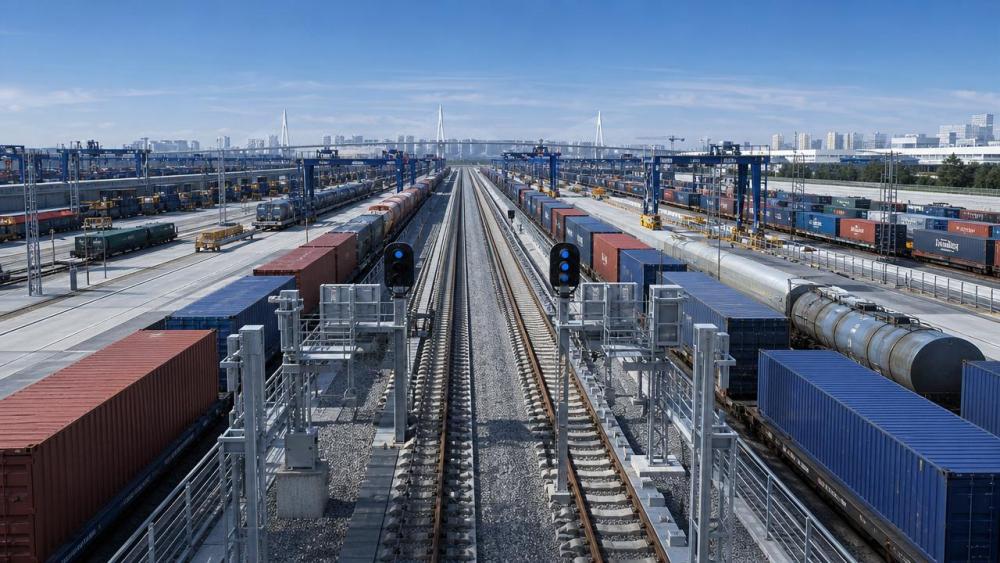
Common constraint areas leaders should test early
Before assuming a rail network project will unlock major value, it helps to verify where constraints actually sit. The table below summarizes frequent problem areas and their business implications.
How should enterprise decision-makers evaluate a rail network project before committing?
Enterprise decision-makers should evaluate a rail network project as a business operating model change, not just an engineering package. That means testing assumptions around capacity, resilience, interfaces, staffing, and downstream logistics performance. A strong evaluation process should compare expected gains under normal conditions and under disruption, because many networks fail not during ideal operation, but during recovery from delays, maintenance events, or demand surges.
One useful approach is to ask four structured questions. First, what specific bottleneck is being targeted, and what evidence proves it is the dominant constraint? Second, what dependencies outside the project boundary must also perform well for the rail network upgrade to create value? Third, what new operational complexity is being introduced, and does the organization have the capability to manage it? Fourth, how will benefits be measured six, twelve, and twenty-four months after implementation?
This discipline is especially important when projects intersect with port operations, bulk material handling, or urban multimodal transfer. A rail network can be upgraded while the surrounding logistics ecosystem remains unchanged. In such cases, capital efficiency weakens because system gains are trapped at the interface between transport modes rather than flowing through them.
What planning mistakes create the biggest gap between forecast and reality?
Several planning mistakes appear repeatedly across rail network programs. The first is relying on peak design assumptions without validating daily operating behavior. A line may be designed for high frequency or high tonnage, but actual performance depends on timetable discipline, crew availability, rolling stock readiness, and terminal synchronization. When these conditions are not stable, modeled benefits become overstated.
The second mistake is underestimating transition risk. During migration from old systems to new ones, temporary workarounds, training gaps, software stabilization periods, and restricted operating rules can reduce benefits for longer than expected. Decision-makers often approve a rail network upgrade based on full-future-state assumptions, while the organization spends a long period in partial functionality.
A third mistake is separating infrastructure planning from commercial demand logic. If freight mix, passenger demand patterns, industrial cluster growth, or inland terminal strategy are not reassessed, the upgraded rail network may be optimized for yesterday’s traffic structure rather than tomorrow’s. For sectors linked to ports, mining, manufacturing, and large urban commuting zones, this misalignment can be costly.
Finally, many organizations fail to define realistic governance. Cross-functional projects need railway operations, signaling, asset management, digital systems, and logistics partners to work from a common performance framework. Without this, accountability is fragmented and benefits become difficult to capture.
Are some rail network upgrades better suited to certain business scenarios than others?
Yes. Not every rail network strategy serves the same commercial objective. For dense urban corridors, signaling modernization, platform flow management, and depot efficiency may deliver more value than visible civil expansion. For freight-heavy routes, siding length, axle load capability, path reliability, and terminal automation links may matter more than top speed. For high-speed integration, system safety, maintenance planning, and interface discipline are often more critical than a simple capacity headline.
The right choice depends on whether the business case is based on growth, resilience, decarbonization, service quality, or network flexibility. A company dependent on just-in-time industrial logistics may value schedule reliability over raw network capacity. A port-connected operator may prioritize yard and crane synchronization with train dispatching. A metropolitan authority may focus on passenger throughput consistency during peaks. In each case, the rail network must be judged against the decision context, not against generic upgrade logic.
This is where intelligence-led evaluation matters. Decision-makers benefit from viewing rail performance alongside logistics node behavior, equipment automation maturity, and long-cycle asset economics. That broader perspective often reveals why technically sound projects still struggle to produce strategic value.
What metrics should leaders track after implementation?
Post-implementation review should focus on a small set of outcome metrics rather than a long list of engineering indicators. A rail network upgrade should be monitored through dependable train paths, on-time performance under stress, average dwell time at yards or stations, energy efficiency, maintenance-related availability, and asset turnaround. For freight users, shipment predictability and terminal release speed may matter more than average line speed. For urban systems, passenger flow recovery after disruption can be a better measure than peak timetable design.
Leaders should also compare expected and actual benefit timing. If a rail network reaches technical completion but commercial value keeps slipping due to software tuning, staffing shortages, or interface instability, corrective action should start early. Waiting for annual review cycles can allow underperformance to become normalized.
A useful discipline is benefit segmentation: identify which gains come from infrastructure, which come from operational change, and which depend on external partners. This makes it easier to understand whether the project itself is weak or whether the surrounding operating ecosystem has not caught up.
What are the most common misconceptions about rail network improvement?
One common misconception is that more infrastructure automatically means more practical capacity. In reality, the rail network only performs as well as its weakest operating interface. Another misconception is that digital systems will quickly compensate for unresolved process issues. Software can optimize flow, but it cannot fully overcome inconsistent operating discipline, poor data quality, or fragmented ownership.
A third misconception is that every bottleneck should be solved at once. Large integrated programs can create value, but they also increase execution risk. In some cases, staged upgrades with measurable checkpoints produce better outcomes because they allow leaders to validate assumptions and adapt investment sequencing. The objective is not maximum project size, but maximum network value.
There is also a tendency to underestimate lifecycle discipline. A rail network may perform well during launch and then deteriorate if maintenance strategy, spare parts planning, and operator competence are not sustained. Long-term value depends on governance as much as on technology.
What should companies clarify before moving toward procurement, partnership, or implementation?
Before moving forward, companies should clarify the real bottleneck, expected value pathway, interface dependencies, and operational ownership model. They should ask whether the planned rail network upgrade improves the full transport chain or only one visible segment. They should also confirm what data is available to validate assumptions, what transitional risks are acceptable, and what governance model will manage cross-functional delivery.
For organizations seeking external intelligence or strategic support, it is useful to begin with a focused discussion around corridor performance, terminal interaction, automation readiness, benefit measurement, and implementation timeline. These questions often reveal whether the issue is infrastructure shortage, systems integration weakness, or operational design misalignment. For enterprise decision-makers, that distinction is the difference between a rail network project that looks complete and one that genuinely improves business performance over the long term.
Related News
Related News
- 00
0000-00
How port machinery systems reduce container handling bottlenecks - 00
0000-00
How smart port logistics systems reduce container dwell time - 00
0000-00
How transport equipment intelligence analysis identifies bottlenecks - 00
0000-00
How rail technology advancements are reshaping signaling standards - 00
0000-00
What is driving growth in the global EMU market size?
Weekly Insights
Stay ahead with our curated technology reports delivered every Monday.