
Freight Logistics Bottlenecks Hidden in Warehouse Timing





In freight logistics, the most costly bottlenecks often do not appear on the route map but inside warehouse timing, where loading windows, equipment readiness, and dispatch coordination quietly shape overall flow. For operators, understanding these hidden delays is essential to reducing idle time, improving asset utilization, and keeping rail, port, and bulk handling systems moving with measurable efficiency.
Why warehouse timing disrupts freight logistics more than many operators expect
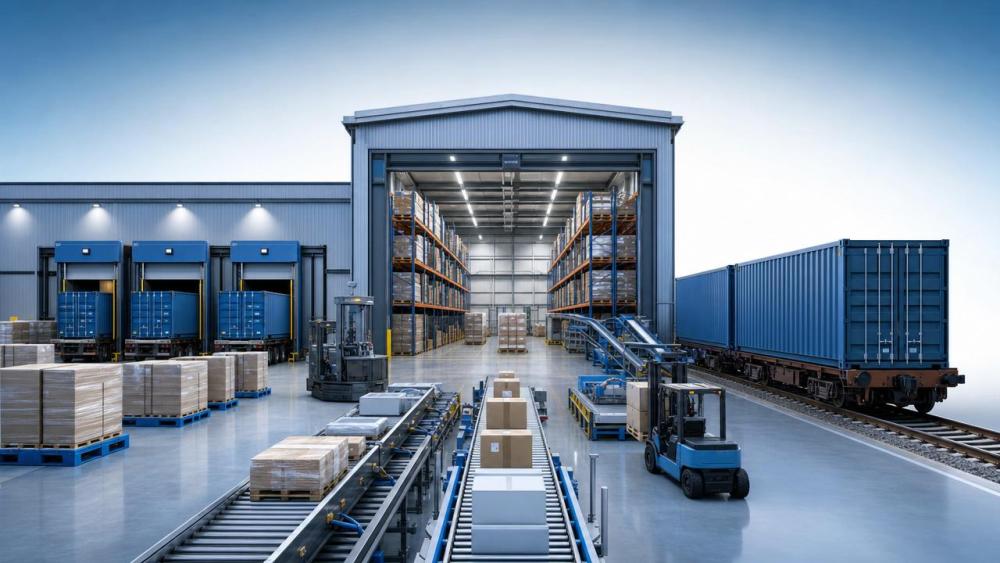
In practical freight logistics, a train, truck, yard crane, conveyor, or stacker may arrive on time and still lose hours inside the node. The problem is rarely a single failure. It is usually a timing mismatch between labor availability, dock release, loading sequence, inventory confirmation, and dispatch authority. These micro-delays accumulate until the whole logistics chain begins to absorb invisible cost.
For operators in rail freight terminals, ports, intermodal yards, and bulk material facilities, warehouse timing is not just a local warehouse issue. It affects wagon dwell, truck turnaround, berth rhythm, crane utilization, and downstream route reliability. A missed loading slot in one building can force rescheduling across several transport assets that were supposed to move as one synchronized system.
What hidden bottlenecks usually look like
- Inbound cargo arrives before storage lanes are cleared, so forklifts wait while transport assets remain occupied outside or on sidings.
- Loading equipment is physically available but not inspection-cleared, power-ready, or digitally released in the operating system.
- Dispatch plans are updated too late, causing operators to load by outdated priority rather than by network urgency.
- Manual data confirmation delays handoff between warehouse teams and transport control rooms.
- Shift changes break continuity, leaving staged cargo without the right crew, documents, or equipment pairing.
These are common across comprehensive logistics environments because freight logistics is shaped by interfaces. A node performs well only when material flow, equipment flow, and information flow move at the same speed.
Where timing losses appear across rail, port, and bulk logistics scenarios
Operators often focus on route efficiency, yet node timing losses vary by application. The table below helps identify where freight logistics bottlenecks are most likely to hide and what operational symptom should trigger action.
The key takeaway is simple: the warehouse clock often determines the transport clock. In freight logistics, timing discipline inside the node matters as much as track access, berth availability, or road transit time outside it.
Why this matters for operators
Operators are judged by throughput, turnaround, and equipment use, not by whether the root cause sits in warehouse planning or dispatch software. That is why bottleneck diagnosis must cross departmental boundaries. A delay owner is not always the delay source.
How to identify the real timing bottleneck in freight logistics operations
A common mistake is to chase the asset that appears idle. A crane waiting, a wagon parked, or a truck queued is usually a visible symptom. The hidden cause may sit one or two process steps earlier. Effective freight logistics analysis starts with sequence mapping rather than blame allocation.
A practical diagnostic sequence
- Map the planned time for cargo release, dock assignment, equipment readiness, and dispatch confirmation on one timeline.
- Measure actual event timestamps, not only completion totals by shift or day.
- Separate waiting caused by inventory unavailability from waiting caused by resource contention.
- Check whether rescheduling rules prioritize network-critical loads or merely first-come tasks.
- Review handoff latency between warehouse systems and transport control systems.
This method is especially valuable in complex facilities where rail equipment, yard machinery, and bulk handling assets must work as a single production chain. TC-Insight’s sector view is useful here because timing should be interpreted in the wider context of network planning, automation logic, and asset life-cycle efficiency rather than only local staffing pressure.
Signals that the bottleneck is structural, not temporary
- Peak-hour congestion repeats across different teams and shifts.
- Performance improves when volume drops, but collapses again under normal demand.
- More labor is added, yet departure reliability does not materially improve.
- The same asset alternates between overwork and idle time because planning is unstable.
Manual coordination or synchronized intelligence: which model works better?
Many freight logistics operations still depend on experience-based coordination. That approach can work in stable, low-variation environments. It becomes fragile when multimodal schedules, remote equipment control, and high-volume throughput create second-by-second dependencies. The comparison below shows where each model performs well and where risk grows.
The strongest model for modern freight logistics is rarely full automation alone. It is synchronized intelligence: systems provide timing visibility and priority logic, while operators manage exceptions with better context. This fits TC-Insight’s focus on linking equipment algorithms, automation behavior, and supply chain efficiency into one decision framework.
What operators should evaluate before changing process, software, or equipment
Not every delay justifies a major system replacement. Sometimes the best improvement comes from timing governance, revised slot design, or better release rules. Before spending capital, operators should evaluate the following points in a disciplined way.
Procurement and optimization checklist for freight logistics nodes
- Does the current process capture event timestamps at each handoff, or only final completion time?
- Can dispatch priorities be updated dynamically when rail, truck, or vessel conditions change?
- Are equipment readiness signals integrated, including inspection status, maintenance blocks, and operator assignment?
- Is the facility handling mixed cargo profiles that require different staging logic and buffer time?
- Will the chosen solution support future remote operation, V2X-style coordination, or automation expansion?
These questions matter because freight logistics performance depends on scalability. A workaround that supports today’s volume may fail once train frequency rises, port crane cycles tighten, or bulk handling throughput becomes more continuous.
Cost thinking: where hidden timing delays create measurable expense
Operators should measure more than direct labor cost. Warehouse timing problems often drive secondary costs such as detention, overtime, extra shunting, fuel burn during idle waiting, unbalanced energy use in heavy equipment, and avoidable maintenance stress from irregular operating patterns. In many freight logistics networks, these indirect costs exceed the visible cost of one delayed shift.
Which implementation steps reduce bottlenecks fastest without disrupting operations?
Operators usually need practical improvement, not a long transformation program that freezes daily work. The fastest gains often come from sequencing discipline and shared visibility before deeper digital integration begins.
A staged improvement path
- Standardize timing definitions. Agree on what counts as cargo ready, equipment ready, dock ready, and dispatch released.
- Build one shared event board. Even a simple digital board can reduce misalignment between warehouse and transport teams.
- Introduce priority rules tied to network value. Critical departures should not compete equally with low-urgency tasks.
- Use pilot zones. Test revised timing logic in one rail lane, one dock cluster, or one stockyard sector first.
- Expand with exception analytics. Once timing data is stable, examine recurring causes such as maintenance, paperwork, or storage design.
This staged method reduces implementation risk. It also supports operations that cannot pause, such as bulk terminals, container interfaces, and rail hubs under fixed departure commitments.
Standards and compliance considerations
When timing improvements involve equipment control, automated dispatch, or data integration, operators should review internal safety procedures and applicable industry standards. In rail and terminal environments, process changes must respect operational safety logic, maintenance release rules, and data traceability. Compliance is not separate from efficiency; it stabilizes repeatable execution.
FAQ: common freight logistics questions about warehouse timing
How can operators tell whether the warehouse is the real source of delay?
Look at event timestamps between cargo availability and actual loading start. If transport assets arrive on schedule but loading begins late, the warehouse timing layer deserves attention. Also compare planned versus actual release times for documents, labor, and equipment. Repeated mismatch is a stronger signal than one bad shift.
Which freight logistics sites benefit most from timing optimization?
High-volume sites gain the most: rail freight yards, intermodal terminals, container port interfaces, and bulk material handling facilities. These environments have expensive assets and tight sequence dependencies, so even small timing improvements can lift throughput and reduce idle time materially.
Is more automation always the best answer?
No. If timing rules are unclear, automation can simply make poor sequence decisions faster. Start with process clarity, event visibility, and exception ownership. Then automation, remote control, or integrated scheduling can add much more value.
What should be prioritized first: equipment, software, or process redesign?
In most freight logistics operations, process and timing definitions come first, software visibility comes second, and equipment expansion comes third. Buying more assets before solving release logic often increases complexity without removing the bottleneck.
Why choose us for deeper freight logistics intelligence and next-step planning
TC-Insight is positioned for operators who need more than general commentary. Our strength lies in connecting mainline railways, urban transit logic, port machinery automation, and bulk logistics equipment into one macro-logistics view. That cross-domain perspective helps identify whether a warehouse timing issue is local, network-driven, asset-related, or a coordination gap between systems.
If you are reviewing freight logistics bottlenecks, you can consult us on practical issues such as timing parameter confirmation, node-level process selection, dispatch coordination logic, delivery cycle considerations for equipment upgrades, low-carbon efficiency priorities, and the fit between automation ambition and current operating reality.
- Need help comparing operational models for rail, port, or bulk handling environments? We can help structure the evaluation criteria.
- Unsure which timing data points matter most before a system upgrade? We can help define the decision baseline.
- Planning a customized solution around scheduling, equipment readiness, or handoff efficiency? We can help frame the technical discussion.
- Need support for quotation communication, implementation scope review, or compliance-oriented planning? We can help narrow priorities before procurement moves forward.
In freight logistics, hidden warehouse timing is often the difference between nominal capacity and usable capacity. The sooner that timing becomes visible, measurable, and coordinated, the sooner operators can turn waiting time into flow.
Related News
Related News
- 00
0000-00
How port machinery systems reduce container handling bottlenecks - 00
0000-00
How smart port logistics systems reduce container dwell time - 00
0000-00
How transport equipment intelligence analysis identifies bottlenecks - 00
0000-00
How rail technology advancements are reshaping signaling standards - 00
0000-00
What is driving growth in the global EMU market size?
Weekly Insights
Stay ahead with our curated technology reports delivered every Monday.