
Global Supply Chain Risk Is Shifting to Secondary Hubs





As the global supply chain faces mounting pressure from geopolitical shifts, capacity constraints, and regional disruptions, risk is no longer concentrated in major gateways alone. Secondary hubs are emerging as critical nodes that can either stabilize cargo flows or expose hidden vulnerabilities. For researchers tracking transport infrastructure, rail logistics, and port automation, understanding this shift is essential to decoding the next phase of global trade resilience.
Why Scenario Differences Matter More Than General Trend Talk
For information researchers, the most useful way to read the current global supply chain is not by asking whether risk is rising in general, but by asking where risk is relocating and under which operating scenarios it becomes material. Major ports, flagship airports, and core rail gateways still matter, yet many disruptions now emerge from secondary hubs: inland rail terminals, regional ports, dry ports, cross-border consolidation centers, feeder container nodes, and bulk transfer sites that were once treated as support infrastructure.
This shift matters because the same event can produce very different outcomes depending on the transport scenario. A labor shortage at a secondary container terminal may create manageable delay for low-value cargo, but it can disrupt time-sensitive manufacturing inputs. A power instability issue at an inland intermodal yard may seem local, yet it can affect synchronized rail-port handoffs across multiple countries. In other words, global supply chain exposure is becoming more distributed, less visible, and harder to evaluate through headline indicators alone.
For a research audience, especially those following railway rolling stock, urban transit logistics interfaces, automated container handling, and bulk equipment systems, scenario-based assessment provides a stronger decision framework. It helps identify which secondary hubs are becoming strategic buffers, which are turning into bottlenecks, and which require closer monitoring because their operating model is not yet mature enough for sustained rerouting pressure.
Where the Shift Appears First in the Global Supply Chain
The movement of risk toward secondary hubs is visible across several business settings. First, cargo owners are diversifying away from overloaded or politically exposed primary gateways. Second, rail-linked inland terminals are gaining value as shippers seek resilience, customs flexibility, and lower congestion. Third, regional ports are absorbing overflow cargo when mainline schedules become unstable. Fourth, bulk logistics systems are relying more heavily on intermediate transfer nodes because mining, energy, and agricultural routes require continuity even when maritime links fluctuate.
What changes is not simply traffic volume. It is the operational importance of places that previously handled support functions rather than strategic functions. Once cargo diversion becomes routine, these hubs must manage more complex train paths, more dynamic storage patterns, tighter truck-rail synchronization, and higher demands for equipment uptime. If they lack digital visibility, automation depth, maintenance reliability, or customs efficiency, the global supply chain inherits a new layer of fragility.
Scenario 1: Regional Ports Taking Overflow from Main Gateways
A common global supply chain scenario is when a primary seaport becomes constrained by labor action, weather disruption, canal-related delays, or schedule bunching. Shippers then redirect cargo to nearby regional ports. On paper, this looks like resilience through diversification. In practice, the secondary hub may have limited crane density, weaker yard software, fewer rail departures, and less mature truck appointment management.
Researchers should pay attention to whether the regional port has true surge-handling capability or only nominal spare capacity. The difference is critical. Spare berth availability alone does not guarantee operational resilience. A port may receive vessels but fail in container evacuation because rail paths are constrained or automated stacking systems are not integrated with gate and vessel planning. For this scenario, indicators such as berth productivity, reefer plug availability, dwell time by cargo class, and feeder connectivity often reveal more than annual throughput figures.
For TC-Insight readers, container port crane automation and remote control maturity become especially relevant here. Secondary hubs under stress need more than equipment; they need coordinated control logic across crane movements, yard sequencing, and hinterland dispatch.
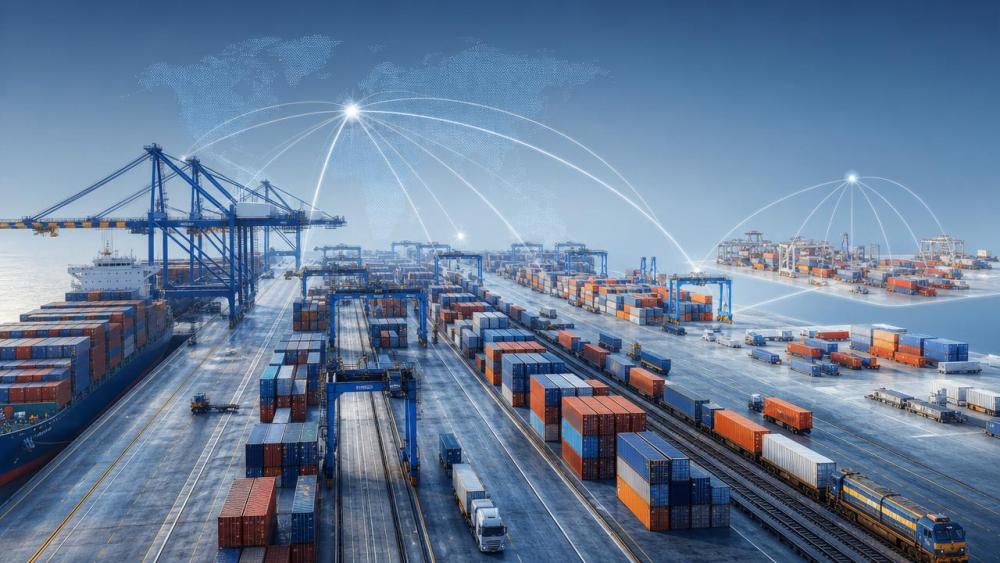
Scenario 2: Inland Rail Hubs Becoming Strategic Shock Absorbers
Another high-value scenario involves inland rail hubs. As companies redesign logistics networks for resilience, dry ports and interior intermodal terminals increasingly serve as shock absorbers for the global supply chain. They allow importers to move boxes away from coastal congestion, support customs pre-clearance in some corridors, and enable longer storage windows closer to manufacturing or distribution clusters.
However, not every inland node is equally suitable. The key question is whether the terminal can synchronize with both the railway operating model and downstream road distribution. If locomotive utilization is weak, if rolling stock turnaround is inconsistent, or if signaling capacity limits train frequency, the hub may become a queue transfer point rather than a resilience asset. This is where railway rolling stock health, bogie reliability, traction system performance, and dispatch discipline directly affect global supply chain stability.
For research use, inland hubs deserve closer study when they show three traits: sustained traffic growth from rerouted flows, investment in digital scheduling or automation, and strategic proximity to manufacturing demand. These are signs that a support node is evolving into a system-critical node.
Scenario 3: Bulk Logistics Networks and Hidden Midstream Exposure
In bulk commodities, the shift of risk to secondary hubs is often less visible than in container trade. Mines, coal corridors, grain terminals, and industrial supply chains depend on transfer points that may not appear prominent in mainstream trade reporting. Yet a single stacker-reclaimer issue, conveyor downtime event, or wagon unloading bottleneck at a secondary bulk node can interrupt long-distance continuity and expose the global supply chain to supply shocks.
This scenario is especially important when researchers are assessing energy transition materials, agricultural exports, or industrial feedstock movements. The focus should not remain only on mine output or vessel loading. Midstream reliability matters just as much. A secondary hub handling blending, temporary storage, or inland transshipment may be the real determinant of delivery reliability. Here, equipment availability, maintenance intervals, dust-control compliance, power redundancy, and weather-protected handling design become core evaluation factors.
For operators, the lesson is clear: if a bulk corridor depends on a small number of midstream assets, the secondary hub is not secondary in risk terms. It is operationally central.
Scenario 4: Cross-Border Corridors and Regulatory Friction at Smaller Nodes
A fourth scenario appears in cross-border land corridors. As firms look for alternatives to longer maritime routes or politically sensitive gateways, smaller border terminals and regional customs nodes become more active. This can support diversification in the global supply chain, but it also introduces a new risk mix: inconsistent documentation practices, uneven digital systems, changing inspections, and limited staffing at non-primary crossings.
In these settings, the physical infrastructure may be adequate while administrative throughput remains weak. Researchers should therefore evaluate not only track, yard, or truck lane capacity, but also data exchange quality, customs operating hours, security protocol consistency, and interoperability between national railway systems. A border node with modest physical capacity can still perform well if it has predictable procedures and integrated information flow. By contrast, a larger facility may underperform if coordination is poor.
How Different Users Should Judge Secondary Hub Risk
Different audiences should assess the global supply chain shift through different filters. Researchers tracking infrastructure strategy may prioritize investment signals, policy direction, and modal substitution potential. Equipment suppliers may focus on where under-automated hubs are likely to upgrade cranes, signaling, traction systems, or bulk handling assets. Operators may care more about dwell time volatility, asset utilization, and service recovery speed after disruption.
A practical way to judge suitability is to ask four questions. First, does the secondary hub have structural relevance, or is it only a temporary overflow point? Second, can its equipment systems sustain higher throughput without steep reliability loss? Third, does the node connect effectively to rail, road, port, or border systems around it? Fourth, is there enough operational transparency to detect risk before congestion becomes visible in shipment outcomes?
When these questions are answered positively, a secondary hub may strengthen global supply chain resilience. When the answers are weak or mixed, the hub may simply relocate disruption rather than reduce it.
Common Misjudgments in Scenario Analysis
One common mistake is to assume that lower utilization automatically means available resilience. In reality, unused capacity may reflect weak connectivity, poor service patterns, or outdated handling systems. Another mistake is evaluating hubs only by size. In the current global supply chain, process quality often matters more than scale, especially for time-sensitive or multimodal flows.
A third misjudgment is separating infrastructure from operations. Secondary hubs can look adequate on maps and investment plans, yet fail under pressure because signaling, maintenance, workforce readiness, or digital coordination are insufficient. Finally, many analysts underestimate the role of technical reliability. A terminal with advanced equipment but unstable uptime can become riskier than a simpler node with disciplined operations.
FAQ for Researchers Tracking the Global Supply Chain
Which secondary hubs deserve priority monitoring?
Focus on nodes that are receiving rerouted cargo, linking multiple modes, or supporting fast-growing industrial zones. These hubs tend to become leverage points in the global supply chain.
What is the best early warning indicator?
Look for rising dwell time combined with declining equipment productivity or train schedule reliability. This combination often signals stress before a public disruption becomes visible.
Why do transport equipment details matter in macro risk analysis?
Because resilience is executed physically. Rolling stock performance, crane automation, signaling logic, and bulk handling reliability determine whether a secondary hub can absorb pressure or amplify disruption.
A Practical Research Direction for the Next Phase
The next phase of global supply chain analysis should move beyond ranking major gateways and instead map the operating maturity of secondary hubs across rail, port, and bulk logistics systems. For information researchers, this means combining throughput data with asset reliability, automation depth, corridor connectivity, and governance consistency. It also means watching where infrastructure investment is being translated into true operational capability rather than symbolic expansion.
For readers using TC-Insight as a decision support source, the most productive approach is to examine each hub through a scenario lens: what kind of cargo stress it handles, which equipment systems are most exposed, how intermodal handoffs perform, and whether the node can scale without losing control. In a more fragmented global supply chain, resilience will increasingly depend on these overlooked places. Understanding them early is not just a research advantage; it is a strategic necessity.
Related News
Related News
- 00
0000-00
How port machinery systems reduce container handling bottlenecks - 00
0000-00
How smart port logistics systems reduce container dwell time - 00
0000-00
How transport equipment intelligence analysis identifies bottlenecks - 00
0000-00
How rail technology advancements are reshaping signaling standards - 00
0000-00
What is driving growth in the global EMU market size?
Weekly Insights
Stay ahead with our curated technology reports delivered every Monday.