
Bulk Transport Delays Often Start Before Loading Begins





Bulk transport delays often begin long before cargo reaches the loading point. For project managers and engineering leaders, missed schedules are frequently rooted in planning gaps, equipment readiness, coordination failures, and weak site visibility. Understanding these early-stage risks is essential to improving bulk transport reliability, protecting throughput targets, and keeping large-scale logistics operations aligned with cost, safety, and delivery expectations.
In bulk logistics, the most visible delay is the vessel waiting, the train standing idle, or the stockyard queue growing beyond plan. Yet in many mines, ports, rail interfaces, and terminal projects, the real failure starts 7 to 21 days earlier, when maintenance windows are missed, handover data is incomplete, or loading sequences are approved without confirming equipment and labor readiness. For decision-makers responsible for schedule control, this earlier phase is where risk can still be reduced at a manageable cost.
For readers following TC-Insight, this issue sits at the intersection of bulk material handling, rail operations, port machinery, and macro-logistics planning. Whether the cargo moves by overland conveyor, wagon loading station, shiploader, stacker-reclaimer, or truck-to-rail transfer point, the same principle applies: reliable bulk transport depends on synchronized upstream decisions, not only efficient loading performance at the last minute.
Why Bulk Transport Delays Start Upstream, Not at the Loader
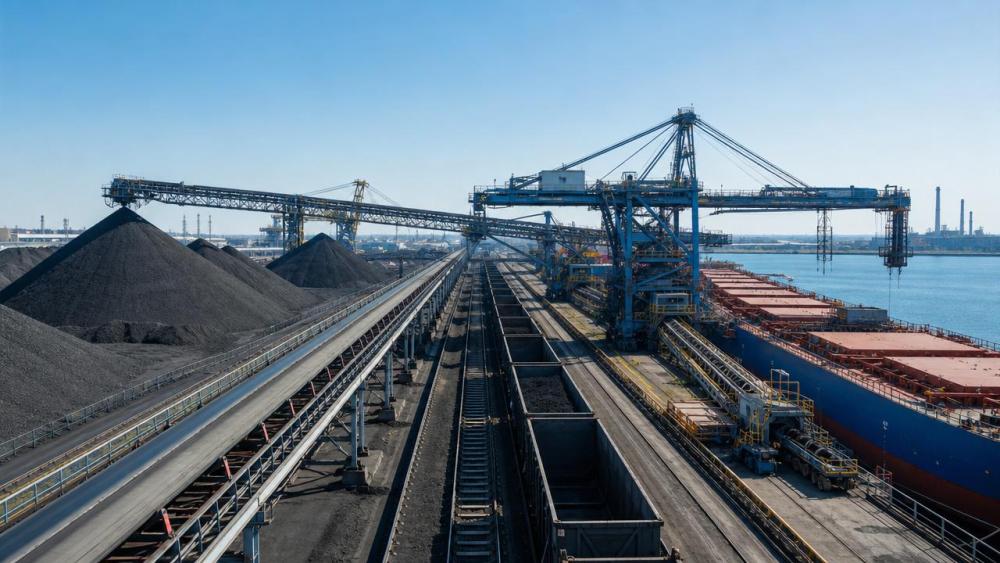
A loading system can look fully available on paper and still fail to deliver planned throughput. In practical operations, a nominal capacity of 4,000 to 8,000 tonnes per hour means little if the reclaim path is blocked, the train arrival window shifts by 6 hours, moisture content exceeds design assumptions, or the operator team receives the final dispatch list too late. Bulk transport performance is therefore shaped by upstream control points as much as by machine speed.
The four early-stage failure zones
Most recurring delays can be traced to four zones: planning logic, asset readiness, interface coordination, and operational visibility. If even 1 of these 4 zones is weak, the loading event becomes fragile. If 2 or more are weak at the same time, schedule slippage becomes likely, especially in networks with multimodal transfer between mine, rail, and terminal.
1. Planning logic breaks before execution begins
Many teams still build transport schedules from static assumptions instead of live constraints. A weekly shipping plan may assume constant reclaim rates, fixed rail slots, and standard turnaround, while actual site conditions fluctuate every 8 to 12 hours. When planning does not reflect variable stockpile geometry, weather exposure, maintenance locks, or line occupancy, the result is not a loading delay alone; it is a cascading transport delay across the entire chain.
2. Asset readiness is often overstated
“Available” equipment is not always “ready” equipment. A shiploader may be mechanically fit but waiting on spares, an automated stacker may require sensor calibration, and a wagon tippler may be limited by chute wear or dust suppression faults. In bulk transport, asset readiness should be verified through at least 6 checks: mechanical status, electrical status, control system alarms, operator availability, maintenance deferrals, and spare-part criticality.
3. Interface coordination causes hidden waiting time
Bulk projects rarely fail inside a single department. They fail at interfaces. Rail dispatch may optimize train paths without considering stockyard reclaim sequence. Port operations may nominate berths before confirming yard accessibility. Engineering teams may approve a shutdown that overlaps with a vessel queue peak. These mismatches create hidden waiting time of 2 to 10 hours per event, which can erase the margin built into the monthly plan.
4. Site visibility remains too weak for fast correction
When data arrives through spreadsheet updates or delayed radio reports, project managers are often reacting to conditions that are already 1 to 3 shifts old. That is too late for preventive action. Modern bulk transport control requires near-real-time visibility into queue length, reclaim position, loading rate variance, downtime codes, and handoff readiness across each transfer node.
The table below shows how upstream risks usually appear before loading begins and how they affect schedule performance in bulk transport operations.
The key takeaway is simple: loading delays are often symptoms, not root causes. For bulk transport managers, the highest-value intervention usually happens before the first tonne moves. That is why upstream readiness reviews, interface governance, and operational intelligence deserve the same attention as loader design capacity or dispatch speed.
What Project Managers Should Measure Before Every Bulk Transport Window
A reliable bulk transport program needs measurable pre-loading controls. Instead of relying on a general “go/no-go” decision, project and engineering teams should define a readiness framework with objective thresholds reviewed 12 to 48 hours before the transport window. This reduces ambiguity and supports faster escalation when conditions fall outside the agreed band.
A practical 5-point readiness checklist
The most effective sites use a short but disciplined checklist. It does not need to be complex, but it must cover the entire logistics chain rather than the loading machine alone.
- Confirm material availability by grade, moisture range, and stockpile access route.
- Verify equipment status for primary and backup assets, including deferred maintenance items.
- Check labor and supervision coverage for all planned shifts within the next 24 to 72 hours.
- Validate transport interfaces such as train arrival windows, berth nomination, and truck staging.
- Review digital visibility inputs, downtime coding discipline, and escalation contacts.
Set readiness thresholds, not broad assumptions
Thresholds improve discipline. For example, stockpile access may require at least 95% route availability, train consist confirmation may need to be locked 8 hours before arrival, and a critical conveyor route may require zero outstanding safety interlocks before release. These thresholds create clearer decisions and make bulk transport planning less vulnerable to last-minute interpretation.
The next table provides a useful starting point for pre-loading control in bulk transport projects where rail, port, and yard operations must stay synchronized.
These controls are not complicated, but they are powerful. They convert general confidence into traceable readiness. For project leaders overseeing capital-intensive bulk transport assets, that shift improves both accountability and response speed when the schedule starts to drift.
How to Reduce Delay Risk Across Rail, Port, and Bulk Handling Interfaces
Bulk transport becomes more fragile as the number of operational interfaces increases. A direct conveyor-to-ship route has fewer variables than a mine-to-rail-to-port chain. But even simple systems can underperform when ownership is fragmented. The answer is not more meetings; it is clearer interface design, faster information flow, and escalation rules that work under time pressure.
Build a shared control model across functions
Project managers should define one shared operational picture used by engineering, maintenance, dispatch, and terminal teams. At minimum, that shared picture should include 7 live indicators: planned tonnage, actual tonnage, queue position, equipment constraints, maintenance lockouts, weather alerts, and next critical handover time. If each team works from a different dashboard or report timing, delays will be discovered too late.
Map the handover points that generate most losses
Most delay hours come from a small number of handover points. In many bulk transport systems, 3 to 5 interfaces generate the majority of avoidable disruption: stockyard-to-reclaimer release, reclaimer-to-conveyor route setup, rail arrival-to-loader assignment, berth confirmation-to-shiploader readiness, and maintenance release-to-operations signoff. Mapping these points allows teams to assign ownership and define exact release criteria.
Use escalation windows shorter than the delay itself
If a critical issue waits 2 hours for approval in a system where average recovery time is 90 minutes, the process is broken. Escalation windows should match operational reality. For many terminals and rail-linked bulk sites, a 15-minute first escalation and a 30-minute cross-functional decision point are more effective than a long reporting chain that preserves formality but loses throughput.
Digital visibility is now an operational requirement
The role of intelligence platforms and control systems is growing because bulk transport delays are increasingly linked to coordination quality rather than machine horsepower alone. Near-real-time visibility into yard position, rail movements, crane status, reclaim path occupancy, and downtime classification gives managers a practical basis for intervention. This is especially relevant in high-volume environments where a 3% loss in daily throughput can translate into substantial monthly backlog.
For organizations following TC-Insight’s coverage of rail equipment, port automation, and bulk handling, the pattern is clear: sites with stronger data stitching between transport nodes usually detect risk earlier and recover faster. The advantage is not only operational. Better visibility supports asset planning, maintenance prioritization, and commercial reliability when customers demand tighter delivery commitments.
Common Procurement and Implementation Mistakes in Bulk Transport Projects
Delay prevention is not only an operations issue. It is also shaped by procurement scope, engineering decisions, and implementation sequencing. Many bulk transport projects buy equipment for nameplate capacity while under-specifying maintainability, interface integration, or control logic. The result is a system that performs well during acceptance testing but struggles under live logistics pressure.
Mistake 1: Buying for peak rate, not recovery resilience
A system rated at 6,000 tonnes per hour may still underperform if restart time after a stoppage is too long, if spares lead time exceeds 4 to 6 weeks, or if maintenance access is poor. Procurement teams should assess not only peak throughput but also restart duration, redundancy philosophy, and serviceability. In many cases, a slightly lower peak rate with faster recovery delivers better annualized output.
Mistake 2: Ignoring control-system integration during scope definition
When stackers, reclaimers, wagon loaders, belt systems, and dispatch tools operate in isolated data environments, visibility gaps remain even after commissioning. Interface definition should be handled early, ideally in the front-end planning phase, with clear signal lists, alarm priorities, reporting fields, and responsibility for downtime coding. Otherwise, teams inherit blind spots that make future bulk transport delays harder to diagnose.
Mistake 3: Underestimating ramp-up and handover discipline
Commissioning does not equal stable operation. Many projects need 30 to 90 days of ramp-up before workflows, maintenance routines, and operator responses become consistent. During this period, project leaders should monitor 4 dimensions closely: throughput variance, failure frequency, recovery time, and interface compliance. Early deviations in these metrics often predict longer-term delay risk.
What buyers and project owners should ask suppliers
- What are the critical failure points and expected recovery times for each major subsystem?
- Which components have lead times above 14 days and require stocking strategy?
- How will data be shared between equipment controls, maintenance systems, and dispatch platforms?
- What operator training and post-handover support are needed in the first 60 days?
These questions improve decision quality because they move the discussion beyond headline capacity. For bulk transport investments with long asset lives and tight production dependencies, procurement discipline is a direct contributor to schedule reliability.
Turning Early Risk Signals Into Better Throughput Performance
The strongest bulk transport operations do not eliminate every disruption. They detect weak signals early, act before queues expand, and align engineering, maintenance, and logistics decisions around shared priorities. For project managers, that means building a system where early warning signs trigger action within hours, not after the loading window has already been lost.
A practical roadmap usually begins with three steps: define measurable pre-loading readiness, identify the 3 to 5 handover points that drive most delay exposure, and strengthen site visibility across rail, yard, and terminal assets. From there, teams can refine thresholds, improve downtime analysis, and support capital planning with more reliable operational intelligence.
For organizations operating across mainline railways, ports, and bulk handling systems, TC-Insight’s perspective is clear: transport reliability is built through connected decision-making, not isolated equipment performance. If you are reviewing a new project, upgrading a loading interface, or trying to reduce recurring schedule loss in bulk transport, now is the right time to evaluate your upstream controls, data visibility, and interface readiness. Contact us to explore tailored insights, discuss operational priorities, or learn more solutions for resilient high-volume transportation.
Related News
Related News
- 00
0000-00
How port machinery systems reduce container handling bottlenecks - 00
0000-00
How smart port logistics systems reduce container dwell time - 00
0000-00
How transport equipment intelligence analysis identifies bottlenecks - 00
0000-00
How rail technology advancements are reshaping signaling standards - 00
0000-00
What is driving growth in the global EMU market size?
Weekly Insights
Stay ahead with our curated technology reports delivered every Monday.